

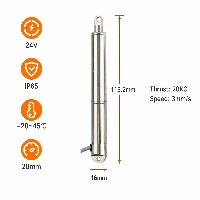
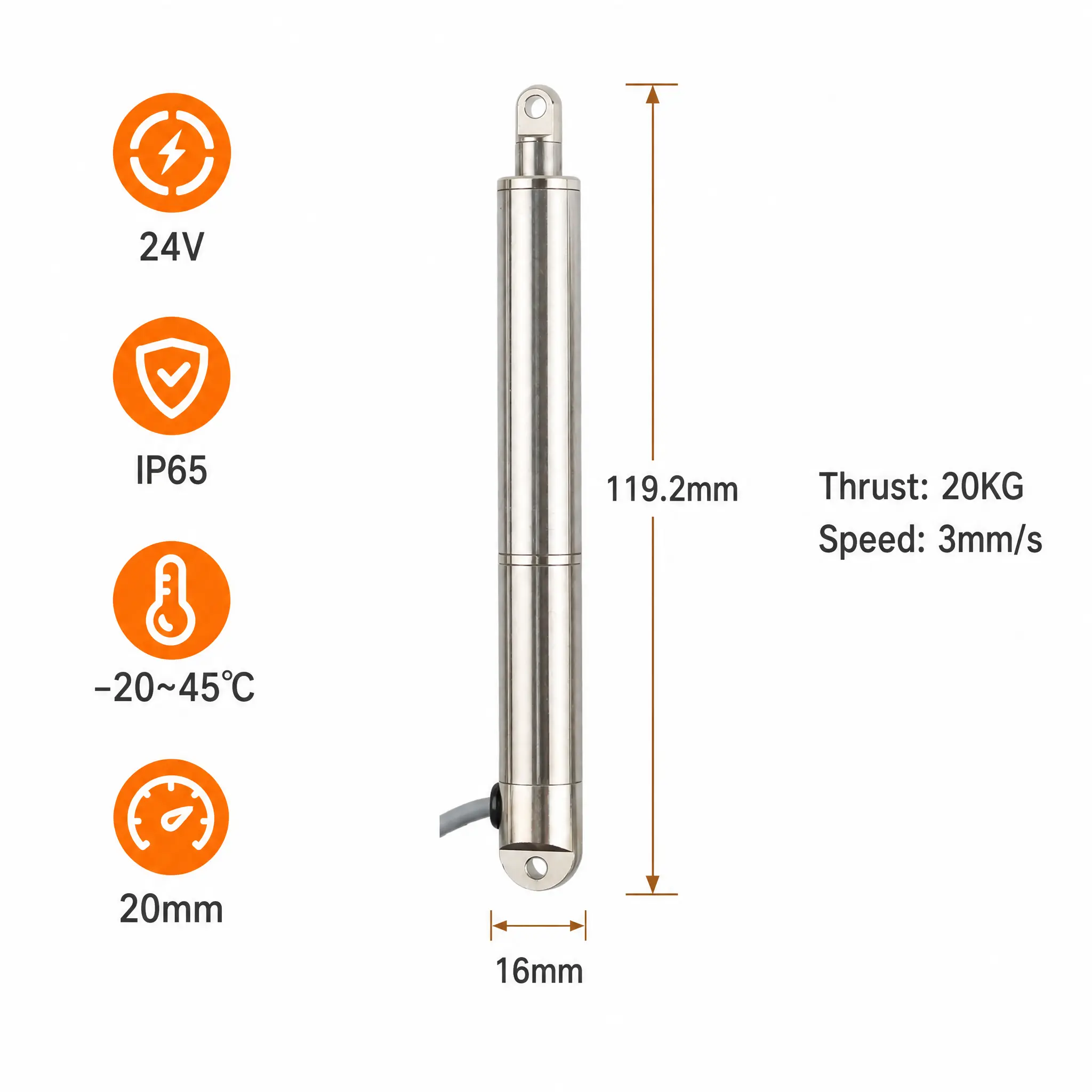

20 mm Short Stroke Linear Actuator
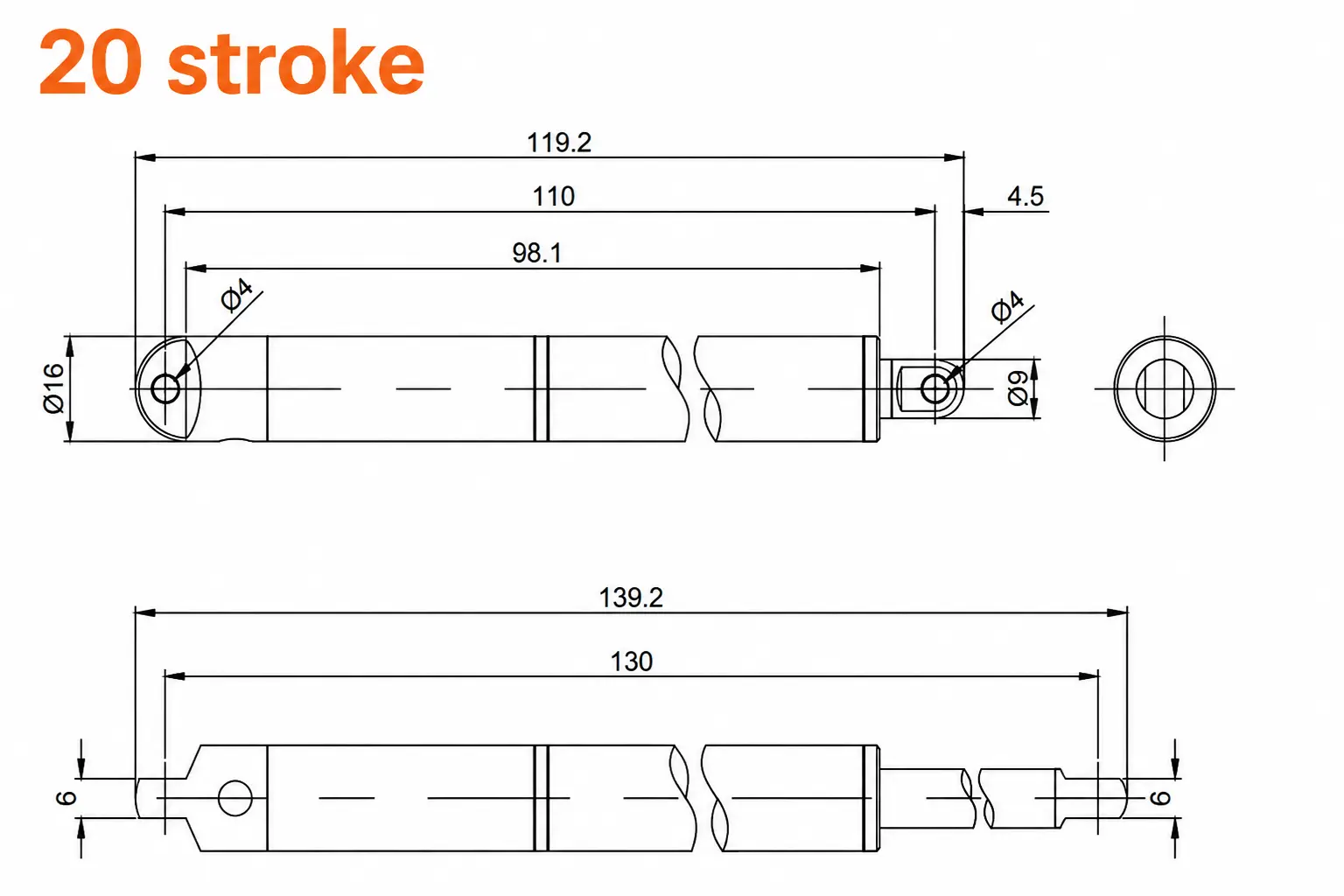
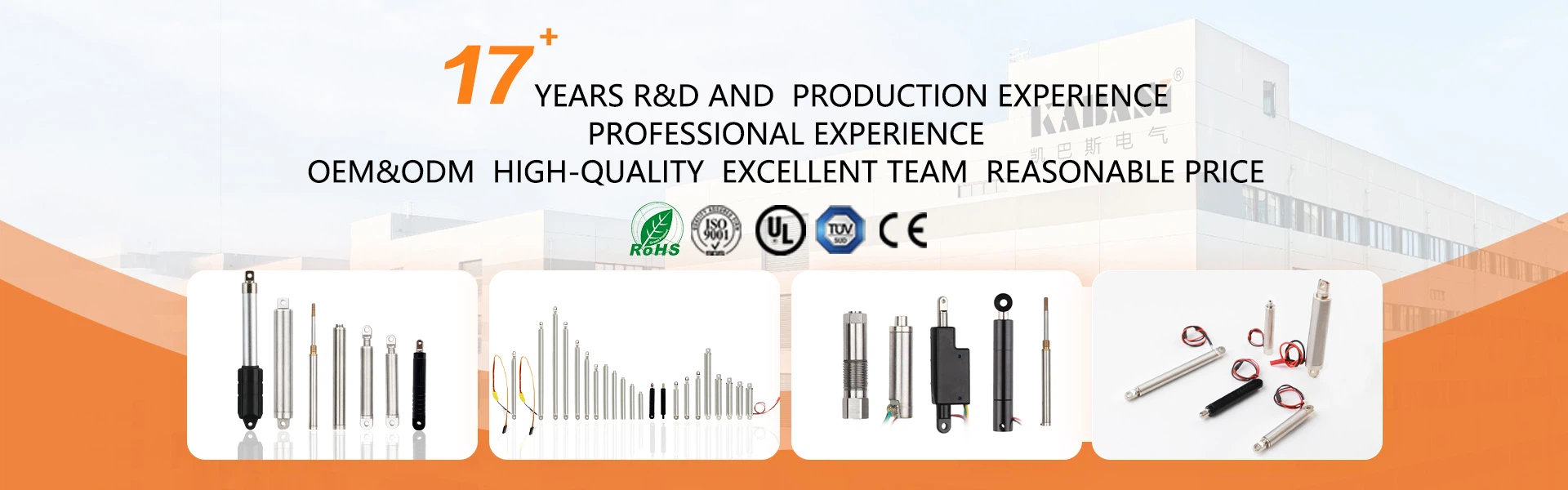
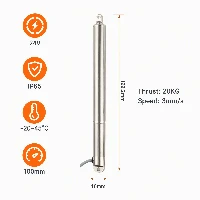
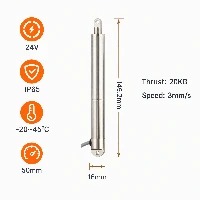
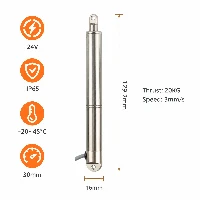
20mm Stroke Mini Linear Actuator CAD Diagram, Small Electric Motion Control Actuator Specification
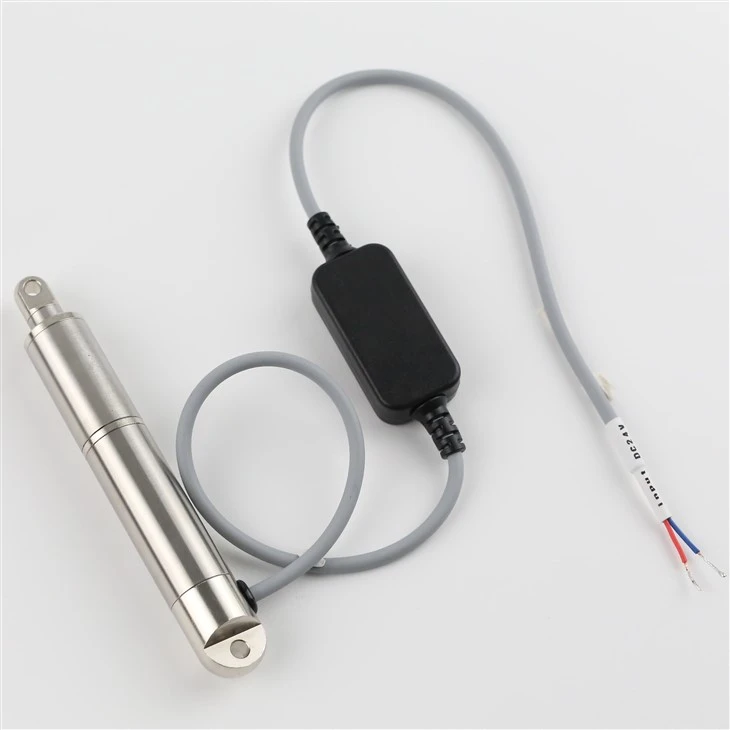
24V micro linear actuator with inline control box and exposed red and blue lead wires, clevis mounts
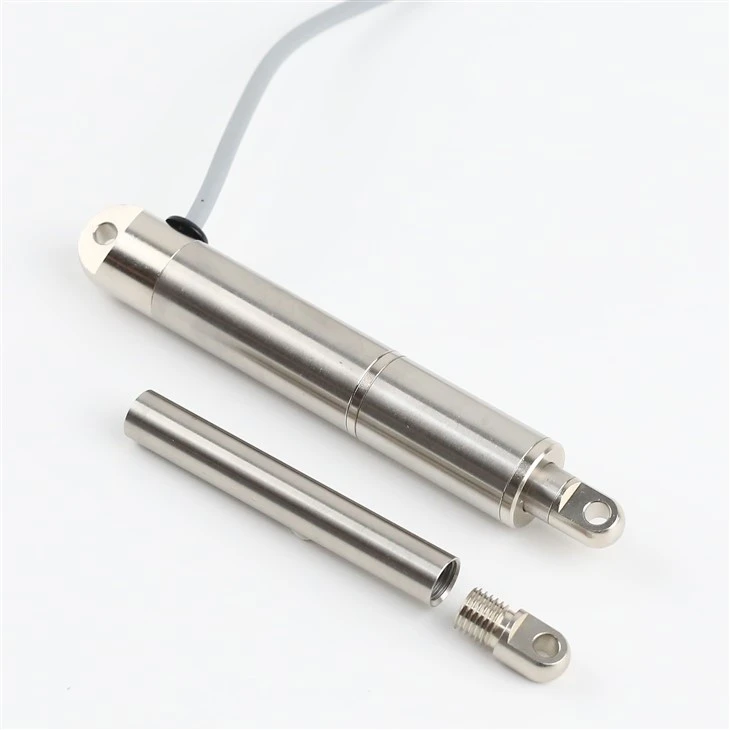
Disassembled micro linear actuator with threaded stainless steel end cap and hollow tube construction
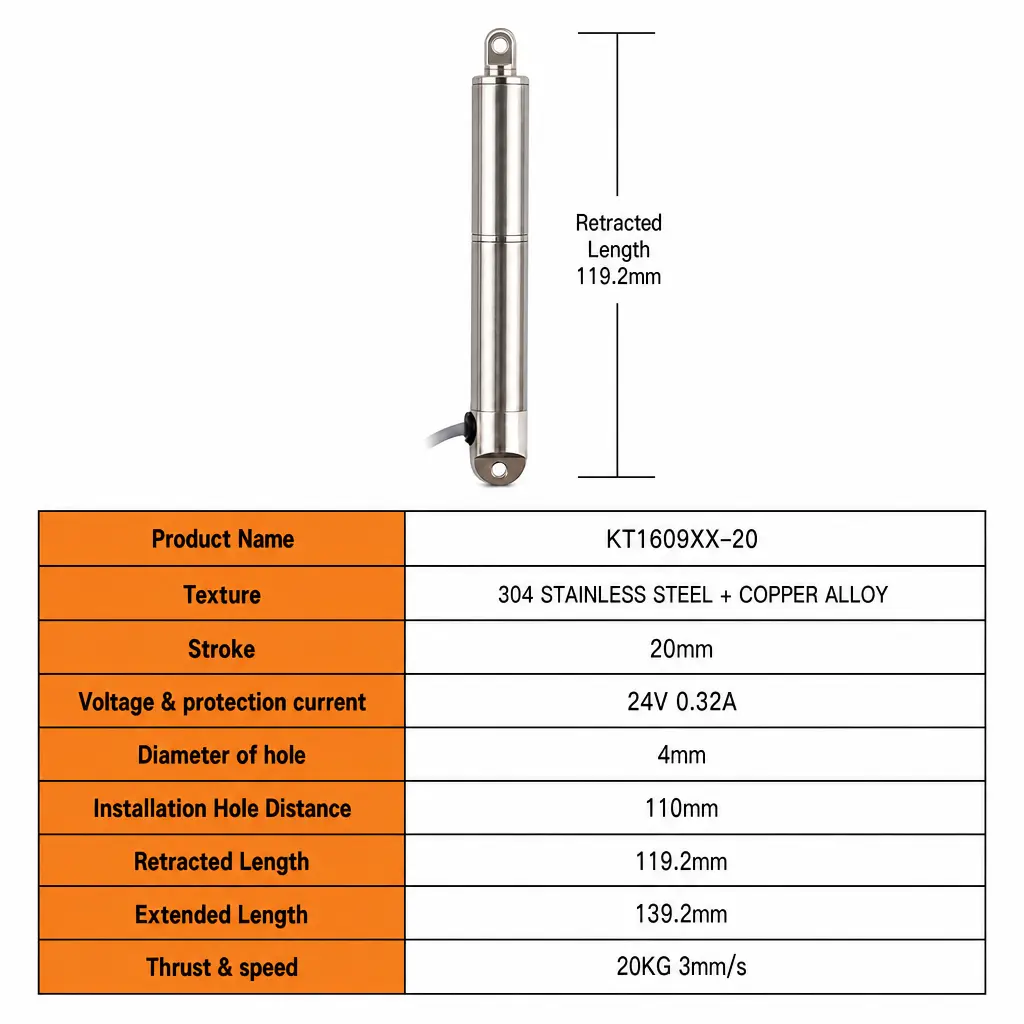
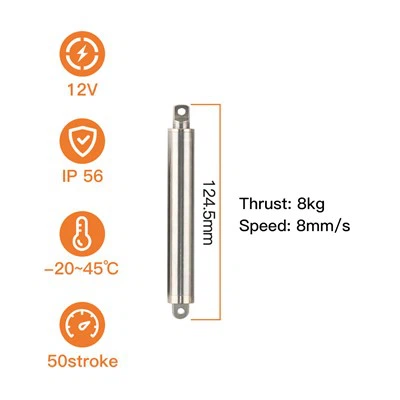
KT1609XX-20 Micro Linear Actuator 20mm Stroke 24V DC 119.2mm Retracted Length, 304 Stainless Steel Electric Cylinder 20KG Thrust
20 mm Short Stroke Linear Actuator
Products Description
The 20 mm short stroke linear actuator is used where a position has to hold after the drive has stopped: a pin that stays in its hole through a power cut, a cover that stays pressed on a gasket between shifts. The mechanism supplies the guidance - hinge, bore, rail - and the unit supplies the final 20 mm of push and the hold that follows.
In the machine it presents three things: a Ø16 mm tube for the clamp, a threaded rod end for the pin, and a limit protection board mounted outside the tube. The hinge, bore and door stay as they are.
At 2 mm/s on load, 20 mm takes about 10 s; unloaded it is nearer 7 s. At that speed the pin reaches the bore without impact and stops without overshooting. If a cycle has to close inside two seconds, this is the wrong platform and more force will not change it.
Specifications
| Item | Value |
|---|---|
| Model | KT1609XX, 20 mm stroke |
| Stroke length | 20 mm (standard range 10 / 20 / 30 / 50 / 100 mm) |
| Supply voltage | 24 V DC |
| Push force / pull force | 200 N each (20 kg dynamic load) |
| No-load speed / full-load speed | 3 mm/s / 2 mm/s |
| Self-locking static load | 300 N |
| Duty cycle | 10% |
| Current limit | 0.32 A |
| Limit | External limit protection board, auto stop at both ends |
| IP rating | IP65 |
| Body / extension rod | Ø16 mm 304 stainless steel / Ø9 mm |
| Gear train | Copper alloy |
| Operating temperature | -40 °C to +65 °C |
| Noise | Below 60 dB |
| Rated life | 8,000–12,000 cycles at rated conditions |
A swap cabinet repeats one sequence at every bay: the door closes, the pin passes through door and frame, the pack is locked, and then the cabinet may sit unpowered for hours or ride to another site on a truck. Pin travel equals bore depth plus chamfer plus overlap, and for most bay designs that lands on 20 mm.
- Entering the hole. 200 N has to beat the return spring plus latch friction with something left over for a pack that sits slightly off centre. The 20 mm divides into 3 mm of release clearance, 2–3 mm of nose chamfer and 14–15 mm of engagement, so the pin squares the door up on the chamfer instead of stalling against the bore. The pin threads onto the rod end, so a worn pin is a pin change, not an actuator change.
- Holding through a cut. The gear train carries the load: 300 N static with the cabinet dead, and no coil burning current to keep it there. A bay that loses power mid-swap, or a cabinet on a pallet, keeps its pins where they were left.
- Retracting and jamming. If a warped door or a stray cable stops the pin, current climbs and the external limit protection board cuts at a 0.32 A current limit, before the winding cooks. The same board gives auto stop at both ends, so nothing in the door has to act as the stroke end.
- Fitting it in. The clamp goes straight onto a bay column, so the sheet metal keeps its original shape - no slot, no welded pad. All five stroke lengths share the same body, so a change of travel moves the clamp, not the design. Dust inside the bay and wash water on the floor sit inside the IP65 rating and the 304 housing.
Replacement Comparison
Most bays in this size class use a solenoid pin: the coil pulls in, a spring pushes back when the supply drops. The difference between the two comes down to what happens after power is removed and how the pin arrives.
| Criterion | Solenoid pin (existing) | 20 mm short stroke linear actuator |
|---|---|---|
| State with supply off | Spring-returned, or held by a live coil | 300 N self-locking static load, stays put ✓ |
| Time per stroke | Under 0.1 s ✓ | About 10 s at 20 mm, full-load speed ✗ |
| Arrival and noise | Metal-to-metal impact △ | Continuous push, below 60 dB ✓ |
| Mounting | Core and stroke envelope to fit △ | Tube clamp anywhere along the body ✓ |
| Jam response | Coil keeps heating △ | 0.32 A current limit, auto stop at both ends ✓ |
| Unit cost | Low ✓ | Higher △ |
A solenoid wins on speed and unit price. If the door must pop open on power loss, or the cycle has to finish inside one second, this variant is the wrong choice. It pays off only where the pin has to stay engaged with the supply off and a few seconds of travel is acceptable.
Selection
All five standard stroke lengths share the Ø16 mm body, the 24 V supply voltage and the 20 kg dynamic load. Only
stroke length and installed dimension change.
| Stroke length | Travel time, loaded | Typical use |
|---|---|---|
| 10 mm | 5 s | Short flaps, small pins |
| 20 mm | 10 s | Battery bay latch pins, door catches |
| 30 mm | 15 s | Inspection covers, cable port lids |
| 50 mm | 25 s | Access covers on agricultural and construction machinery |
| 100 mm | 50 s | Service doors on energy storage cabinets and chargers |
20 mm is the specification on this page, with retracted length and extended length quoted per stroke; mounting distance follows the stroke. Other stroke lengths and shared data sit on the 24V tubular linear actuator page.
Stroke Budget
The 20 mm is spent in three parts:
- Release clearance, 3 mm. What the pin needs to clear the bore completely. Cut it short and the pin scrapes on the way out.
- Lead-in chamfer, 2–3 mm. The chamfer on the pin nose squares the door up. This is where misalignment is absorbed.
- Engagement, 14–15 mm. The loaded length, and the only part that carries shear.
The three add up to 20 mm. If the bore is deeper than 15 mm, move to the 30 mm stroke length instead of lengthening the pin nose - a longer nose increases the side-load arm without adding engagement.
With 2 mm of door rebound under spring load, engagement drops to about 12 mm, which still holds. Past 5 mm of rebound the door guidance itself needs work; extra stroke will not fix it.
Certification
The plant works to ISO9001 and the product carries CE; documents are on the certification page. Load testing happens on each unit before packing, on the rigs listed under test equipment. Warranty runs 6 months and is limited to defects in manufacturing and materials.
FAQ
Q: Is a 20 mm stroke length enough to lock a battery bay pin?
A: Work it out as bore depth plus chamfer plus overlap: 20 mm covers a bore up to 15 mm deep. Deeper bores need the 30 mm stroke length - a longer pin nose only adds a side-load arm.
Q: Does the pin let go when the cabinet is moved?
A: No. Back-driving is resisted by the gear train, not by a spring or a brake, so the pin stays engaged on a pallet, in a van or on a site with the supply isolated. Treat impact as the mechanism's problem: the bay needs its own end stop if packs can be thrown in.
Q: What if a pack sits off centre and the pin meets the bore wall?
A: Current climbs and the board cuts at a 0.32 A current limit, which protects the motor winding. That is a backstop, not a locating feature - put 2–3 mm of float or a chamfer in the mechanism, or every second swap ends in a cut-out.
Q: At 100 swaps a day, how long does one unit last?
A: The 8,000–12,000 cycle figure is measured at rated load and room temperature. At 100 cycles a day the upper end arrives in three to four months, so a lane running that hard needs a different platform rather than a longer service interval.
Q: Can it be mounted horizontally?
A: Yes, as long as the pin is guided. Load travels along the rod, so the pin's weight and any side knock must be taken by a bush in the door; with a loose guide the rod wears on one side and life drops.
For a quotation, send: stroke length, quantity, and cycles per day.
Hot Tags: 20 mm short stroke linear actuator, China 20 mm short stroke linear actuator manufacturers, suppliers, factory, dual motion linear actuator, heavy duty linear slide actuator, large pneumatic cylinder, linear actuator working, Linear Motor 12V, voice coil linear actuator
You Might Also Like



Send Inquiry