

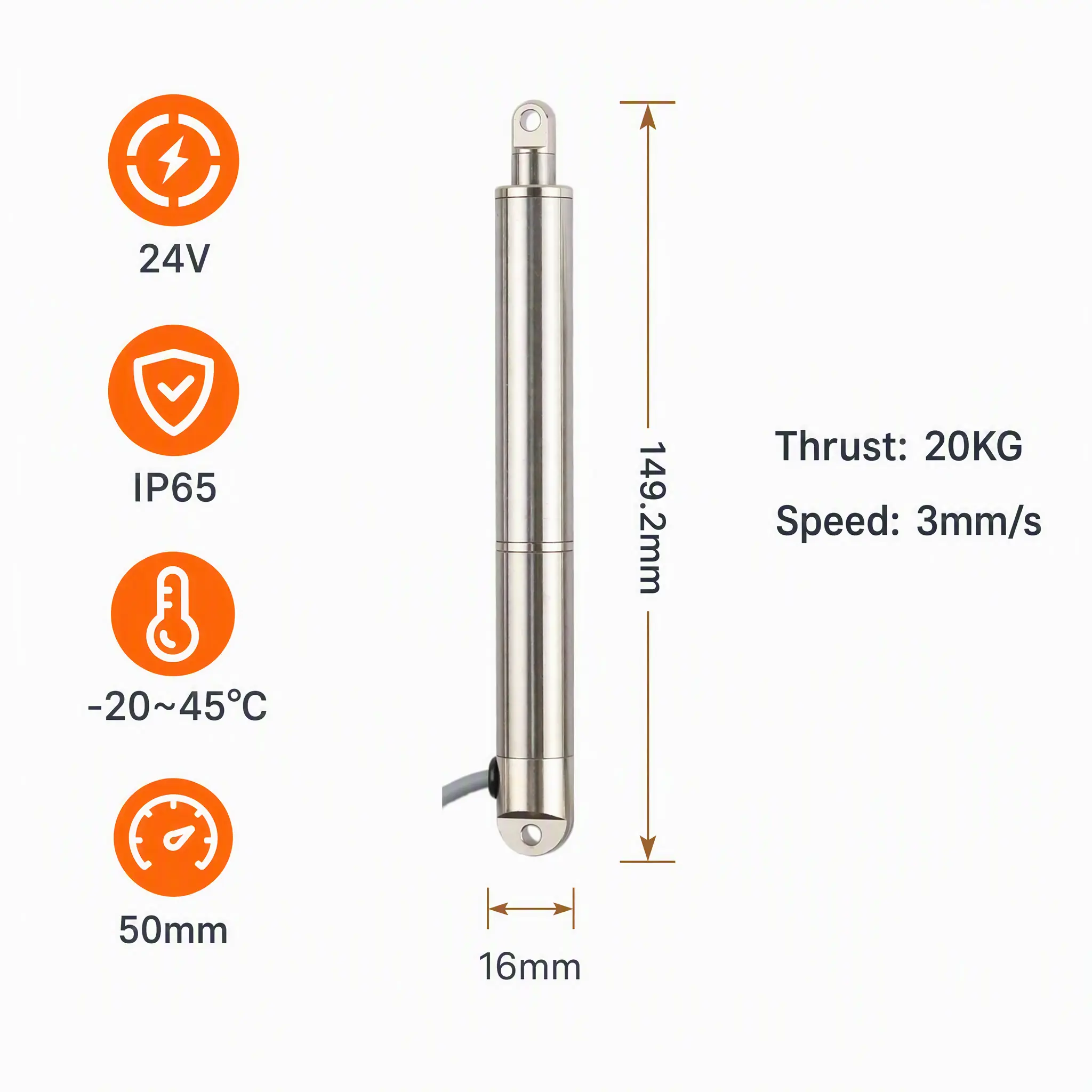

Micro Linear Actuator 50 mm Stroke
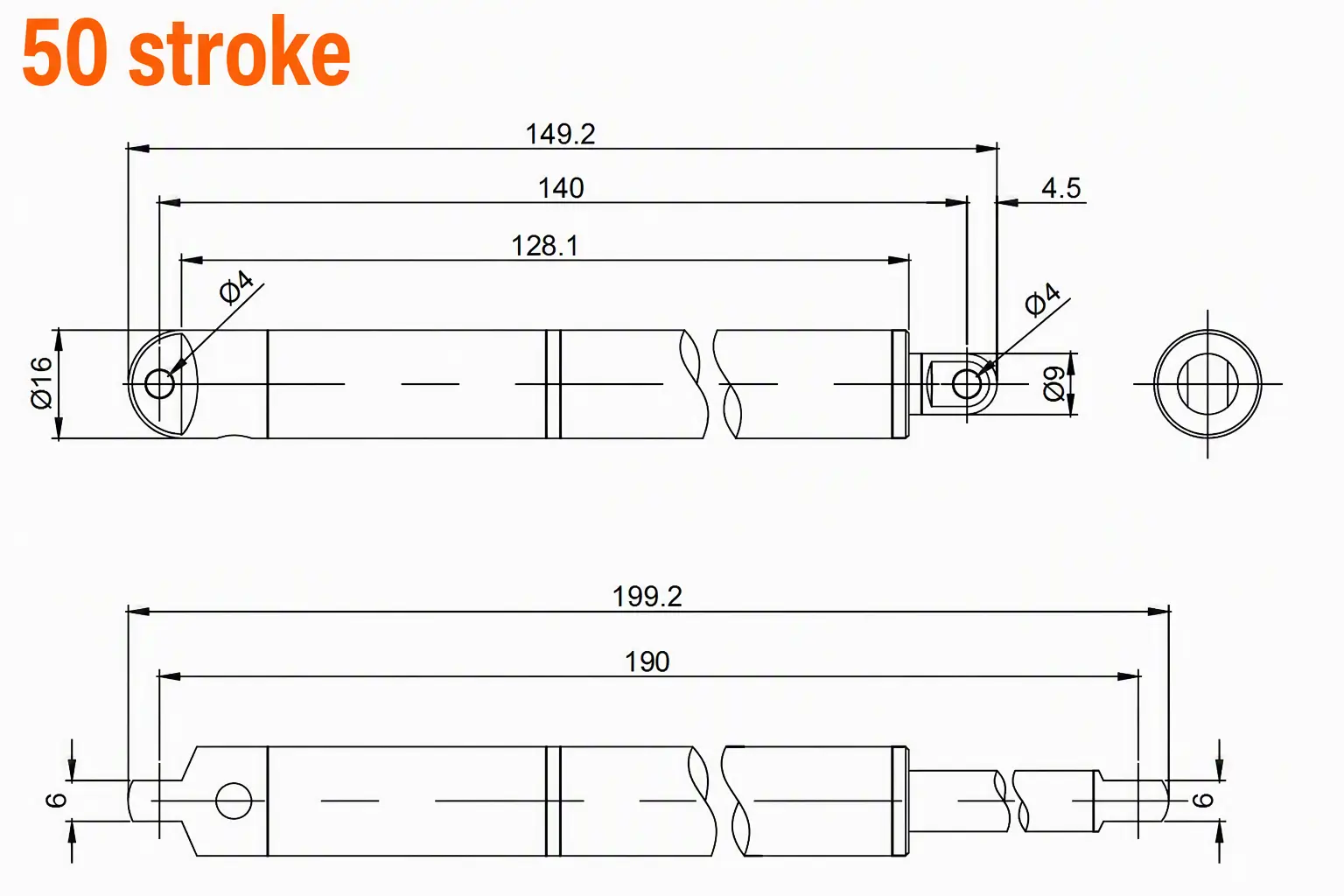
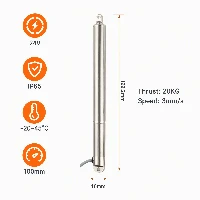
50mm Stroke High Precision Micro Linear Actuator Size Sheet, Industrial Automation Hardware Drawing
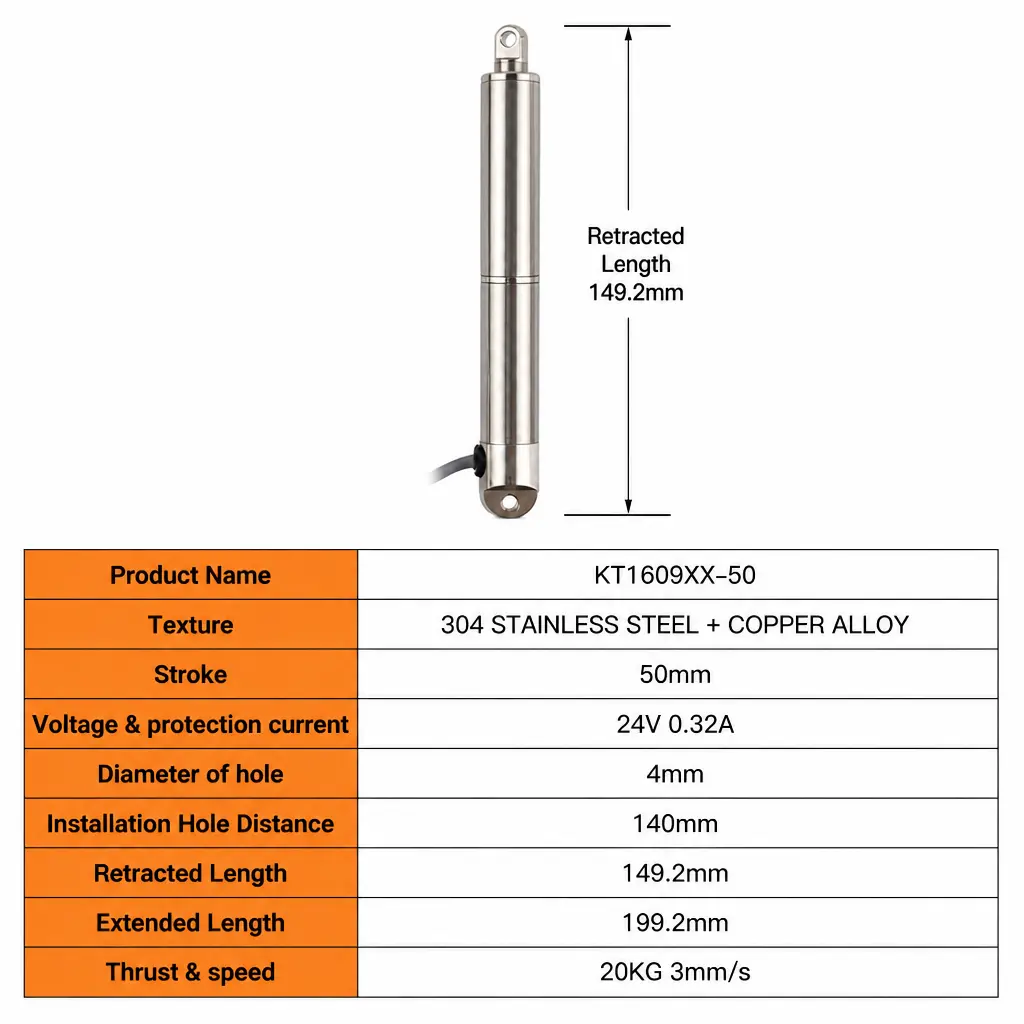
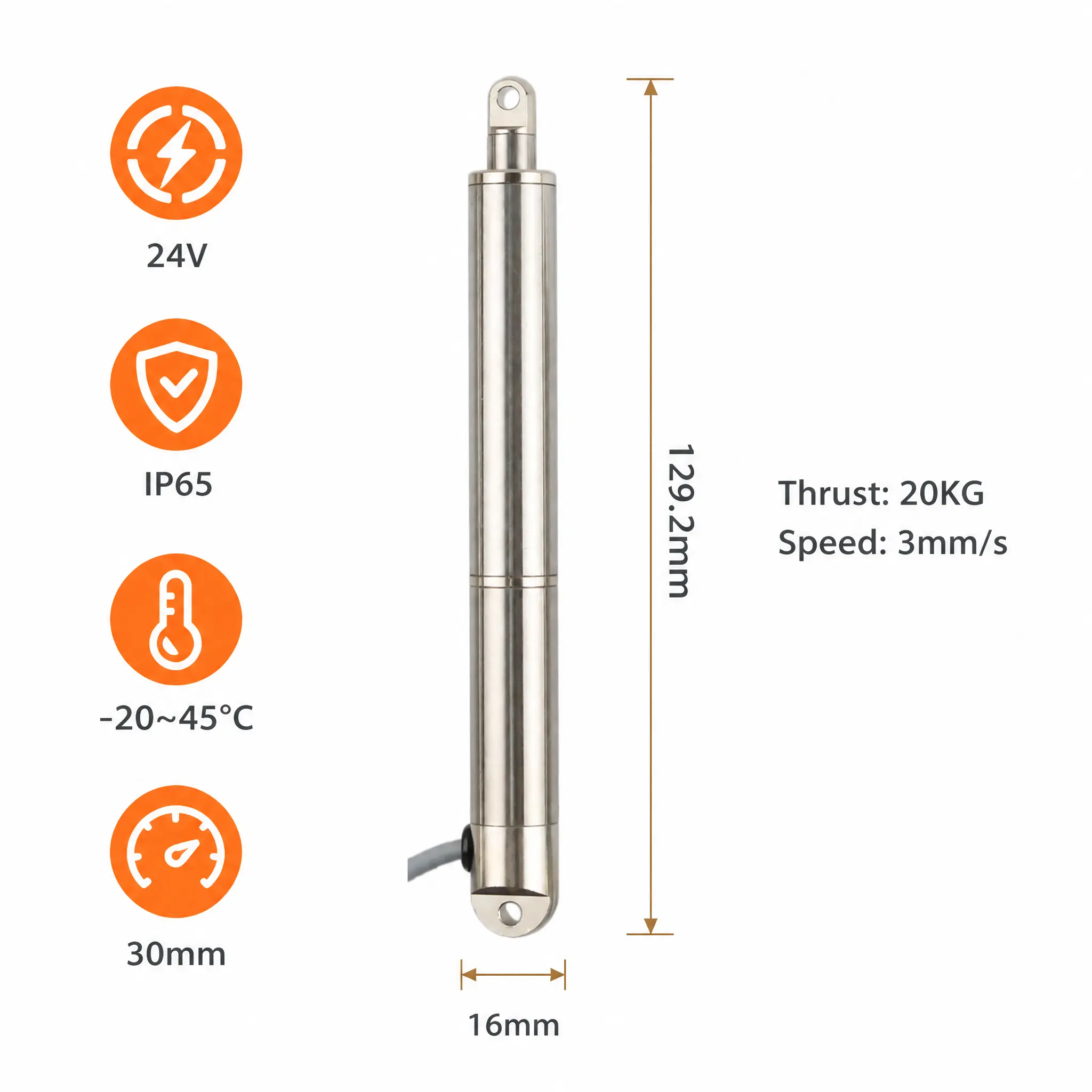
KT1609XX-50 Micro Linear Actuator 50mm Stroke 24V DC 149.2mm Retracted Length 304 Stainless Steel Electric Cylinder 20KG Thrust
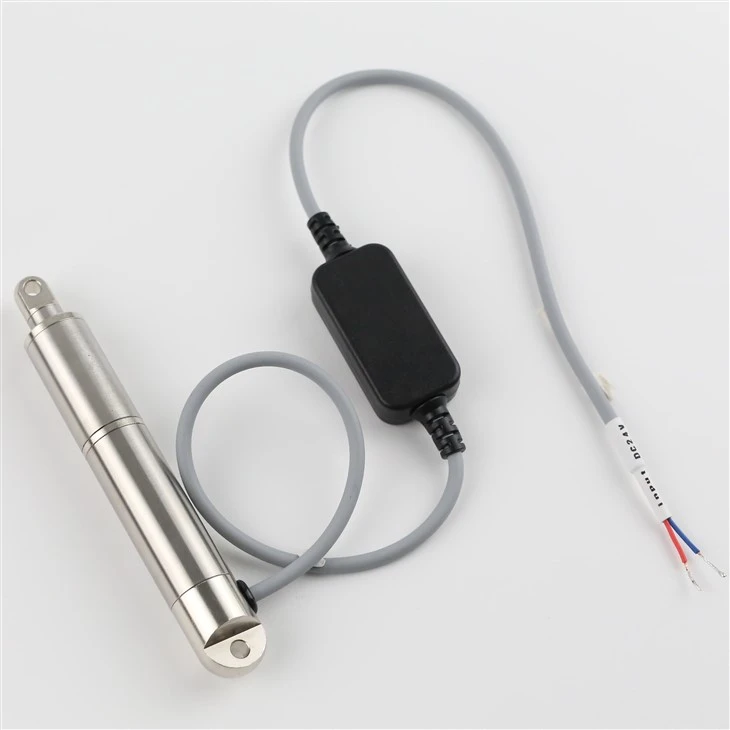
24V micro linear actuator with inline control box and exposed red and blue lead wires, clevis mounts
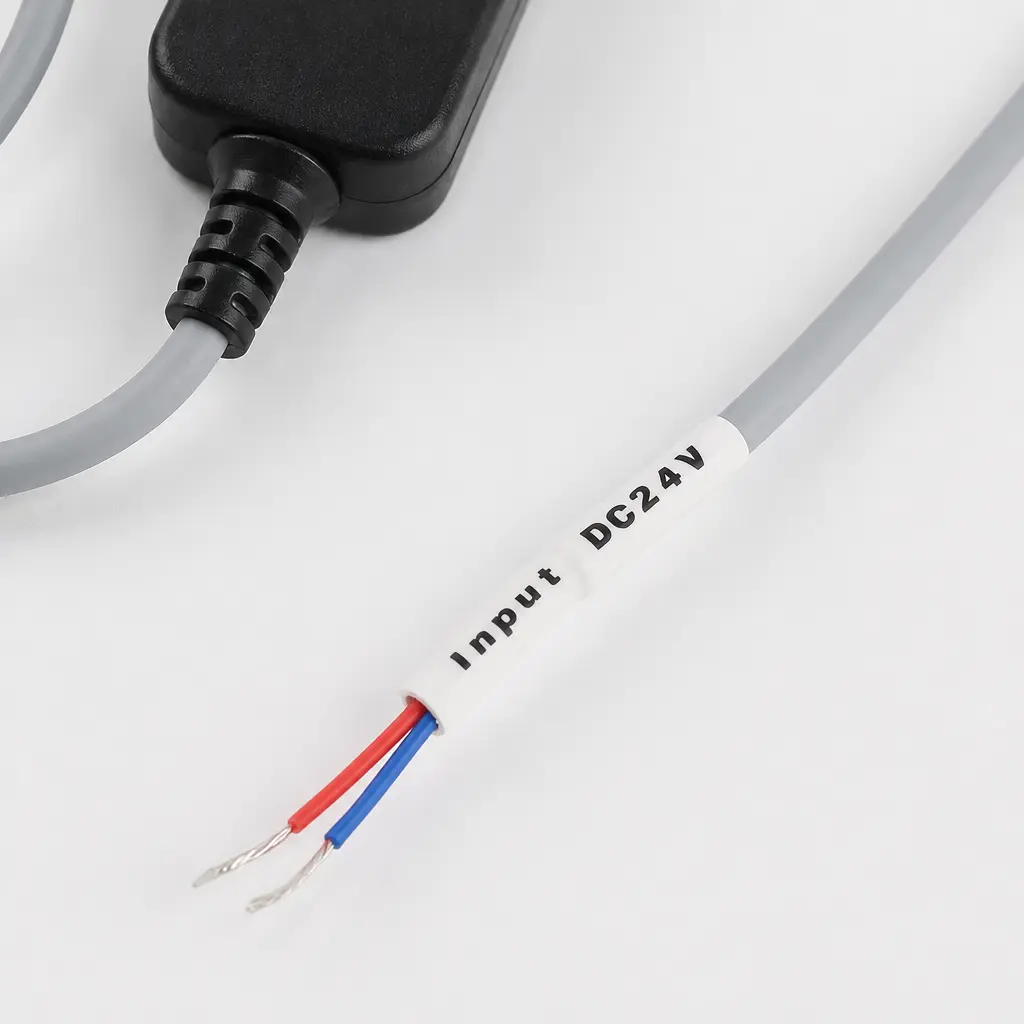
Detailed view of micro linear actuator wiring with 24V DC input label on white cable.
Micro Linear Actuator 50 mm Stroke
Products Description
The Micro Linear Actuator 50 mm Stroke fits the pump-bay side cover of a trailed or self-propelled sprayer. The cover hinges upward and seals on a bulb gasket; the machine it replaces holds the cover open with a gas strut and shut with a latch.
The 200 N does not carry the cover - the hinge does. It works against gasket rebound and the opening torque, and once the supply is removed the gear train holds the cover where it was left: no prop rod during service, and no standby current while the machine stands. Bounce and impact on a rough track belong to the cover stop and the hinge.
Fertiliser dust, spray residue and end-of-shift hosing are the conditions inside a pump bay, and the 304 body with IP65 sealing is specified for them. Two openings a day leaves a wide margin on the 10% duty cycle.
Technical Parameters
| Item | 50 mm variant |
|---|---|
| Series | KT1609XX, 24 V DC round-body platform |
| Stroke | 50 mm (also 10 / 20 / 30 / 100 mm) |
| Body outer diameter | Ø16 mm |
| Rod diameter | Ø9 mm |
| Supply voltage | DC 24 V |
| Push / pull force | 20 kg (200 N) each |
| Speed | 3 mm/s no-load, 2 mm/s full-load |
| Full-load travel over 50 mm | About 25 s |
| Self-locking capacity, power off | 300 N |
| Duty cycle | 10% |
| Current limit | 0.32 A |
| End-of-travel protection | Limit protection board outside the tube, auto-stop at both ends |
| Material | 304 stainless tube, copper alloy gear train |
| Ingress protection | IP65 |
| Operating temperature | −40 °C to +65 °C |
| Noise | Below 60 dB |
| Rated life | 8,000–12,000 cycles |
| Certification | CE, ISO9001 |
Device Fit
The pump-bay side cover is opened twice a day to check the pump, the filters and the lines, then pressed back onto its gasket before the machine moves. The opening is set by gasket compression, clearance past the frame lip and 2–3 mm of margin, which puts most pump-bay covers at 45–50 mm.
- Travel. At 30 mm the gasket is still loaded when the stroke ends; at 100 mm the cover meets the hood line and installed length grows by 50 mm.
- Force. A 10 kg cover with its centre of gravity 200 mm from the hinge, driven at a point 200 mm out, needs about 98 N at the start of the lift (moment divided by that distance) - half the 200 N rating.
- Mounting. A Ø16 mm tube clamps to a pump-bay post or a frame member; neither the cover nor the frame is machined, and a stroke change reuses the same clamp.
- Division of work. The hinge takes cover weight, wind load and road bounce; the rod delivers axial force along the line of travel, and side load goes to the guide.
Rod Attachment Point
The same 200 N lifts a different cover depending on where the rod attaches. Fix the attachment point first, then check the force.
- Free edge of the cover. Longest arm, lowest force demand, longest travel demand, highest demand on cover stiffness.
- Middle of the cover. A compromise between arm and travel, and where most 50 mm units are fitted.
- Close to the hinge. Shortest arm, force demand rises steeply, travel demand is smallest, and it is not the usual choice.
The closer the rod sits to the hinge, the lighter the cover that 200 N will lift; do not size the cover backwards from 200 N before the attachment point is fixed.
Alternatives Compared
| Point | Gas strut + latch | Small hydraulic cylinder | 50 mm micro linear actuator |
|---|---|---|---|
| What moves the cover | The operator, by hand | Pump supply | 24 V, on command |
| Position with power off | Against the strut or on the latch | Held by a valve, internal leakage over time | Gear train self-locks at 300 N, no leakage |
| Positions available | Two | Any | Any, held where power stops |
| Low temperature | Strut force falls with temperature | Oil viscosity rises | Rated from −40 °C |
| Gasket compression | By hand on the latch | By system pressure | 200 N, repeatable |
| Trapped hose or tool | Not detected | Relief valve opens | Cut at 0.32 A |
| Installation | Two ball-joint mounts | Pump, hoses, valve block | One clamp point |
| Wearing parts | Strut, latch spring | Oil, seals, bleeding | Rod seal, clamp |
A strut and a latch cost least, but someone has to work them every time; a small cylinder has force to spare and pays for it with a pump and hoses. The actuator is chosen for two things: the cover moves on command, and it stays put when the power is off.
Model Selection
| Opening to be cleared | 30 mm | 50 mm | 100 mm |
|---|---|---|---|
| Implement side cover (45–50 mm) | △ | ✓ | △ |
| Service opening you reach a hand through | △ | ✓ | ✓ |
| Cover that must swing past a neighbouring panel | ✗ | △ | ✓ |
| Pin or bolt entering a bore | ✓ | ✗ | ✗ |
✓ direct fit △ check the margin ✗ insufficient or over-long
Size the opening from gasket compression plus clearance, not from the space left in the frame; extra stroke only adds installed length. Shared data across the five strokes is on the 24V tubular linear actuator series page.
Factory and Certification
Units are produced under ISO9001 and every one is loaded to its rating before it is boxed, not sampled; the rigs used for load and life testing are listed under test equipment. CE documents and the quality certificate are held on the certification page, and the plant with warranty terms is described under about us and why us. Warranty is 6 months, limited to manufacturing and material defects; other diameters and force classes are on the full actuator range.
Related Pages
- 10 mm micro linear actuator - shortest travel in the same tube
- 20 mm short stroke linear actuator - battery cabinet latch pins
- 30 mm miniature linear actuator - outdoor cabinet entry covers
- 24V tubular linear actuator series - shared data across five strokes
- Applications - selection by machine type
- Contact us - drawings, samples and lead time
frequently answer question
Q: Will spray residue and fertiliser dust wear the rod?
A: It collects at the rod exit, and the rod seal is the wear part on this unit: grit carried along the rod does more damage per stroke than normal travel. Aim the washdown at the body rather than the rod exit, wipe the rod before it retracts, and check the seal every three months in a dusty pump bay.
Q: A 12 kg cover - is 200 N enough?
A: Work from the moment. At 12 kg with the centre of gravity 200 mm from the hinge, the opening moment is about 23.5 N·m; a rod attached 250 mm out needs about 94 N, which leaves margin on 200 N. At 150 mm out it needs about 157 N and the margin falls to 43 N. Gasket rebound and a new, over-compressed seal are additional.
Q: If the cover freezes shut, does the motor burn out?
A: No. Current rises and the 0.32 A cut-off stops the motor before the winding heats. The unit is rated to −40 °C, and the first stroke in cold weather is slower than the warm figure. Free the cover first rather than driving against ice.
Q: Can one large cover take two units?
A: Yes, and the force adds. Each unit stops itself at both ends, but mid-travel positions are not synchronised - the error depends on cover stiffness. Where a mid position has to repeat, use one unit with a guide instead of two levelling each other.
Q: Is there a 45 mm or 60 mm version?
A: The series has five strokes: 10 / 20 / 30 / 50 / 100 mm. When the opening falls between two, take the longer one and let the cover swing a little further; do not block the rod to absorb the excess, because every arrival would then end on the 0.32 A cut-off and the protection becomes the end stop. Nor should the clamp be packed up with spacers, which lengthens the unsupported rod and puts side load on the front bearing.
Q: What maintenance does it need once fitted?
A: Three things: wipe the rod, re-tighten the clamp, check gasket compression. A loose clamp lets the body rotate and the cover run off line; a gasket that is not compressed enough rattles and takes water. At a 10% duty cycle the cycle rate needs no attention - continuous cycling does.
Hot Tags: micro linear actuator 50 mm stroke, China micro linear actuator 50 mm stroke manufacturers, suppliers, factory, 2 inch linear actuator, 20 linear actuator, fast actuator, iot actuators, linear actuator 2000n, linear rail actuator
You Might Also Like



Send Inquiry