

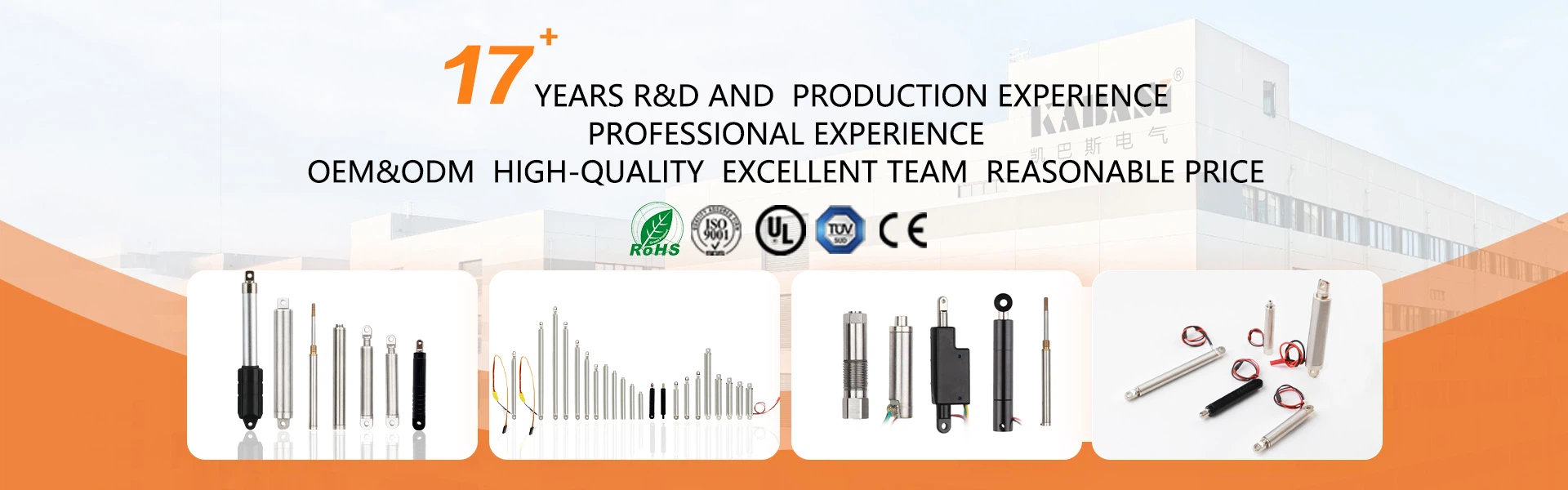

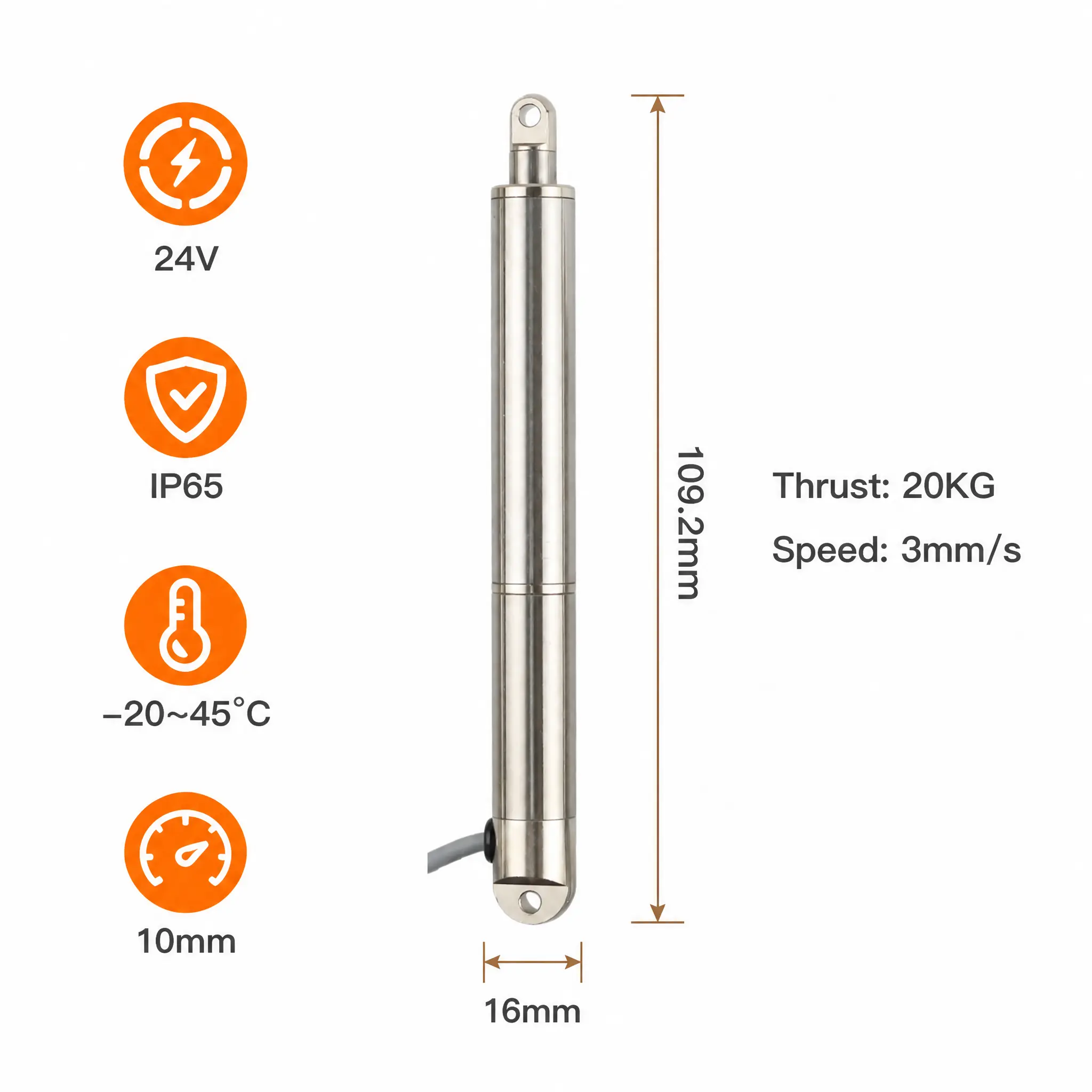

10mm Micro Linear Actuator
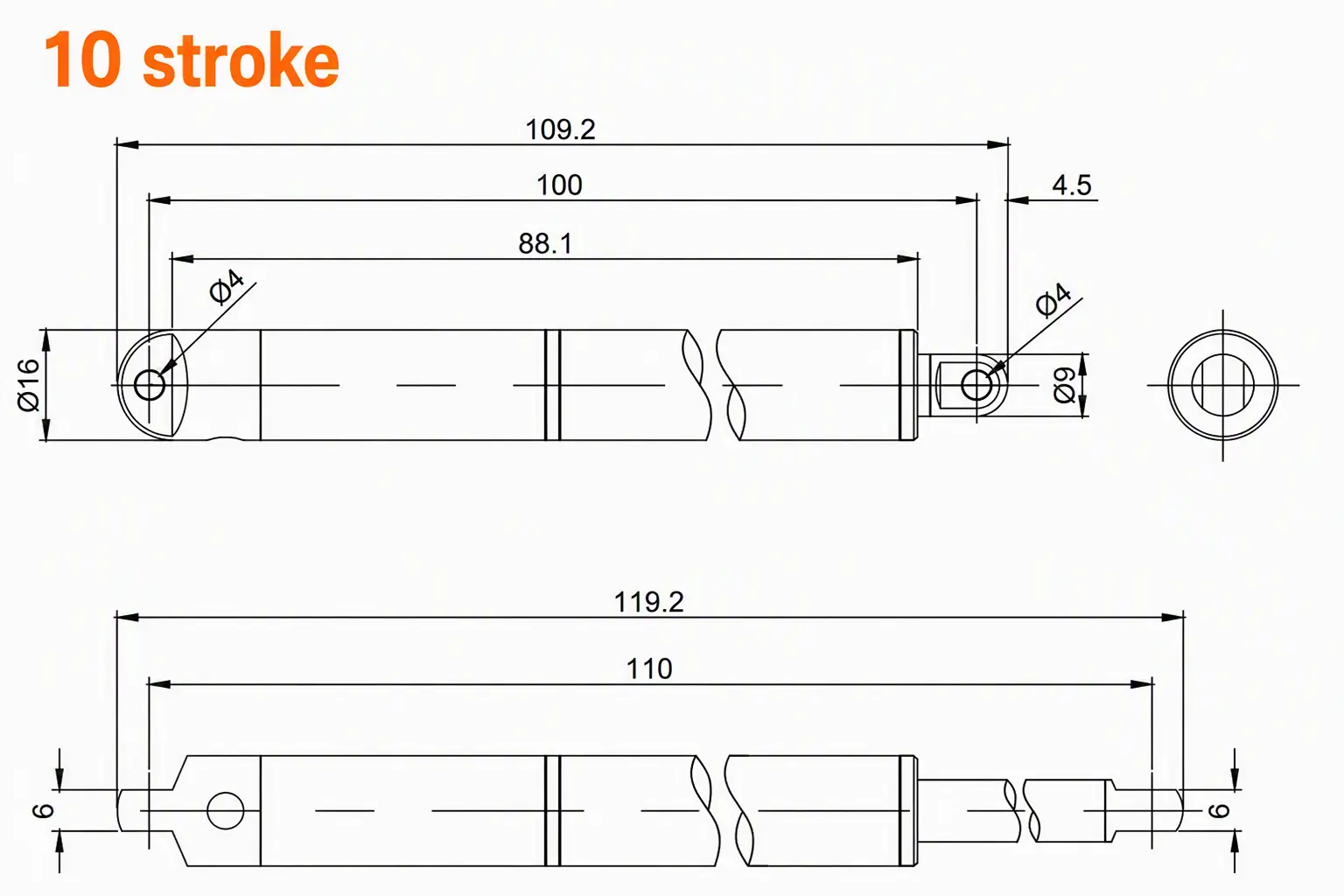
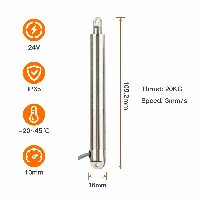
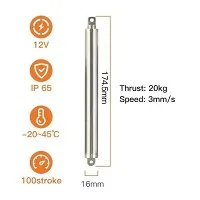
10mm Stroke Micro Linear Actuator Technical Drawing, 12V 24V DC Mini Electric Actuator Dimensions
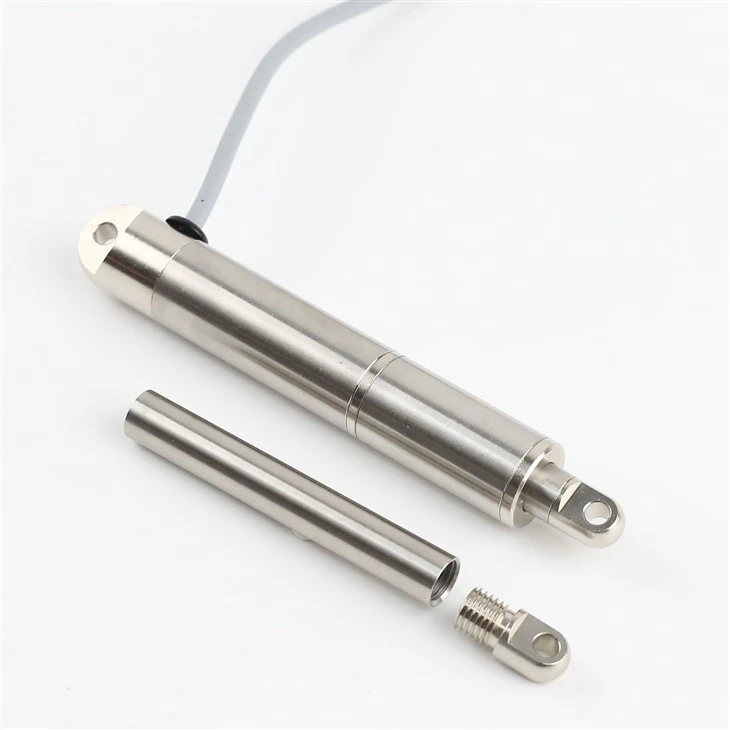
Disassembled micro linear actuator with threaded stainless steel end cap and hollow tube construction
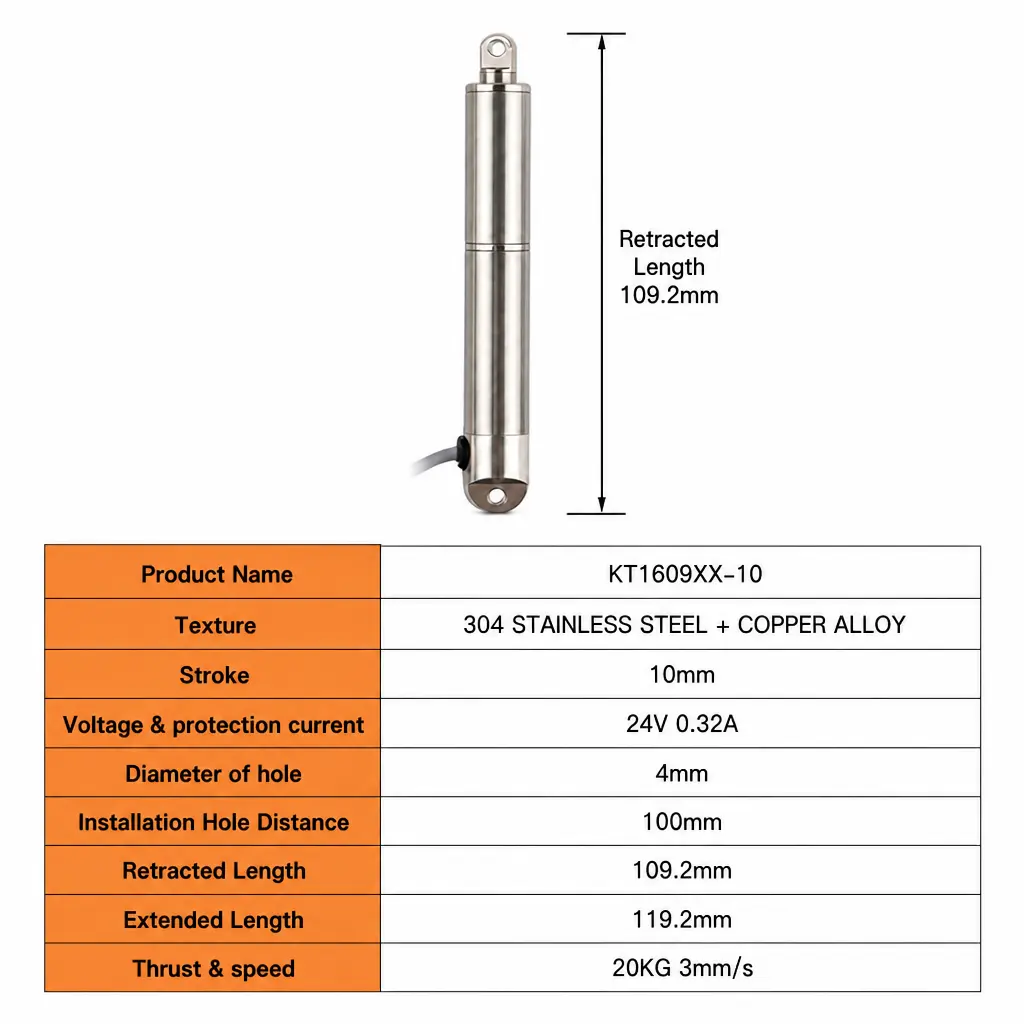
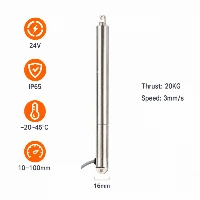
KT1609XX-10 Micro Linear Actuator 10mm Stroke 24V DC 109.2mm Retracted Length 304 Stainless Steel Electric Cylinder 20KG Thrust
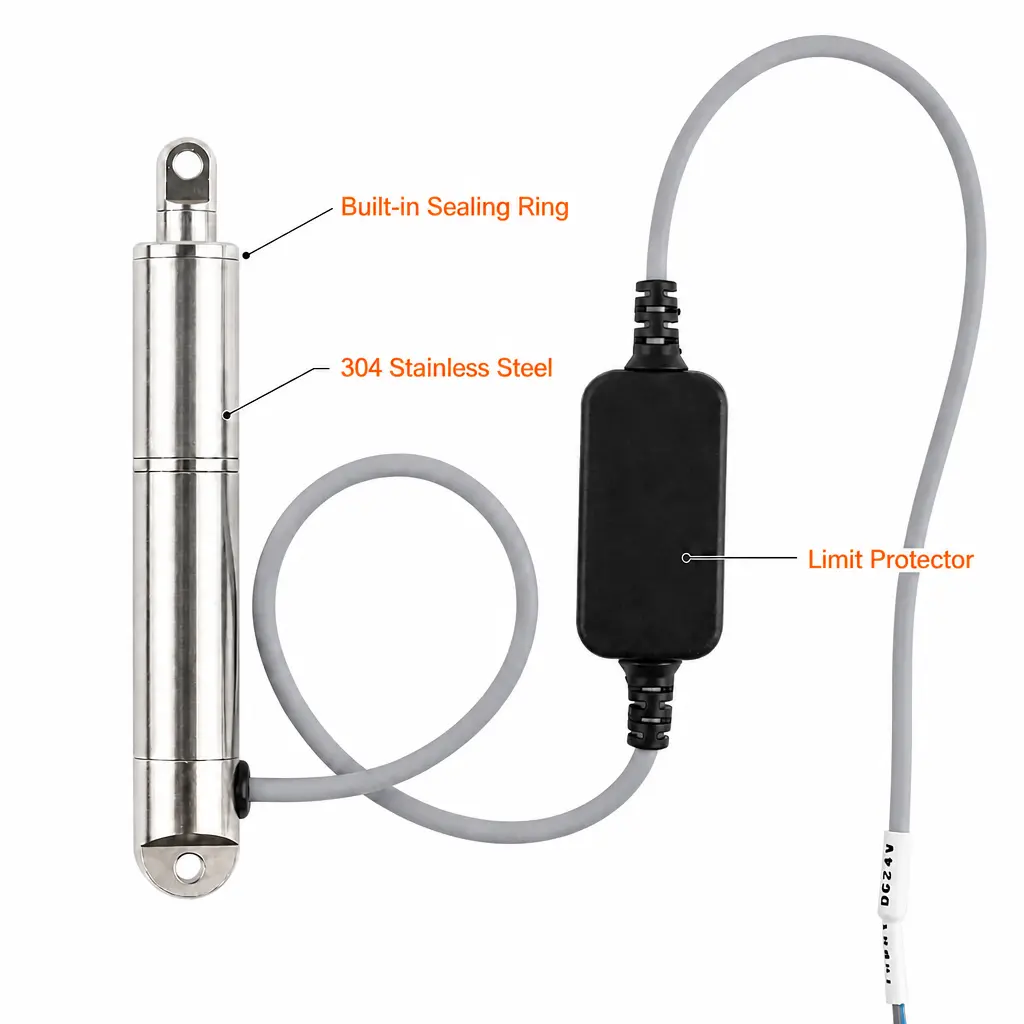
Micro linear actuator technical details 304 stainless steel body, built-in sealing ring, and limit protector. Professional product photo with orange annotations on a white backgr
10mm Micro Linear Actuator
Products Description
The 10 mm micro linear actuator is for motions that cover 10 mm and no more: a lane stop, a gate flap, a slide gate, a latch pin. Two positions, nothing in between. Stroke beyond that point adds installed length and cost without adding function.
Three figures decide whether it fits. 200 N covers the gate weight and return spring - measure the resistance first, then compare. 300 N of static self-locking decides whether the gate is still in position after a power cut, an e-stop or a shift change; that hold comes from the gear train, not a brake, and draws no current. The 0.32 A cut-off protects the motor winding when the mechanism jams. End of travel is set by a protection board outside the tube, auto-stopping at both ends, so no external limit switch is needed in the mechanism.
A clean rod and an aligned load decide service life more than wall thickness does.
Technical Parameters
| Item | Specification |
|---|---|
| Series | KT1609XX tubular linear actuator |
| Stroke | 10 mm (also 20 / 30 / 50 / 100 mm) |
| Body outer diameter | 16 mm |
| Rod diameter | 9 mm |
| Input voltage | DC 24 V |
| Rated load (push / pull) | 20 kg (200 N) |
| Static self-locking force | 300 N |
| No-load speed | 3 mm/s |
| End-of-travel protection | External limit protection board, auto-stop at both ends |
| Overcurrent threshold | 0.32 A |
| Housing material | 304 stainless steel |
| Ingress protection | IP65 |
| Operating temperature | −40 °C to +65 °C |
| Noise level | Below 60 dB |
| Rated life | 8,000–12,000 cycles |
| Certification | CE, ISO9001 |
Device Fit: Lane Stop on a Parcel Sorter
A lane stop on a parcel sorter does one thing: the flap moves 10 mm sideways from the release position to the stop position, holds the parcel out of the lane, then returns. Two positions, many cycles a shift.
- Travel. The flap moves 10 mm and stops nowhere in between. A longer stroke stretches installed length, and the inside of a sorter frame has no room for that.
- Force. Flap weight plus return spring is the whole resistance here, and 200 N covers it. When a parcel leans on the flap, 300 N of static self-locking holds it - no drift back to release after a power cut, no current spent holding.
- Speed. 10 mm at 3 mm/s takes about 3.3 seconds. The flap meets the parcel slowly, so there is no impact and no rebound, and noise stays under 60 dB.
- Mounting. A 16 mm round body clamps onto a frame tube anywhere along its length; no pocket to machine, and a stroke change does not move the clamp.
- Split of responsibility.
Parcel impact, flap weight and hinge play belong to the hinge and the mechanical stop. The rod delivers axial force only and has to sit on the flap's line of travel; off that line, the rod seal and front bearing fail first.
A lane stop is a high-cycle position, and 8,000–12,000 cycles is a rated-condition figure. Faster indexing and heavier dust move it down.
Where the Same 10 mm Sits in Other Machines
The same motion repeats across dry processing equipment, and the travel lands near 10 mm because the mechanism only needs two positions:
| Machine | Motion | Why 10 mm |
|---|---|---|
| Packaging machine gate | Holds the next item back, releases one | Flap travel matches the lane mouth, not the item width |
| Cartoner pusher gate | Closes the lane while the next batch indexes | A lane mouth is open or closed; mid-travel has no use |
| Labeller hold-down block | Holds the part before the label is applied | Small clamping travel; more would mark the part |
| Print finishing back stop | Blocks the stack for sheet separation | Stop travel is fixed and unrelated to stack height |
| Test fixture locating stop | Blocks the datum edge once the part is in place | Location comes from the datum face, not from stroke adjustment |
What these positions share: the mechanism's own rail or hinge guides the motion, the rod only supplies the last 10 mm, and position is held by self-locking rather than by powered hold.
Comparison Points
| Point | This unit | What it changes on the machine |
|---|---|---|
| Who ends the stroke | Limit board outside the tube, auto-stop at both ends | No external limit switch or stop block in the mechanism |
| Position after power off | 300 N static self-locking, no brake, no standby current | Flap stays put through e-stop, power cut or shift change |
| Behaviour on a jam | Power cut at 0.32 A | The motor winding is protected before anything mechanical fails |
| Housing | One-piece 304 stainless tube, no painted edge | Same cleaning agents as the frame, no bare metal after a knock |
| Body shape | 16 mm round section | Clamp, U-bolt or through-bore - no frame rework |
Model Selection
Set the motion first, then the stroke. Five strokes share the body diameter; match the one whose travel clears the movement.
| Mechanism motion | 10 mm | 20 mm | 30 mm |
|---|---|---|---|
| Lane stop, gate flap (two positions only) | ✓ | ✓ | △ |
| Latch pin, lock bolt (insertion depth needed) | △ | ✓ | ✓ |
| Cabinet port cover, inspection window (panel thickness to clear) | ✗ | ✓ | ✓ |
| Service door, cover you reach through | ✗ | △ | ✓ |
✓ direct fit △ check the margin ✗ insufficient travel
Factory and Certification
Production runs under ISO9001, and testing is full-load on every unit rather than a sample - nothing ships without being loaded to its rating. CE documents and the quality certificate are on the certification page; the equipment used for load and life testing is on the test equipment page, and the plant is described under about us. A 6-month limited warranty covers manufacturing and material defects.
Other strokes in the same body are listed on the tubular linear actuator series page. For other diameters and force classes see the full actuator range; for selection by machine type see applications.
FAQ
Q: If 10 mm turns out to be too short, can I move to 20 mm?
A: Yes. Body diameter, clamp and mounting method stay the same; installed length and part number change, and the clamp on the frame does not move. Before switching, confirm the mechanism still has a few millimetres of mechanical margin past full extension.
Q: What happens if a parcel hits the flap hard?
A: 300 N is a static holding force, not impact resistance. Impact belongs to the hinge and the mechanical stop - that is the mechanism's job. The actuator positions the flap and holds it with power off. If the impact path runs through the rod, the rod seal and front bearing fail first.
Q: Will the rod seize in a dusty lane?
A: IP65 covers dust and low-pressure jets, and the rod seal is the weak point in that protection. Dust dragged back and forth across the seal lip wears it faster. Mount the unit with the cable exit at the low point, wipe the rod on a service interval, and add a simple dust plate on the flap side.
Q: Can the 10 mm and 20 mm versions share one clamp?
A: Yes. Both use the 16 mm body and the same clamping method; the clamp only has to grip the tube without deforming it. Sharing a clamp assumes the frame leaves room for the longer installed length.
Q: Is 3 mm/s too slow?
A: A 10 mm stroke takes about 3.3 seconds. For a two-position lane stop, that slowness buys a soft landing - no rebound, low noise, no parcel shift. If the index has to close inside 5 seconds, speed really is the limit, and the fix is a shorter motion or a faster platform, not more force.
Q: Where does the flap stop when power is cut?
A: Exactly where it was, held by the 300 N gear self-locking. There is no brake action and no spring-back. Returning it to the start position needs power and a reverse command.
Hot Tags: 10mm micro linear actuator, China 10mm micro linear actuator manufacturers, suppliers, factory, circular actuator, dual action pneumatic cylinder, linear screw actuator, remote control linear actuator, rodless air cylinder, telescoping linear actuator
Previous
No InformationYou Might Also Like



Send Inquiry