Hey there! As a supplier of fast actuators linear, I've had my fair share of customers asking about the difference between fast and slow linear actuators. So, I thought I'd put together this blog to clear things up.
First off, let's talk about what a linear actuator is. In simple terms, a linear actuator is a device that converts rotational motion into linear motion. It's used in a wide range of applications, from industrial machinery to home automation. Think of it as a mechanical muscle that can push, pull, lift, or lower objects with precision.
Now, onto the main topic: the difference between fast and slow linear actuators. The most obvious difference is, of course, the speed at which they operate. Fast linear actuators can move at a high velocity, making them ideal for applications where quick response times are crucial. On the other hand, slow linear actuators move at a more leisurely pace, which is great for applications that require precise control and accuracy.
Speed and Response Time
Fast linear actuators are designed to deliver rapid movement. They can achieve high speeds, sometimes reaching several inches per second. This makes them perfect for applications like robotics, where quick movements are needed to perform tasks efficiently. For example, in a pick-and-place robot, a fast linear actuator can quickly move the robotic arm to pick up an object and place it in the desired location.
Slow linear actuators, on the other hand, are all about precision. They move at a slower speed, typically less than an inch per second. This slow movement allows for better control over the position of the actuator. In applications like medical equipment, where precise positioning is critical, slow linear actuators are the go-to choice. For instance, in a CT scanner, a slow linear actuator can precisely move the patient table to the correct position for imaging.
Force and Load Capacity
Another important difference between fast and slow linear actuators is their force and load capacity. Fast linear actuators often sacrifice some force in order to achieve high speeds. They are generally designed to handle lighter loads. This is because moving at high speeds requires more power, and if the load is too heavy, the actuator may not be able to maintain its speed or may even overheat.
Slow linear actuators, on the other hand, can typically handle heavier loads. Since they move at a slower pace, they can apply more force without overloading the motor. This makes them suitable for applications that require lifting or moving heavy objects, such as in industrial machinery or automotive manufacturing.
Accuracy and Repeatability
Accuracy and repeatability are also key factors when comparing fast and slow linear actuators. Fast linear actuators may not be as accurate as slow ones. The high speed of movement can make it difficult to stop the actuator precisely at the desired position. However, advancements in technology have improved the accuracy of fast linear actuators, and many modern models can achieve a high level of precision.
Slow linear actuators, on the other hand, are known for their excellent accuracy and repeatability. The slow movement allows for fine-tuning of the position, ensuring that the actuator can repeatedly reach the same position with a high degree of accuracy. This is essential in applications like 3D printing, where precise movements are required to create detailed objects.
Applications
The choice between fast and slow linear actuators depends largely on the specific application. Here are some common applications for each type:
Fast Linear Actuators
- Robotics: As mentioned earlier, fast linear actuators are widely used in robotics for quick movements. They can be found in robotic arms, grippers, and other robotic components.
- Automated Manufacturing: In automated manufacturing processes, fast linear actuators are used to move parts quickly along the production line. This helps to increase productivity and reduce cycle times.
- Aerospace: In the aerospace industry, fast linear actuators are used in applications such as aircraft landing gear and flight control surfaces. Their high speed and quick response times are essential for safe and efficient operation.
Slow Linear Actuators
- Medical Equipment: Slow linear actuators are commonly used in medical equipment, such as surgical robots, patient tables, and imaging devices. Their precision and accuracy are crucial for patient safety and effective treatment.
- Laboratory Equipment: In laboratories, slow linear actuators are used to move samples and instruments with precision. This is important for accurate testing and analysis.
- Optics and Photography: Slow linear actuators are used in camera lens focusing systems and other optical equipment. Their ability to make small, precise movements is essential for achieving sharp images.
Our Fast Actuators Linear
As a supplier of fast actuators linear, we offer a wide range of products to meet different customer needs. Our fast linear actuators are designed with high-quality materials and advanced technology to ensure reliable performance. They are available in various sizes and configurations, and can be customized to fit specific applications.
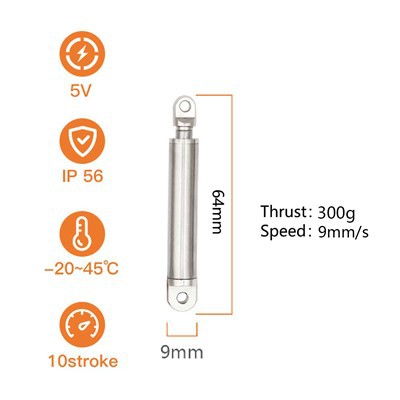
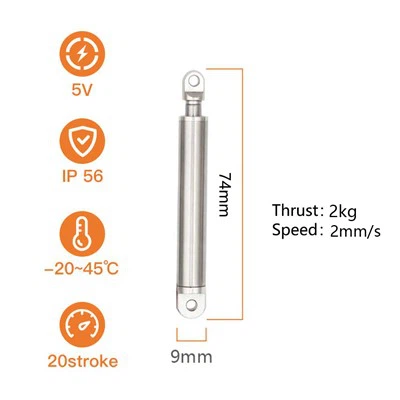
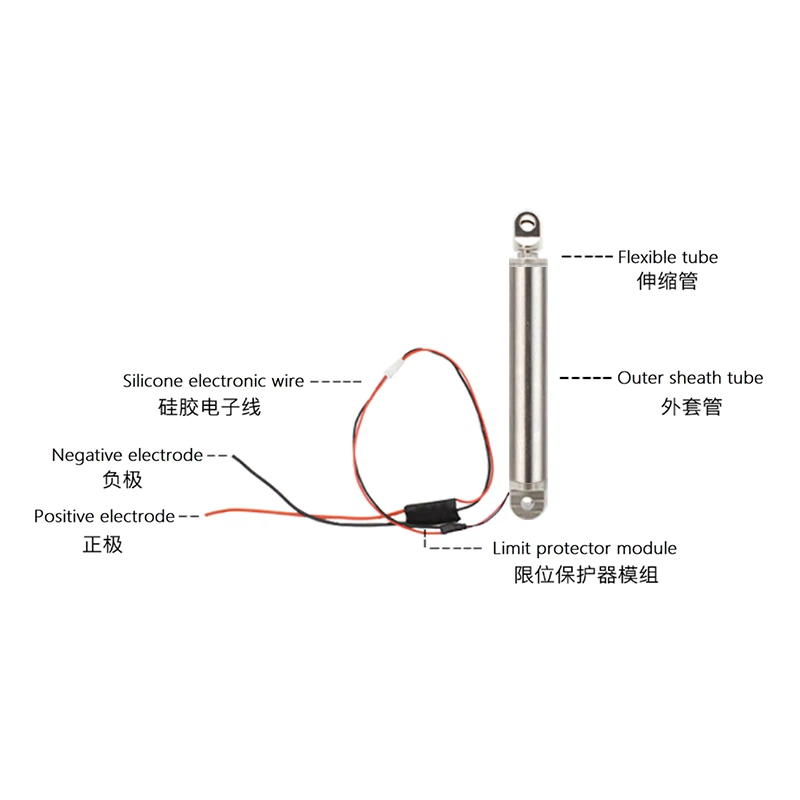
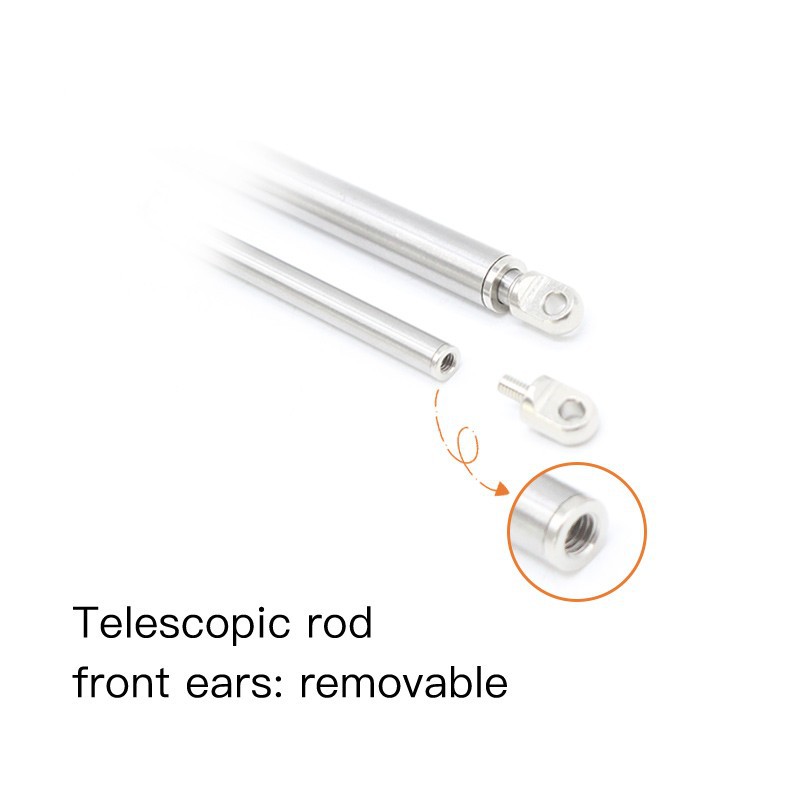
Some of our popular products include the Tiny Linear Actuator, which is perfect for applications where space is limited. It offers high speed and precise control in a compact package. We also have the Stainless Steel Linear Actuator, which is resistant to corrosion and suitable for harsh environments. And our Dc Linear Actuator is powered by DC voltage, making it easy to integrate into different systems.
Conclusion
In conclusion, the difference between fast and slow linear actuators lies in their speed, force, accuracy, and applications. Fast linear actuators are great for applications that require quick movements, while slow linear actuators are better suited for applications that demand precision and heavy loads.
If you're in the market for a linear actuator, it's important to consider your specific requirements and choose the right type for your application. And if you're looking for high-quality fast actuators linear, we're here to help. Whether you need a standard product or a customized solution, we can provide you with the best options.
So, if you're interested in learning more about our fast actuators linear or have any questions, don't hesitate to get in touch. We'd love to have a chat with you and discuss how we can meet your needs. Let's start a conversation and find the perfect linear actuator for your project!
References
- "Linear Actuators: A Comprehensive Guide" by John Doe
- "The Basics of Linear Motion" by Jane Smith
- Various industry reports and technical documents on linear actuators