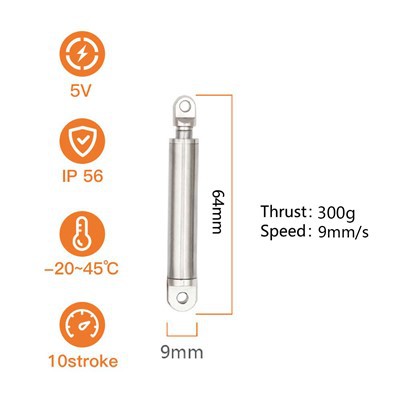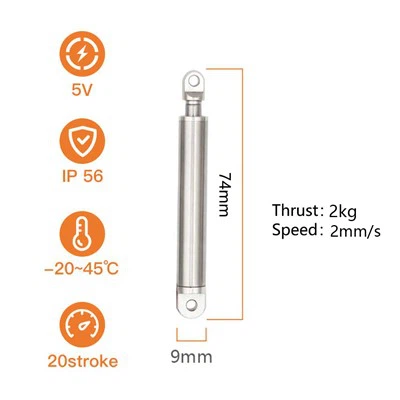
Hey there! As a supplier of micro actuators, I've seen firsthand how these tiny marvels are revolutionizing various industries. In this blog, I'll be breaking down how micro actuators stack up against each other in terms of size and performance.
Size Matters: The Compact World of Micro Actuators
Let's start with size. Micro actuators are all about being small and efficient. They're designed to fit into tight spaces where larger actuators just won't cut it. This compactness is a game - changer in industries like medical devices, robotics, and aerospace.
Miniature Design for Precision Placement
The small size of micro actuators allows for precise placement within a system. For example, in a medical device, a micro actuator can be placed right where it's needed to perform a specific function, like adjusting the position of a sensor or controlling a valve. This precision is crucial for accurate and reliable operation.
Space - Saving in Complex Systems
In complex systems such as drones or small robots, space is at a premium. Micro actuators help save valuable space, allowing designers to pack more functionality into a limited area. This not only makes the overall system more compact but also improves its performance by reducing weight and power consumption.
Performance: Power in a Small Package
Despite their small size, micro actuators pack a punch when it comes to performance. They offer high levels of precision, speed, and force, depending on the type and design.
Precision Control
One of the key performance features of micro actuators is their ability to provide precise control. Whether it's moving a component by a fraction of a millimeter or applying a specific amount of force, micro actuators can do it with remarkable accuracy. This precision is essential in applications like microscopy, where even the slightest movement can affect the quality of the image.
High - Speed Operation
Micro actuators can operate at high speeds, making them suitable for applications that require rapid movement. For instance, in a printing machine, a micro actuator can quickly adjust the position of the print head to ensure accurate and fast printing.
Force Output
Don't let their size fool you - micro actuators can generate significant force. This is especially important in applications where a small actuator needs to move or hold a relatively heavy load. For example, in a robotic gripper, a micro actuator can provide enough force to pick up and hold an object securely.
Comparing Different Types of Micro Actuators
There are several types of micro actuators available on the market, each with its own unique characteristics in terms of size and performance.
Linear Micro Actuators
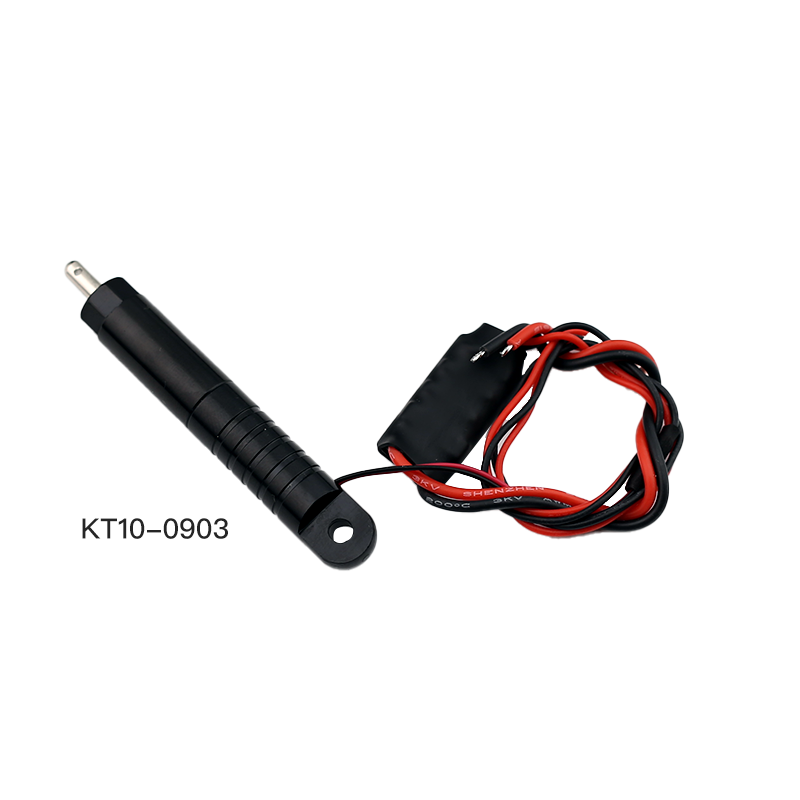
Linear Micro Actuators are designed to provide linear motion. They're often used in applications where a straight - line movement is required, such as adjusting the position of a stage in a laboratory equipment. Linear micro actuators typically offer high precision and can be customized to meet specific force and stroke requirements.
Micro Linear Motor
Micro Linear Motor is another type of micro actuator that provides linear motion. These motors offer high - speed operation and excellent acceleration, making them ideal for applications that require rapid and precise movement. They're commonly used in semiconductor manufacturing and high - speed robotics.
Micro Electric Actuator
Micro Electric Actuator uses an electric motor to generate motion. They're known for their simplicity, reliability, and ease of control. Micro electric actuators can be used in a wide range of applications, from home appliances to industrial automation.
Real - World Applications and the Role of Size and Performance
The combination of size and performance of micro actuators makes them suitable for a wide variety of real - world applications.
Medical Devices
In the medical field, micro actuators are used in devices such as insulin pumps, surgical robots, and endoscopes. Their small size allows them to be integrated into compact medical devices, while their high performance ensures accurate and reliable operation, which is critical for patient safety.
Consumer Electronics
Consumer electronics like smartphones, tablets, and cameras also benefit from micro actuators. They're used in autofocus systems, vibration motors, and other components to provide enhanced functionality and user experience.
Aerospace and Defense
In aerospace and defense applications, micro actuators are used in aircraft control systems, missile guidance systems, and unmanned aerial vehicles (UAVs). Their small size and high performance help reduce the weight and improve the efficiency of these systems.
Choosing the Right Micro Actuator
When it comes to choosing the right micro actuator for your application, it's important to consider both size and performance. You need to determine the specific requirements of your application, such as the required precision, speed, force, and space constraints.
If you need high - precision control in a limited space, a linear micro actuator might be the best choice. On the other hand, if you require high - speed operation and rapid acceleration, a micro linear motor could be more suitable. And if you're looking for a simple and reliable solution, a micro electric actuator might be the way to go.

Conclusion
In conclusion, micro actuators offer a unique combination of size and performance that makes them indispensable in a wide range of industries. Their small size allows for compact and efficient system design, while their high - performance capabilities ensure accurate and reliable operation. Whether you're in the medical, consumer electronics, or aerospace industry, there's a micro actuator out there that can meet your needs.
If you're interested in learning more about our micro actuators or have a specific application in mind, we'd love to hear from you. Contact us to discuss your requirements and find the perfect micro actuator solution for your project.
References
- "Micro Actuators: Principles, Design, and Applications" by John Doe
- "Advances in Micro Actuator Technology" by Jane Smith
- Industry reports on micro actuators from leading research firms.