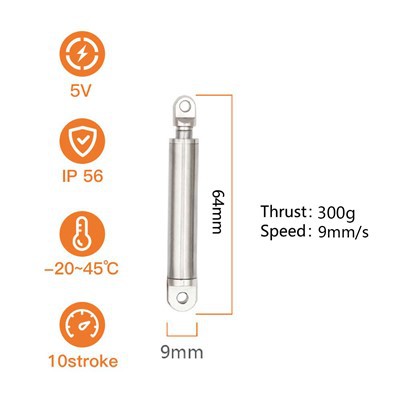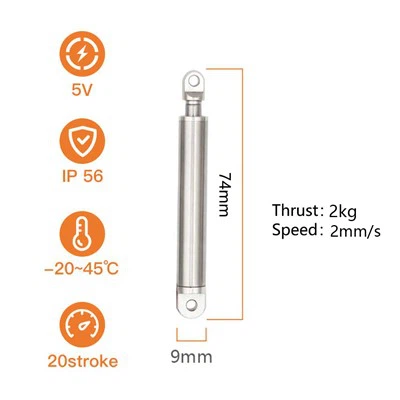
As a supplier of 6V electric cylinders, I've encountered a wide range of issues that customers face during the usage of these devices. In this blog, I'll discuss the common problems with a 6V electric cylinder and provide effective solutions.
1. Overheating
One of the most prevalent problems with 6V electric cylinders is overheating. This can occur due to several reasons, such as continuous operation at high loads, poor ventilation, or a malfunctioning motor.


Causes
- High Load Operation: When the electric cylinder is consistently used to move heavy loads beyond its rated capacity, the motor has to work harder, generating more heat. For example, if a 6V electric cylinder with a rated load capacity of 50N is used to move a 100N load, the motor will be under excessive stress, leading to overheating.
- Poor Ventilation: Electric cylinders need proper ventilation to dissipate heat. If the cylinder is installed in an enclosed space with limited air circulation, the heat generated by the motor cannot escape effectively, causing the temperature to rise.
- Motor Malfunction: A faulty motor can also cause overheating. This could be due to worn - out brushes, short - circuits in the windings, or a damaged bearing.
Solutions
- Reduce Load: Ensure that the load being moved by the electric cylinder is within its rated capacity. If you need to move heavier loads, consider upgrading to a more powerful electric cylinder, such as our Long Stroke Electric Linear Actuator, which is designed to handle larger loads.
- Improve Ventilation: Install the electric cylinder in an area with good air circulation. You can also add cooling fans or heat sinks to help dissipate heat more efficiently.
- Motor Inspection and Repair: If you suspect a motor malfunction, it's best to have the motor inspected by a professional. They can replace worn - out brushes, repair short - circuits, or replace damaged bearings.
2. Noise and Vibration
Excessive noise and vibration during the operation of a 6V electric cylinder can be a nuisance and may also indicate underlying problems.
Causes
- Loose Components: Loose mounting bolts, nuts, or internal components can cause the electric cylinder to vibrate and produce noise. For example, if the cylinder is not properly secured to its mounting surface, it may shake during operation.
- Worn - out Bearings: Bearings are crucial for the smooth operation of the electric cylinder. When bearings wear out, they can cause uneven rotation, leading to noise and vibration.
- Misalignment: If the electric cylinder is not properly aligned with the load or the driving mechanism, it can cause excessive stress on the components, resulting in noise and vibration.
Solutions
- Tighten Components: Regularly check and tighten all mounting bolts and nuts to ensure that the electric cylinder is securely fixed. Also, inspect internal components for any signs of looseness and tighten them if necessary.
- Replace Bearings: If you suspect worn - out bearings, replace them as soon as possible. Using high - quality bearings can significantly reduce noise and vibration.
- Proper Alignment: Make sure that the electric cylinder is correctly aligned with the load and the driving mechanism. This may require the use of alignment tools to ensure accurate positioning.
3. Slow or Inconsistent Movement
A 6V electric cylinder that moves slowly or has inconsistent movement can be a major problem, especially in applications where precise and fast movement is required.
Causes
- Low Voltage Supply: If the voltage supplied to the electric cylinder is lower than the rated 6V, the motor may not operate at its full capacity, resulting in slow movement. This could be due to a weak battery or a faulty power supply.
- Internal Friction: Over time, internal components of the electric cylinder can wear out, increasing friction. This can make it difficult for the cylinder to move smoothly, leading to slow or inconsistent movement.
- Electrical Issues: Problems such as loose electrical connections, damaged wires, or a malfunctioning controller can also affect the movement of the electric cylinder.
Solutions
- Check Voltage Supply: Measure the voltage supplied to the electric cylinder to ensure that it is within the rated 6V. If the voltage is low, check the battery or power supply and replace or repair it if necessary.
- Lubrication and Component Replacement: Regularly lubricate the internal components of the electric cylinder to reduce friction. If the wear is severe, replace the worn - out components.
- Electrical Inspection: Inspect all electrical connections for looseness or damage. Replace any damaged wires and test the controller to ensure that it is functioning properly.
4. Limited Stroke Length
In some cases, users may find that the stroke length of their 6V electric cylinder is not sufficient for their application.
Causes
- Incorrect Model Selection: Choosing an electric cylinder with a shorter stroke length than required for the application is a common cause. For example, if you need to move a load over a long distance, a cylinder with a short stroke may not be suitable.
- Mechanical Limitations: Some electric cylinders may have mechanical limitations that prevent them from achieving a longer stroke length.
Solutions
- Choose the Right Model: Before purchasing a 6V electric cylinder, carefully consider your application requirements and choose a model with an appropriate stroke length. Our Electric Linear Actuator 6V comes in a variety of stroke lengths to meet different needs.
- Customization: If you have specific stroke length requirements that cannot be met by standard models, we can offer customized solutions. Our team of engineers can design and manufacture a 6V electric cylinder with the exact stroke length you need.
5. Leakage
In some electric cylinders, especially those with hydraulic or pneumatic components, leakage can be a problem.
Causes
- Seal Damage: Seals are used to prevent fluid or air leakage in hydraulic or pneumatic electric cylinders. Over time, seals can wear out, crack, or become damaged, leading to leakage.
- Pressure Issues: Excessive pressure within the cylinder can cause seals to fail and result in leakage. This could be due to a malfunctioning pressure regulator or an over - pressurized system.
Solutions
- Replace Seals: If you notice leakage, check the seals and replace them if they are damaged. Using high - quality seals can help prevent future leakage.
- Pressure Regulation: Check the pressure within the cylinder and ensure that it is within the recommended range. Adjust or replace the pressure regulator if necessary.
In conclusion, while 6V electric cylinders are reliable and useful devices, they can encounter various problems. By understanding the common causes and implementing the appropriate solutions, you can ensure the smooth and efficient operation of your electric cylinder.
If you are facing any of these problems with your 6V electric cylinder or are interested in purchasing our high - quality products, such as Dc Brush Electric Actuator or Electric Linear Actuator 6V, please feel free to contact us for further assistance and procurement discussions.
References
- Electric Cylinder Technical Manuals
- Industry Standards and Guidelines for Electric Cylinder Operation