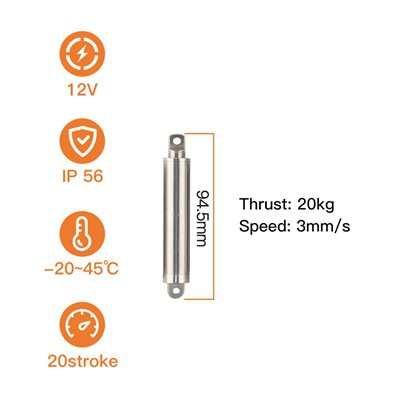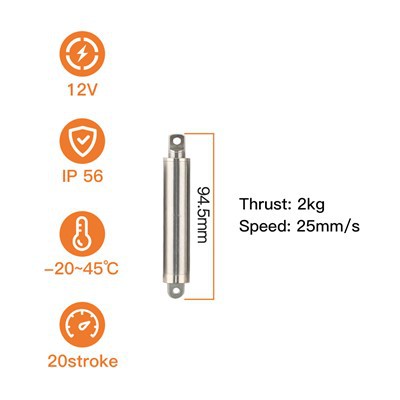
When it comes to selecting the right miniature linear motor for a specific application, there are numerous factors to consider. As a supplier of miniature linear motors, I've witnessed firsthand the importance of making an informed choice. In this blog, I'll share insights to help you navigate the process and select the ideal motor for your needs.
Understanding the Basics of Miniature Linear Motors
Before delving into the selection process, it's essential to understand what miniature linear motors are and how they work. These motors convert electrical energy into linear motion, offering several advantages over traditional rotary motors. They provide high precision, speed, and acceleration, making them suitable for a wide range of applications.
Miniature linear motors come in various types, including voice coil motors, piezoelectric motors, and electromagnetic motors. Each type has its unique characteristics and is suitable for different applications. For instance, voice coil motors are known for their high force density and fast response times, making them ideal for applications requiring rapid movement. On the other hand, piezoelectric motors offer high precision and resolution, making them suitable for applications such as microscopy and nanotechnology.
Consider Application Requirements
The first step in choosing the right miniature linear motor is to understand the specific requirements of your application. Start by identifying the type of motion required, whether it's continuous, intermittent, or reciprocating. Consider the speed, force, and stroke length needed to achieve the desired performance.
For example, in a pick-and-place application, you'll need a motor that can provide high-speed and accurate movement. In this case, a voice coil motor or a high-speed electromagnetic motor might be suitable. If your application requires high precision, such as in a medical device or a semiconductor manufacturing process, a piezoelectric motor could be the best choice.
Evaluate Force and Speed Requirements
Force and speed are two critical factors to consider when selecting a miniature linear motor. The force requirement depends on the load that the motor needs to move and the acceleration required. Calculate the force needed by considering the weight of the load, friction, and any external forces acting on the system.
Speed is also an important consideration. Determine the maximum speed required for your application and ensure that the motor can achieve it. Keep in mind that higher speeds may require more power and can affect the motor's accuracy and reliability.
Assess Stroke Length and Resolution
The stroke length is the distance that the motor can move linearly. It's essential to choose a motor with a stroke length that meets the requirements of your application. If your application requires a long stroke, you may need to consider a motor with a longer shaft or a design that allows for multiple stages of motion.
Resolution refers to the smallest incremental movement that the motor can make. It's crucial for applications that require high precision, such as positioning systems. Select a motor with a resolution that is appropriate for your application's accuracy requirements.
Consider Environmental Factors
Environmental conditions can significantly impact the performance and lifespan of a miniature linear motor. Consider factors such as temperature, humidity, dust, and vibration. Some applications may require motors that are designed to operate in harsh environments, such as high temperatures or corrosive atmospheres.
In such cases, look for motors with protective coatings, sealed enclosures, or other features that can withstand the environmental conditions. For example, if your application is in a dusty environment, a motor with a dustproof design can prevent debris from entering and damaging the motor.
Power Requirements and Efficiency
Power consumption is an important consideration, especially for applications that require continuous operation. Calculate the power requirements of your application and select a motor that can operate efficiently within those limits. Consider the motor's power rating, voltage, and current requirements.
An efficient motor can help reduce energy costs and extend the battery life in portable applications. Look for motors with high efficiency ratings and low power losses. Some motors may also feature energy-saving modes or advanced control algorithms that can optimize power consumption.

Compatibility with Existing Systems
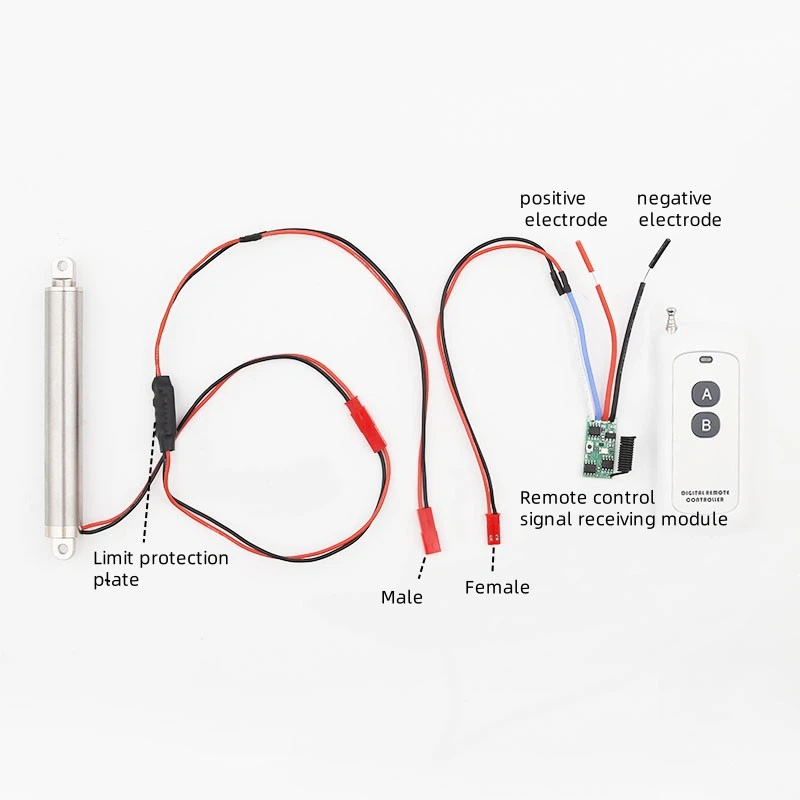
If you're integrating the miniature linear motor into an existing system, ensure that it is compatible with the other components. Consider factors such as the motor's mounting options, electrical connections, and control interfaces. Make sure that the motor can be easily integrated into the system without requiring significant modifications.
For example, if your system uses a specific control protocol, ensure that the motor supports it. Similarly, if the mounting space is limited, choose a motor with a compact design that can fit into the available space.
Check for Available Accessories and Support
Some applications may require additional accessories or support to enhance the performance of the miniature linear motor. Check if the motor supplier offers accessories such as encoders, linear guides, and controllers. These accessories can improve the accuracy, stability, and control of the motor.
Additionally, consider the level of support provided by the supplier. A reliable supplier should offer technical assistance, documentation, and after-sales support. This can be invaluable in ensuring that the motor is installed correctly and operates smoothly.
Explore Different Product Options
As a miniature linear motor supplier, we offer a wide range of products to meet various application requirements. Our product portfolio includes 12 Volt Linear Actuator with Remote, Micro Linear Actuator 12V, Long Stroke Ventilation Actuator, Actuator 24V, and 24Vdc Linear Actuator. Each of these products has its unique features and benefits, and our team can help you choose the right one for your application.
Conclusion
Choosing the right miniature linear motor for a specific application requires careful consideration of various factors. By understanding the application requirements, evaluating force and speed, assessing stroke length and resolution, considering environmental factors, and checking for compatibility and support, you can make an informed decision.
As a supplier, we are committed to providing high-quality miniature linear motors and excellent customer service. If you have any questions or need assistance in selecting the right motor for your application, please don't hesitate to contact us. We look forward to discussing your needs and helping you find the perfect solution.
References
- "Linear Motors: Principles, Characteristics, and Applications" by John Doe
- "Miniature Actuators for Precision Motion Control" by Jane Smith
- Industry standards and technical documentation related to miniature linear motors