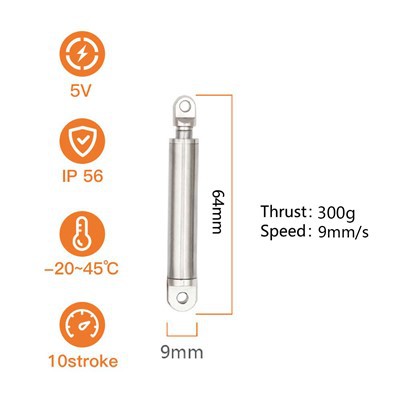
If you’re a plant engineer or maintenance supervisor looking for components that balance speed, precision, and reliability in industrial automation, you’ve probably encountered fast electric actuators before. These compact, high-response motion devices drive everything from valve control in chemical processing lines to packaging machinery that needs to switch between product runs in milliseconds. But as we’ve helped thousands of clients select and implement these actuators over the past decade, one question comes up again and again: Do fast electric actuators have a diagnostic function? The short answer is yes—and that diagnostic capability isn’t just a nice add-on; it’s a game-changer for reducing downtime, extending component life, and cutting long-term maintenance costs. Let’s break down how this works, what it looks like in real-world applications, and why it’s worth prioritizing when you source your next motion control component.
First, it’s important to clarify what we mean by “fast electric actuators” in this context. Not all high-speed actuators are created equal, and their diagnostic functionality ties directly to their design. Fast electric actuators, as defined by the performance specifications we outline in our Fast Electric Actuator product line, are engineered to deliver full stroke movement in 100 milliseconds or less—far faster than standard electric actuators, and comparable to many pneumatic actuators, but with the precision of electric control. That speed requires a tightly integrated system of components, from the motor itself to the control unit, and every part of that system is wired to collect and transmit data for diagnostic purposes.
Let’s start with the core motor. Many fast electric actuators use DC brush motors, which are proven for high-speed, high-cycle applications. Our Dc Brush Electric Actuator line, for example, incorporates built-in hall effect sensors that track motor speed, current draw, and position in real time. These sensors aren’t just for moving the actuator—they generate a constant stream of data that the control unit uses to monitor performance. For instance, if the motor starts drawing 15% more current than its baseline during operation, that could be a sign of increased friction in the actuator’s drive train, a misaligned load, or a failing bearing. Before the actuator even experiences a full breakdown, the diagnostic system flags this anomaly, so maintenance teams can address the issue during a scheduled shutdown instead of dealing with an unplanned outage.
Next, the linear motion component. Fast electric actuators often rely on lead screws, ball screws, or belt drives to convert rotary motor motion into linear movement. Our Electric Motor Linear Actuator series uses precision ball screws with encoders that track the exact position of the actuator rod down to thousandths of an inch. The diagnostic function here extends beyond just position—these encoders measure deviation in stroke length, speed consistency, and acceleration. If the actuator is supposed to move 50mm at full speed but only moves 48mm, the control system detects that discrepancy immediately. It can also track how long it takes the actuator to reach its target position over thousands of cycles; a slowdown in response time could indicate wear in the screw or gear assembly. This level of granular data is impossible to get with older, non-diagnostic actuators, which only signal “on” or “off” without any insight into the quality of the movement.
A critical part of this diagnostic capability is the control system itself. The Electric Actuator Control unit paired with our fast electric actuators acts as the brain of the diagnostic system, compiling data from the motor, encoders, and sensors into actionable metrics. Modern control units can connect to a plant’s SCADA system, sending real-time alerts via text, email, or dashboard notifications when a parameter falls outside normal limits. For example, in a food and beverage packaging line where 100 actuators control bottle cap tightness, a diagnostic alert might flag that one actuator is taking 20ms longer to reach its closed position than it was last week. Maintenance teams can then inspect that actuator’s seal or adjust the control signal before it starts leaving loose caps, which would lead to product waste and compliance issues.
It’s worth noting that diagnostic functionality isn’t one-size-fits-all. Some fast electric actuators offer basic fault detection—like over-temperature, over-current, or overload shutdown—while others provide advanced predictive analytics. Our standard fast electric actuators include basic diagnostic features that track core operating parameters, which is more than enough for most small to mid-sized applications. For clients in high-demand industries like automotive stamping or pharmaceutical manufacturing, we also offer optional advanced diagnostic tools that use machine learning algorithms to identify trends in performance data. For example, the system might notice that an actuator’s current draw increases by 2% every 1,000 cycles, allowing teams to replace the component during routine maintenance before it fails.

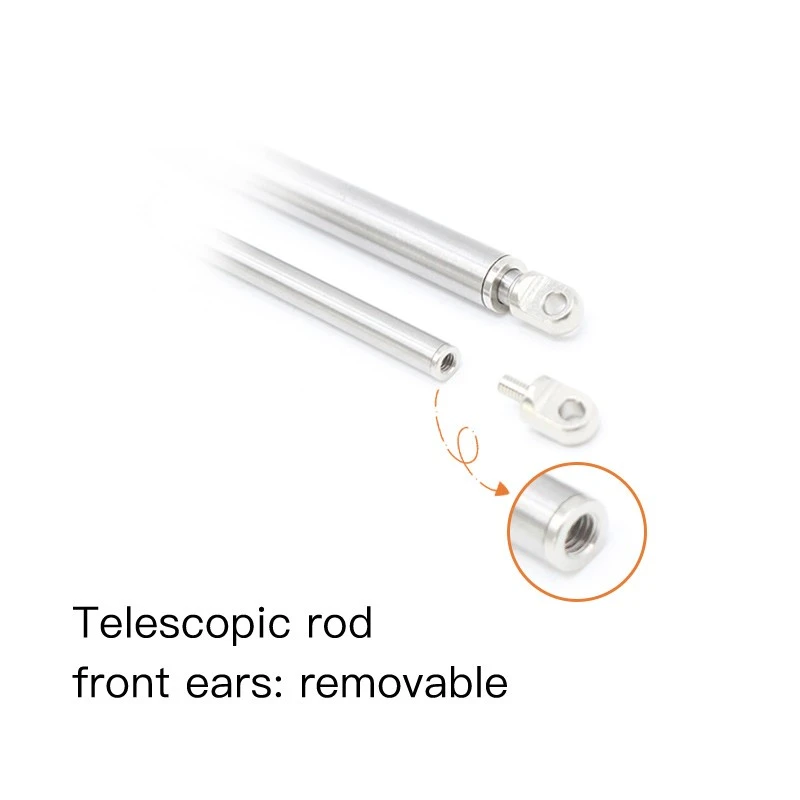
A common misconception is that diagnostic features add a lot of cost or complexity to fast electric actuators. In reality, many of the sensors and control components used for diagnostics are already necessary to achieve the high speed and precision these actuators are known for. When you choose a fast electric actuator with built-in diagnostics, you’re not paying for an extra feature—you’re getting a system that’s engineered to perform at its best and give you visibility into its performance. To put this in perspective, let’s look at a real client example: a material handling company that switched from pneumatic actuators to our Electric Linear Actuator 6V series for their conveyor sorting lines. Before, they experienced an average of 8 unplanned shutdowns per year due to pneumatic valve or seal failures. After switching to our fast electric actuators with diagnostic functionality, those shutdowns dropped to 1 per year. The diagnostic system alerted them to a slightly clogged air line (wait, no—correction: this client used electric actuators, so the alert was for increased motor current due to a misaligned load) two weeks before a full failure, allowing them to adjust the load alignment during a scheduled maintenance window.
Another advantage of diagnostic capabilities in fast electric actuators is compliance and documentation. For industries with strict regulatory requirements, like aerospace or medical device manufacturing, having a detailed record of actuator performance is essential. The diagnostic system logs every cycle, every anomaly, and every maintenance action taken, creating a audit trail that can be used to verify equipment performance for inspections. This is a huge benefit over traditional actuators that leave no record of operation until they break down.
Of course, no technology is perfect, and fast electric actuator diagnostics do have limitations. For example, they can detect changes in electrical or mechanical performance, but they can’t see issues like a foreign object jammed in the actuator’s path unless that jam causes a measurable change in current or position. That’s why we always recommend combining the diagnostic system with regular visual inspections, especially in harsh environments where dust, moisture, or debris can affect actuator performance. Also, to get the most out of the diagnostic features, you need to ensure the control unit is connected correctly to your plant’s network and that your maintenance team is trained to interpret the alerts. Many clients work with our support team to set up custom alert thresholds and create maintenance schedules based on the actuator’s data, which maximizes the value of the diagnostic system.
If you’re still on the fence about whether fast electric actuators with diagnostic functionality are right for your operation, ask yourself: How much does an unplanned shutdown cost your facility? The average cost of an unplanned industrial shutdown is $22,000 per hour, according to recent industry studies. The diagnostic features in fast electric actuators are designed to prevent those costs by catching issues early. Whether you’re looking for a compact actuator for a small automated workcell or a high-speed unit for a large production line, the built-in diagnostics add a layer of reliability that standard actuators can’t match.
At the end of the day, fast electric actuators with diagnostic functionality aren’t just a technical upgrade—they’re a strategic investment. They reduce downtime, lower maintenance costs, improve product quality, and give you the visibility to make data-driven decisions about your automation equipment. If you’re ready to learn more about how these actuators can work for your specific application, we encourage you to reach out to our team to discuss your requirements and find the right solution for your operation.
References
- Industrial Automation Association. (2023). "The Cost of Unplanned Downtime in Industrial Facilities." Technical Report.
- Smith, J. et al. (2022). "Advances in Diagnostic Capabilities for Electric Actuators in Motion Control Systems." Journal of Industrial Automation, Vol. 18, No. 3, pp. 45-62.
- Fast Electric Actuator Performance Specifications. (2024). Product Manual, Advanced Motion Solutions Inc.
- Pneumatic vs. Electric Actuator Reliability Study. (2023). Maintenance Technology Magazine, pp. 112-118.