Hey there, if you’ve ever shopped for electric lift cylinders, you’ve probably stumbled on the term “stroke length” and gone, “wait, what even is that, and why does it matter?” I’m Sam, part of the team that sources and works on electric linear actuators and lift cylinders day in and day out, and let’s be real—when you’re ordering a custom setup for a forklift, a medical bed, or a solar panel tracker, guessing this number leads to either something that’s too short and useless or too long and clunky. Today we’re breaking down exactly what an electric lift cylinder’s stroke length is, how it works, and why it’s the make-or-break detail for your project. First off, if you’re just getting started and want to browse what’s on the market, feel free to check out our main Electric Lift Cylinder page right here—no pressure, just options.
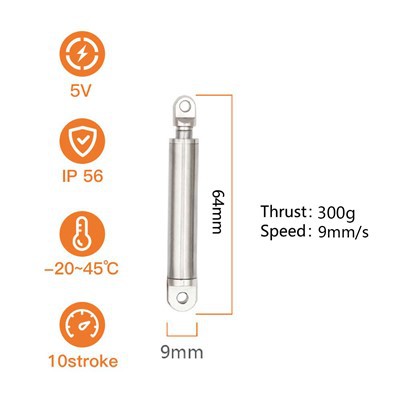
So, let’s start with the basics that even the newbies can follow. If you’re used to old-school hydraulic lift cylinders, you might think stroke length is the same thing, but electric versions work a little differently, so let’s clarify that first. The stroke length of an electric lift cylinder is basically the total distance the push rod (the long metal stick that extends out to lift or move stuff) travels from its fully retracted state (all the way inside the cylinder body) to its fully extended state (sticking out as far as it can go). It’s not a random number—this is super specific to what you need to lift. For example, if you’re building a wheelchair lift that needs to get from the ground to the van’s floor, you don’t want a stroke that’s just 12 inches when you need 24—trust me, I’ve seen that mistake once, and the client had to scramble to swap it last minute, which no one wants.
Wait, hold on—let’s make sure we’re not mixing this up with actuator types here. A lot of people confuse electric lift cylinders with linear actuators, but they’re cousins, not twins. A linear actuator is a broader category, and electric lift cylinders are a specialized subset built for heavier loads, right? If you’re working on smaller projects, like opening a RV hatch, maybe a standard linear actuator works, but for lifting 500+ pounds (like a construction work platform), you need that specialized lift cylinder setup. Speaking of, if you need a faster option than traditional lift cylinders, our Fast Linear Actuator line has quicker cycle times—great for applications where speed matters, like automated assembly lines.
Now, how do you figure out the right stroke length for your project? Let’s walk through the math, but keep it simple—no fancy engineering degree required. The general formula is: Stroke Length = Desired Final Height - Starting Height. That’s it? Yeah, mostly, but there’s a tiny catch you don’t want to miss. You also have to add a little buffer for any clearance issues, like if the push rod needs to clear another part of your machine when it’s fully extended. For example, if your machine’s base is 10 inches off the ground when the cylinder’s retracted, and you need it to get to 30 inches when extended, that’s 20 inches of raw difference, but add 2 inches of clearance so the rod doesn’t bash into the frame, and you’re looking at a 22-inch stroke, not 20. Skipping that buffer is how you end up with a cylinder that hits the frame mid-lift and stops working—ask me how I know.
Another thing that throws people off: some projects have variable height needs, not just two set points (up and down). Like, a solar panel tracker that tilts at different angles throughout the day, or a hospital bed that can be adjusted to different heights for patient comfort. For those, you don’t just pick a stroke length—you might need a control system that lets you set custom positions, instead of just fully retracted and extended. That’s where Linear Actuator Control modules come in handy; they let you program specific stops so you can get any height between retracted and maximum stroke, which is perfect for those adjustable applications.
Wait, let’s talk about common stroke length ranges, because that’s a question we get all the time. Electric lift cylinders aren’t one-size-fits-all. For light-duty stuff, like adjusting a workbench or a small RV jack, you’re looking at stroke lengths from like 2 inches up to 12 inches. Mid-duty, like lifting a car lift or a small trailer ramp, that’s 12 to 36 inches. Heavy-duty industrial stuff, like lifting construction equipment or large factory platforms? Those can go up to 72 inches or even more, depending on the model. If you need something extra long, we also have Linear Motor Actuator options that can handle longer strokes without losing load capacity, which is a big win for long-reach projects.
Now, what factors affect stroke length beyond just what you’re lifting? Two big ones: load capacity and speed. If you’re lifting a heavy load, a longer stroke might not be possible with a standard model—because the push rod gets longer, it can bend under heavy weight, which is a safety hazard. That’s why when you’re picking a stroke, you have to match it to the load. For example, a 24-inch stroke cylinder might handle 1,000 pounds, but a 48-inch stroke version of the same model might only handle 600 pounds, just because the longer rod is less rigid. So you can’t just go for the longest stroke possible for no reason—balance is key. Speed also plays a role: faster cylinders (like the Fast Linear Actuators we mentioned earlier) might have slightly different stroke limits because they’re built for quick movement, not extended travel.
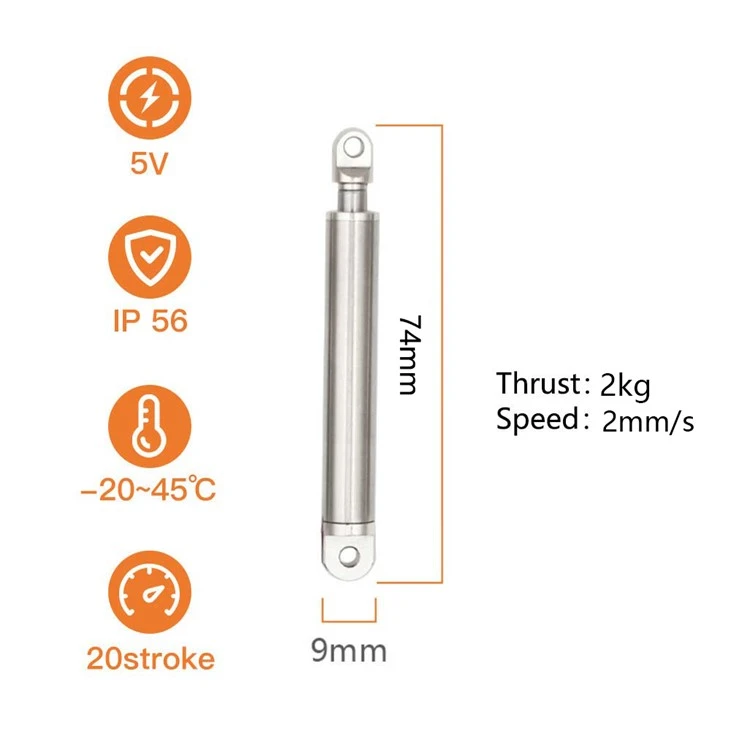
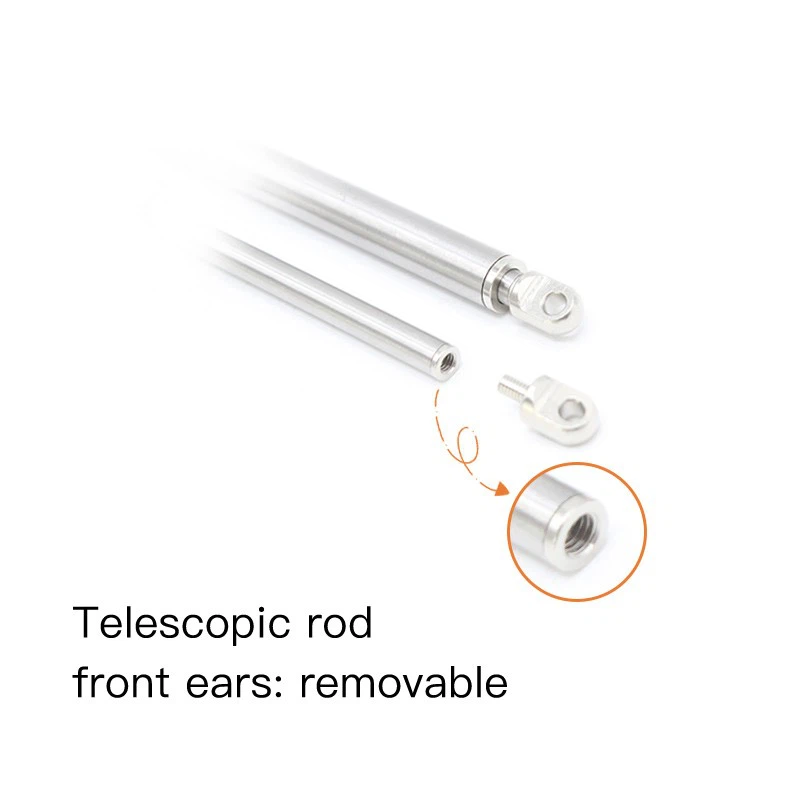
Another mistake people make: not considering the cylinder’s retracted length when installing. You can’t just measure the stroke and think that’s all you need to clear space. The cylinder itself has to fit into the machine when it’s fully retracted, so if your machine only has 10 inches of space to fit the cylinder, a 22-inch stroke would need a retracted length of, say, 18 inches (since stroke = extended length minus retracted length), which means you only have 10 inches of space, that won’t work. You have to account for both ends. I’ve had customers bring me blueprints and skip this step, so we have to recommend a shorter stroke or modify the machine, which adds time—we’re here to help you avoid that.
Let’s chat about a specific example to make this concrete. Last month, a customer reached out to us needing an electric lift cylinder for a small agricultural sprayer. They needed the spray boom to lift from 3 feet above the ground (when traveling down a dirt road) to 10 feet above the ground (when spraying to avoid crop damage). Desired final height minus starting height is 7 feet, or 84 inches. They added 6 inches of clearance so the boom didn’t hit the top of the sprayer frame when fully extended, so total stroke length needed was 90 inches. We matched them with a heavy-duty electric lift cylinder that had a 90-inch stroke, rated for 800 pounds (which was more than enough for their spray boom’s weight), and paired it with a simple control that let them set the two positions. They said it’s been working flawlessly for the past month, no issues. That’s the kind of thing we love helping with.
Wait, also—what if you need a low-power option for a small project, like a home automation build? We’ve got a 6 Volt Linear Actuator with Remoteactuators that’s perfect for smaller strokes, like 2 to 8 inches, with remote control so you don’t have to wire a bunch of stuff. If you’re not in industrial or agricultural, that’s a great option for DIY projects too.
A lot of people ask: “Can I custom-order a stroke length that’s not standard?” The answer is yes, but it depends on the model. For most of our electric lift cylinders, we offer standard strokes from 2 inches up to 72 inches, and for custom lengths beyond that, we can work with our engineering team to build something specific for your project. Just make sure you have all your details sorted when you reach out—starting height, desired height, clearance, load, and any speed or control needs—to make sure we give you the right product.
Let’s wrap this up with a quick recap, because I know that was a lot. The stroke length of an electric lift cylinder is how far the push rod travels from fully retracted to fully extended, it’s not just desired height minus starting height (add that clearance buffer!), it’s tied to load and speed so you don’t get something that’s unsafe or inefficient, and there are standard ranges for different projects, plus custom options if you need them.
If you’re shopping around, don’t overthink it—head to our main Electric Lift Cylinder page to see all our models, check out the Fast Linear Actuator if you need speed, browse the Linear Actuator Control for position settings, or look at the Linear Motor Actuator for long-stroke heavy loads. If you have questions about stroke length, or need help picking the right cylinder for your project, our team is here to chat. We don’t do pushy sales—just real advice from people who work with this stuff every day, so reach out when you’re ready to connect on your next build.
References:
- Linear Actuator Technology: Stroke Length and Load Capacity Relationships, Industrial Motion Control Association, 2022.
- Electric Lift Cylinder Application Guidelines, Automation Direct Technical Documentation, 2023.
- Safety Standards for Linear Motion Systems, National Institute of Occupational Safety and Health (NIOSH), 2021.