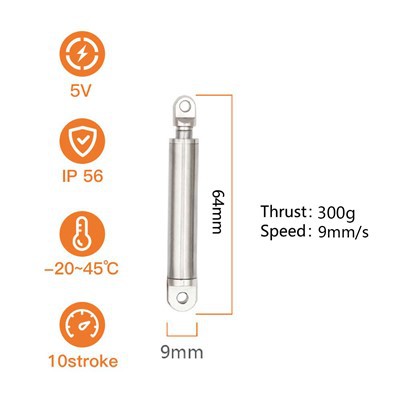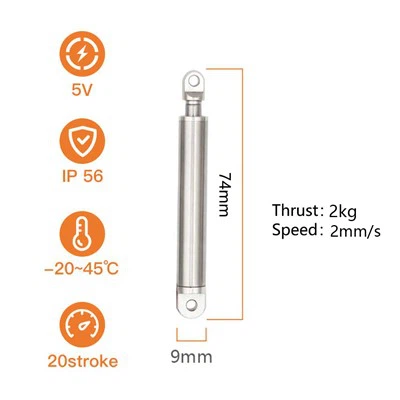
Hey there! As a supplier of Fast Electric Actuators, I often get asked about how the speed of our fast electric actuators stacks up against hydraulic actuators. So, I thought I'd dive into this topic and share some insights with you all.
Let's start by understanding what these actuators are. An actuator is a device that converts energy into motion. Hydraulic actuators use fluid pressure to generate force and movement, while electric actuators, like the ones we supply, rely on electricity.
Speed Comparison
When it comes to speed, fast electric actuators have some significant advantages over hydraulic actuators. One of the main reasons is the response time. Electric actuators can start and stop almost instantly. They don't have to wait for a fluid to build up pressure like hydraulic actuators do. For example, in applications where you need rapid and precise movements, such as in robotics or high - speed manufacturing processes, our Fast Electric Actuator can react in a fraction of a second.
Hydraulic actuators, on the other hand, have a delay in their operation. The fluid needs to be pumped and the pressure has to build up before the actuator can start moving. This delay can be a real drawback in situations where speed is of the essence. Even in well - maintained hydraulic systems, there's always a bit of lag.
Another aspect is the acceleration and deceleration capabilities. Fast electric actuators can achieve high acceleration rates. They can quickly reach their maximum speed and then just as quickly slow down. This is great for applications where you need to move objects rapidly over short distances. Our electric actuators can be programmed to have different acceleration and deceleration profiles, giving you more control over the movement.
Hydraulic actuators, while they can generate a lot of force, are not as good at rapid acceleration and deceleration. The inertia of the fluid and the mechanical components in the hydraulic system make it difficult to change the speed quickly. So, if you're looking for a system that can move things around in a hurry and stop on a dime, an electric actuator is the way to go.
Precision and Repeatability
Speed isn't just about how fast an actuator can move; it's also about how accurately it can move. Fast electric actuators offer excellent precision and repeatability. They can be controlled with great accuracy, down to very small increments. This means that if you need to move an object to a specific position multiple times, our Electric Actuator 6V can do it with a high degree of consistency.
In contrast, hydraulic actuators can be a bit less precise. The fluid in the system can compress slightly under pressure, and there can be some leakage in the seals over time. These factors can lead to small variations in the movement, which might not be acceptable in applications where precision is critical, like in medical equipment or aerospace.
Maintenance and Long - term Performance
When it comes to long - term use, fast electric actuators also have an edge in terms of speed - related performance. They require less maintenance compared to hydraulic actuators. Hydraulic systems need regular fluid changes, filter replacements, and seal inspections. If the fluid isn't maintained properly, it can lead to a decrease in the actuator's speed and performance.
Electric actuators, like our Dc Brush Electric Actuator, have fewer moving parts and don't rely on fluids. This means there's less that can go wrong, and they can maintain their speed and performance over a longer period of time. You won't have to worry about fluid leaks or clogged filters affecting the actuator's ability to move quickly.
Energy Efficiency
Energy efficiency also plays a role in the speed of operation. Fast electric actuators are generally more energy - efficient than hydraulic actuators. They only use power when they're actually moving, and they can be designed to use the minimum amount of energy required for the task. This means that they can operate at high speeds without consuming excessive amounts of power.
Hydraulic systems, on the other hand, need to keep the pump running constantly to maintain the fluid pressure. This continuous power consumption can be a significant drawback, especially in applications where energy costs are a concern. And as the system ages and becomes less efficient, the power consumption can increase even more, which can also affect the actuator's speed and performance.
Applications
Let's look at some specific applications where the speed advantage of fast electric actuators really shines. In the automotive industry, electric actuators are used in things like active suspension systems. They can quickly adjust the suspension settings based on the road conditions, providing a smoother and more comfortable ride. Hydraulic actuators would be too slow to react to sudden changes in the road surface.
In the food and beverage industry, fast electric actuators are used in packaging machines. They can rapidly move products along the production line, pick and place items, and perform other high - speed tasks. The precision and speed of electric actuators ensure that the packaging process is efficient and accurate.
In the entertainment industry, electric actuators are used in stage lighting and special effects. They can quickly move lights and props into position, creating dynamic and engaging shows. Hydraulic actuators would be too cumbersome and slow for these types of applications.
Cost Considerations
Now, I know cost is always a factor. Fast electric actuators can have a higher upfront cost compared to hydraulic actuators. However, when you consider the long - term savings in maintenance, energy consumption, and the improved productivity due to their speed and precision, the overall cost - effectiveness can be much better.
Over time, the reduced downtime and increased efficiency of electric actuators can lead to significant savings. And in many applications, the performance benefits they offer are well worth the initial investment.
Conclusion
So, to sum it up, fast electric actuators have a clear advantage over hydraulic actuators when it comes to speed. Their quick response time, high acceleration and deceleration capabilities, precision, energy efficiency, and low maintenance requirements make them a great choice for a wide range of applications.
If you're in the market for an actuator and speed is an important factor for your application, I'd highly recommend considering our fast electric actuators. We have a range of products to suit different needs and budgets, and our team is always ready to help you find the right solution.


If you're interested in learning more or discussing a potential purchase, don't hesitate to reach out. We're here to answer any questions you might have and help you make the best decision for your project.
References
- "Actuator Handbook" by Motion Control and Motor Association
- "Hydraulic and Pneumatic Systems" by Fluid Power Society
- Various industry whitepapers on electric and hydraulic actuator performance