In the dynamic world of industrial automation and precision engineering, linear motor actuators have emerged as indispensable components, driving innovation and efficiency across a multitude of sectors. As a leading supplier of Linear Motor Actuators, I often encounter a common question from our clients: "What is the maximum number of linear motor actuators that can be synchronized?" This query is not only crucial for understanding the capabilities of these remarkable devices but also for optimizing system performance in large - scale applications.
Understanding Linear Motor Actuators
Before delving into the synchronization limits, it's essential to grasp the fundamentals of linear motor actuators. These devices convert electrical energy directly into linear motion, eliminating the need for intermediate mechanical components such as gears, belts, or screws. This direct conversion results in high - speed, high - precision, and low - maintenance operation, making them ideal for applications where accuracy and speed are paramount.
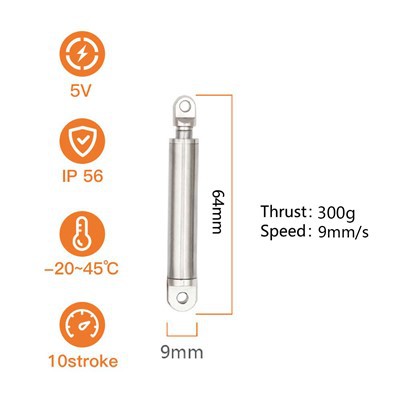
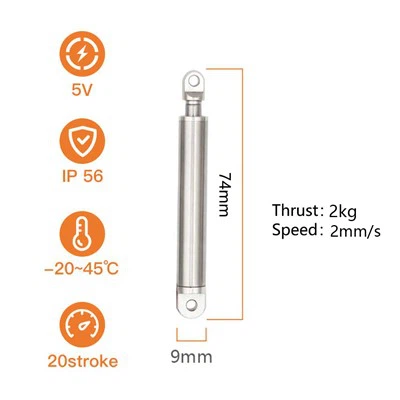
There are various types of linear motor actuators available in the market, each with its own set of features and advantages. For instance, the Fast Linear Actuator is designed for applications that demand rapid movement, while the Electric Lift Cylinder is commonly used in lifting and positioning tasks. The 6 Volt Linear Actuator with Remoteactuators offers the convenience of remote control, which is useful in situations where manual operation is not feasible.
The Concept of Synchronization
Synchronization of linear motor actuators refers to the ability of multiple actuators to move in a coordinated manner, maintaining a specific relationship between their positions, velocities, or accelerations. This is critical in applications such as multi - axis motion systems, robotics, and automated manufacturing lines, where precise coordination between different components is required to achieve the desired outcome.
There are two main types of synchronization: mechanical and electronic. Mechanical synchronization involves physically coupling the actuators together, which can be a simple and cost - effective solution for small - scale applications. However, it has limitations in terms of flexibility and the maximum number of actuators that can be synchronized. Electronic synchronization, on the other hand, uses advanced control systems to coordinate the movement of the actuators. This method offers greater flexibility and can handle a larger number of actuators.
Factors Affecting the Maximum Number of Synchronized Actuators
Control System Capabilities
The control system is the heart of any synchronization operation. It is responsible for sending commands to the actuators and monitoring their positions and velocities. The maximum number of actuators that can be synchronized largely depends on the processing power and memory of the control system. A high - end control system with a powerful processor and ample memory can handle a larger number of actuators compared to a basic system.
Communication Bandwidth
Effective communication between the control system and the actuators is essential for synchronization. If the communication bandwidth is limited, it can lead to delays in sending and receiving commands, which can affect the synchronization accuracy. As the number of actuators increases, the amount of data that needs to be transmitted also increases. Therefore, a high - speed communication protocol is required to ensure smooth and accurate synchronization.
Power Supply
Each linear motor actuator requires a certain amount of power to operate. When synchronizing multiple actuators, the power supply must be able to provide sufficient power to all the actuators simultaneously. If the power supply is inadequate, it can cause the actuators to malfunction or operate at reduced performance levels.
Actuator Characteristics
The characteristics of the actuators themselves, such as their speed, acceleration, and load capacity, can also affect the synchronization. Actuators with different characteristics may require different control strategies to achieve synchronization. Additionally, the physical layout of the actuators can impact the synchronization process. For example, if the actuators are located far apart, it can introduce additional delays in the communication and affect the synchronization accuracy.
Case Studies
To illustrate the practical implications of synchronizing multiple linear motor actuators, let's consider a few case studies.
Automated Assembly Line
In an automated assembly line, multiple linear motor actuators are used to move and position different components. In one particular case, a manufacturer wanted to synchronize 20 actuators to ensure precise assembly of a complex product. By using a high - end control system with a fast communication protocol and a robust power supply, the manufacturer was able to achieve accurate synchronization, resulting in a significant increase in production efficiency.
Robotics
In robotics, synchronization of linear motor actuators is crucial for achieving smooth and coordinated movement. A research team developed a robotic arm with 10 synchronized actuators. The actuators were carefully selected based on their characteristics, and a custom - designed control system was used to synchronize their movement. The result was a highly flexible and precise robotic arm that could perform a variety of tasks with high accuracy.
Estimating the Maximum Number
Based on our experience as a Linear Motor Actuator supplier and the analysis of various factors, it is difficult to provide a specific number for the maximum number of linear motor actuators that can be synchronized. However, in most industrial applications, it is possible to synchronize up to 30 - 50 actuators using a high - end control system, a fast communication protocol, and an adequate power supply.
In some specialized applications with advanced technology and custom - designed systems, it may be possible to synchronize even more actuators. However, this requires a thorough understanding of the application requirements and careful consideration of all the factors mentioned above.
Conclusion
The maximum number of linear motor actuators that can be synchronized depends on a variety of factors, including the control system capabilities, communication bandwidth, power supply, and actuator characteristics. As a leading supplier of Linear Motor Actuators, we have the expertise and experience to help our clients design and implement synchronization solutions that meet their specific needs.
Whether you are looking to synchronize a few actuators for a small - scale project or a large number of actuators for a complex industrial application, we can provide you with the right products and support. Our range of Fast Linear Actuator, Electric Lift Cylinder, and 6 Volt Linear Actuator with Remoteactuators offers a wide variety of options to suit different requirements.


If you are interested in learning more about our products or discussing your synchronization needs, please do not hesitate to contact us. Our team of experts is ready to assist you in finding the best solution for your application.
References
- "Linear Motion Control Handbook", published by a leading industry association.
- Technical papers from international conferences on industrial automation.
- Case studies and reports from our clients' successful projects.