Hey there! As a supplier of fast linear actuators, I've been in the thick of the industry for quite a while. And let me tell you, optimizing the design of these bad boys is no walk in the park. But with the right know - how, it's totally doable. So, in this blog, I'm gonna share some tips on how to optimize the design of a fast linear actuator.
Understanding the Basics
First things first, we need to understand what a fast linear actuator is. Simply put, it's a device that converts rotational motion into linear motion at high speeds. These actuators are used in a whole bunch of applications, from industrial automation to robotics.
When we talk about optimization, we're mainly looking at three key areas: performance, efficiency, and durability. If we can nail these aspects, we'll have a top - notch fast linear actuator on our hands.
Performance Optimization
The performance of a fast linear actuator is all about speed, accuracy, and force. Let's break it down.
Speed
To increase the speed of the actuator, we need to focus on the motor and the传动 mechanism. A high - speed motor is a no - brainer. Look for motors with high RPM ratings and low inertia. This way, the motor can spin up quickly and transfer that motion to the actuator.
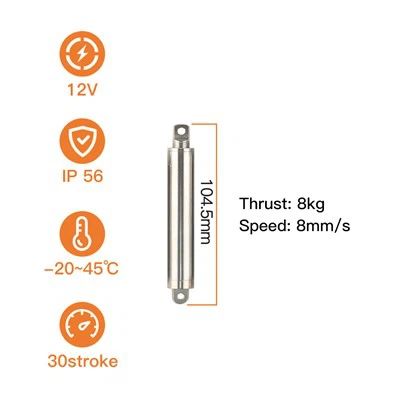
Another factor is the传动 mechanism. For fast linear actuators, a ball screw or a belt drive can be great choices. Ball screws offer high efficiency and smooth operation, while belt drives are lightweight and can achieve high speeds. For example, if you're looking for a high - speed option, Fast Actuators Linear might be a good fit. They're designed to deliver rapid linear motion, which is perfect for applications where speed is of the essence.
Accuracy
Accuracy is crucial, especially in applications like CNC machining or 3D printing. To improve accuracy, we need to reduce backlash and ensure proper alignment. Backlash is the play or clearance between the moving parts of the actuator. A ball screw with pre - loading can significantly reduce backlash.
Proper alignment is also essential. Make sure all the components are installed correctly and that the actuator is mounted securely. Any misalignment can lead to inaccurate motion and premature wear.
Force
The force output of the actuator depends on the motor torque and the传动 mechanism. A high - torque motor can generate more force. However, we also need to consider the mechanical advantage of the传动 mechanism. For example, a ball screw with a large lead can convert more of the motor's torque into linear force.
Efficiency Optimization
Efficiency is all about getting the most out of the actuator while using the least amount of energy.
Motor Efficiency
The motor is the heart of the actuator, so its efficiency is crucial. Look for motors with high power - to - weight ratios and low losses. Brushless DC motors are a popular choice for fast linear actuators because they offer high efficiency and long service life.
Reducing Friction
Friction is the enemy of efficiency. To reduce friction, use high - quality bearings and lubricants. Bearings with low friction coefficients can minimize the energy lost due to friction. And don't forget to keep the actuator clean. Dust and debris can increase friction and wear.
Power Management
Proper power management can also improve efficiency. Use a power supply that matches the actuator's requirements. Over - powering the actuator can waste energy, while under - powering it can lead to poor performance.
Durability Optimization
A durable actuator can save you a lot of money in the long run.
Material Selection
Choose high - quality materials for the actuator components. For the housing, use materials that are strong and corrosion - resistant, like aluminum or stainless steel. The传动 mechanism components, such as the ball screw and the nut, should be made of materials with high wear resistance.
Heat Dissipation
Fast linear actuators can generate a lot of heat, especially during high - speed operation. Proper heat dissipation is essential to prevent overheating and premature failure. Install heat sinks or fans to keep the actuator cool.


Maintenance
Regular maintenance is key to ensuring the durability of the actuator. Check the lubrication levels, inspect the components for wear, and tighten any loose bolts. By catching problems early, you can prevent major breakdowns.
Specialized Applications
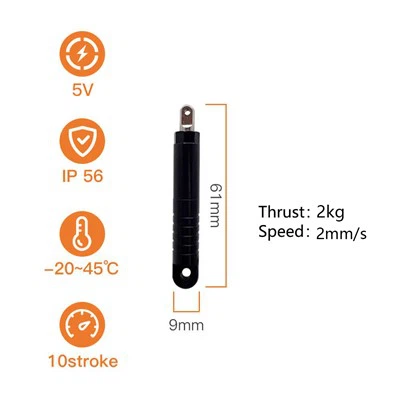
Depending on the application, you might need to optimize the actuator design further. For example, in medical devices, you might need a Tiny Linear Actuator. These actuators are small in size but still offer high performance. They're perfect for applications where space is limited.
In the automotive industry, electric lift cylinders are often used. Electric Lift Cylinder can provide the necessary force and speed for various automotive applications, such as seat adjustment and hood lifting.
Conclusion
Optimizing the design of a fast linear actuator is a multi - faceted process. By focusing on performance, efficiency, and durability, we can create an actuator that meets the needs of various applications. Whether you're in industrial automation, robotics, or any other field, a well - designed fast linear actuator can make a big difference.
If you're interested in learning more about our fast linear actuators or have any questions about the optimization process, don't hesitate to reach out. We're here to help you find the perfect solution for your needs. Let's start a conversation and see how we can work together to take your projects to the next level.
References
- Groover, M. P. (2010). Automation, Production Systems, and Computer - Integrated Manufacturing. Prentice Hall.
- Norton, R. L. (2004). Design of Machinery: An Introduction to the Synthesis and Analysis of Mechanisms and Machines. McGraw - Hill.