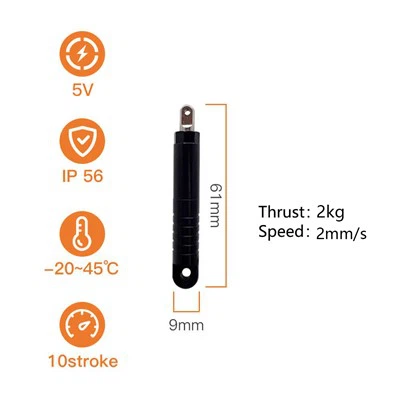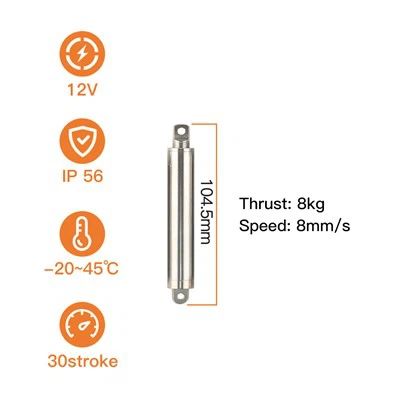
If you’re reading this, chances are you’ve already incorporated a micro linear motor into a precision device—whether it’s a portable medical pump that delivers consistent drug doses, a tiny robotic arm for lab automation, or a DIY model that needs smooth, controlled linear movement. As a supplier of Micro Linear Motor systems, I’ve worked with thousands of engineers, hobbyists, and product teams over the past eight years, and one of the most common questions I get is: “How do I keep this small, powerful component running reliably for years?”
Let’s be real: micro linear motors are built for compact, high-precision tasks, but their tiny size means they’re far more sensitive to small maintenance missteps than larger industrial actuators. Skip a basic check, and you might face unexpected stutter, inconsistent stroke length, or even a total failure that sets back your entire project. I’ve seen a $500 lab analyzer sit idle for three months because its micro linear actuator stopped moving—all because someone forgot to clean a single grain of dust from its drive mechanism. That’s the kind of avoidable headache I want to help you skip.
This guide isn’t just a list of random tips; it’s the practical, field-tested maintenance routine we share with every customer who buys from our line of Linear Micro Actuators and custom solutions. We’ve refined these steps over hundreds of installations, and they work whether you’re using a Micro Linear Actuator 6V for a battery-powered gadget or a higher-voltage model for industrial testing equipment.
First, let’s start with the basics: why micro linear motors need different care than their big brothers. A standard industrial linear actuator might have a 10mm diameter shaft and a load capacity of 100kg, so a speck of dust or a tiny amount of friction won’t throw it off. A micro linear motor, by contrast, often has a shaft diameter under 5mm, operates with tolerances measured in micrometers, and carries loads from 100 grams to 10kg. Even a small amount of debris or worn lubrication can throw off its precision or cause wear that cuts its lifespan in half.
Routine Daily Checks (The 5-Minute Habit That Prevents 80% of Issues)
Most maintenance problems start with small, unobserved changes that accumulate over time. For any team using micro linear motors in daily operation, a quick pre-shift or end-of-day check takes no more than 5 minutes, and it’s non-negotiable.
First, visually inspect the entire unit for physical damage. Look for dents in the housing, cracks around the motor connection point, or any loose wires. On the drive shaft, check for scratches, burrs, or debris stuck in the grooves. Debris is the number one enemy here: even a tiny piece of lint or metal shavings can grind between the shaft and the linear bearing, causing increased friction and uneven movement. For devices that use open-frame designs (common in many Actuator Linear For Diy Model kits, where exposure to dust is more likely), this check is even more critical.
Next, run a quick functional test. Actuate the motor through its full stroke 2-3 times, and pay attention to two things: consistency and noise. Does it move at the same speed every cycle, or does it speed up or slow down mid-stroke? Is there a new grinding, squeaking, or clicking noise that wasn’t there before? In my experience, a change in noise or speed is almost always a warning sign—9 times out of 10, it’s a sign that lubrication is drying out or that debris is building up, both of which are easy to fix if caught early.
One common mistake I see with DIY users is trying to power through a noisy motor. I once worked with a maker who had a Micro Electric Actuator for a mini CNC router, and he kept running it even when it started making a high-pitch squeal. By the time he reached out to us, the shaft had worn down so badly that the entire motor needed replacement. That squeal was the motor screaming for a lubrication top-up or a clean, and ignoring it cost him weeks of work.
Weekly Deep Clean (The Step Most People Skip)
Even if you do daily checks, dust, oil mist, and tiny particles will build up over time, especially if your motor is used in a workshop, lab, or outdoor setting. A deep clean every week removes this debris before it causes damage. The key here is to be gentle—micro linear motors have delicate internal components, so you can’t blast them with compressed air (which can force particles deeper into the mechanism) or rub them with harsh chemicals.
Let’s break this down step by step. First, disconnect power to the motor and remove it from your device if possible. If it’s mounted in a hard-to-reach spot (like inside a medical pump casing), you can clean it in place, just be extra careful not to let fluid or debris get into the surrounding electronics.
Start with the exterior: use a soft, lint-free microfiber cloth dampened with isopropyl alcohol (90% or higher works best; lower concentrations leave residue) to wipe down the housing and the drive shaft. For tiny, hard-to-reach gaps around the shaft seal or the motor’s end caps, use a cotton swab dipped in a small amount of alcohol to gently dislodge debris. Avoid using q-tips with detached cotton heads, as small pieces can break off and get stuck.
Next, clean the internal mechanism (this is only safe if your motor has a removable end cap—check your user manual first; many of our standard models have this feature). Use a small, soft-bristled brush (like a clean makeup brush or a toothbrush with soft bristles) to gently brush away any loose dust or metal shavings from the linear guide and gear assembly. Never use metal tools here, as they can scratch the components. If there’s stubborn gunk, you can dip the brush in a tiny amount of isopropyl alcohol, but make sure the motor is completely dry before reassembling and powering it on—moisture is another big enemy of micro electric components.
A quick note here: never use water to clean your micro linear motor. Even distilled water can leave mineral deposits that cause friction, and it can damage the internal windings or circuit board if it seeps in. Stick to isopropyl alcohol for all cleaning tasks.


Monthly Lubrication (Critical for Smooth, Long-Lasting Performance)
Lubrication is the oil that keeps your micro linear motor running, but too little is bad, and too much is even worse. Over-lubrication can attract more dust, create excess friction, and even leak into adjacent components (that’s a big problem for medical devices that need to stay sterile, or electronics that can’t handle oil residue).
First, check your motor’s user manual for the recommended lubricant type. For most of our Micro Linear Motor systems, we use a high-performance, low-viscosity synthetic grease that’s designed for precision linear movements. Never use general-purpose grease or oil for larger industrial motors—these are too thick and will cause uneven movement in a micro unit.
When lubricating, less is more. You only need a tiny amount—about the size of a grain of rice—applied directly to the drive shaft at the point where it meets the linear bearing. Too much grease will spread into unnecessary areas and cause the issues I mentioned earlier. After applying, actuate the motor through its full stroke 5-10 times to distribute the grease evenly, then wipe away any excess that comes to the surface with a clean microfiber cloth.
How often should you lubricate? For motors used in continuous, daily operation (like a lab analyzer that runs 8 hours a day), monthly is ideal. For motors used occasionally (like a DIY model that only runs a few times a week), every 3-6 months is usually enough. Always check the motor’s performance between lubrications—if you notice increased noise or friction before your scheduled time, go ahead and do a top-up early.
Annual Professional Inspection (For Critical Applications)
If your micro linear motor is part of a critical system where failure could cause safety issues (like a surgical robot, a aerospace component, or a manufacturing line that runs 24/7), a yearly professional inspection is a smart investment. Our team offers this service for customers across industries, and it’s more than just a check-up: our technicians can test the motor’s stroke accuracy, measure the resistance of the windings to spot early signs of wear, and identify any internal damage that isn’t visible to the naked eye.
I can’t stress enough how much this pays off. A few years ago, a customer of ours had a surgical robot that used a custom micro linear motor for moving the biopsy tool. They skipped an annual inspection, and halfway through a procedure, the motor’s linear bearing wore out, causing a delay that meant they had to reschedule the patient. A $200 annual inspection would have caught the worn bearing before it failed, saving them thousands in service fees and protecting their patient’s trust.
Common Mistakes to Avoid (From Someone Who’s Seen Them All)
Even if you follow all the steps above, there are a few small mistakes that can kill your micro linear motor’s lifespan fast. Let’s go over the most frequent ones I hear about:
- Overloading the motor: Every micro linear motor has a maximum load capacity, and many DIY users or new engineers forget that “dynamic load” (the load when the motor is moving) is different from “static load” (the load when it’s stopped). For example, a 5kg dynamic load motor can only hold 10kg when it’s stopped—pushing beyond the dynamic load will cause the shaft to bend or the gears to strip, often without immediate warning.
- Forcing the motor to move a blocked stroke: If the motor’s path is blocked by debris or a misplaced component, never try to power it through. This will burn out the motor’s windings, strip the gears, or crack the housing. Always disconnect power immediately if the motor doesn’t move when actuated.
- Using incompatible power supplies: Micro linear motors like the Micro Linear Actuator 6V are designed for specific voltage and current ratings. Using a power supply that outputs higher voltage than recommended will overheat the motor and destroy the windings in a matter of minutes. Double-check your motor’s specs every time you connect it.
- Ignoring the environment: If your motor is used in a dusty outdoor setting, a humid bathroom, or a workshop with metal shavings, you’ll need to clean and lubricate it twice as often. Dust and humidity can accelerate friction and corrosion, so adjust your maintenance schedule to match your working conditions.
Ready to Keep Your Micro Linear Motor Running?
Maintaining a micro linear motor doesn’t have to be complicated, expensive, or time-consuming. It’s all about small, consistent checks and gentle care that prevent small issues from becoming big, costly failures. Whether you’re building a DIY project with an Actuator Linear For Diy Model or designing a precision industrial system with our custom Linear Micro Actuators, following these steps will help your motor last for years, not months.
If you have questions about your specific micro linear motor, need help troubleshooting a small issue, or want to order replacement parts to keep your system running smoothly, our team is here to help. We work with engineers, makers, and manufacturers across the globe to provide tailored support for every Micro Electric Actuator and linear motor we supply. Reach out to our team today to learn more and discuss your needs.
References
- National Institute of Standards and Technology. (2021). Precision Linear Actuators for Microsystems. NIST Technical Note 1992.
- International Organization for Standardization. (2019). ISO 14725:2019 – Test Methods for Micro Actuator Performance. ISO, Geneva.
- Parker Hannifin Corporation. (2022). Maintenance Best Practices for Small Linear Actuator Systems. Motion Control Industry Guide.
- Our internal field maintenance database, compiled from 2018–2024 customer installations across medical, robotics, and DIY industries.