If you’ve ever shopped around for actuation solutions for a compact medical pump, a portable industrial gripper, or an automotive seat adjuster, you’ve probably noticed how often 12V linear motors come up—and one question I get from engineers and procurement managers alike again and again is, “What is the response time of a 12V linear motor?” It’s not a trivial detail; for many of our customers, response time isn’t just a spec on a data sheet—it’s what keeps a surgical robot moving precisely, a warehouse shuttle on schedule, or a home appliance responding to a user’s touch instantly. Today, I want to break down that question, share what affects that number, and show where our 12V products fit in.
First, let’s start with a clear definition: response time for a linear motor is the amount of time that elapses between when you send a control signal (a voltage pulse, a digital command from a PLC, or a sensor trigger) and when the motor actually reaches its full, rated output force at a given displacement. For 12V units, this is especially important because they’re often used in battery-powered or space-constrained devices, where power is limited and latency can break functionality.
Most people assume response time is a single fixed number, but it’s actually a derived value that depends on three core factors: the motor’s design, the load it’s moving, and the control system driving it. Let’s unpack each.
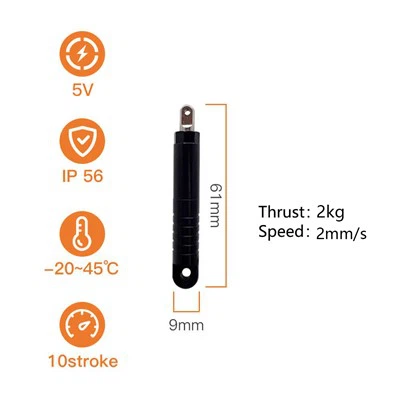
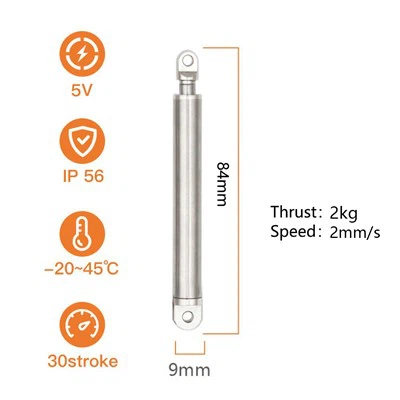
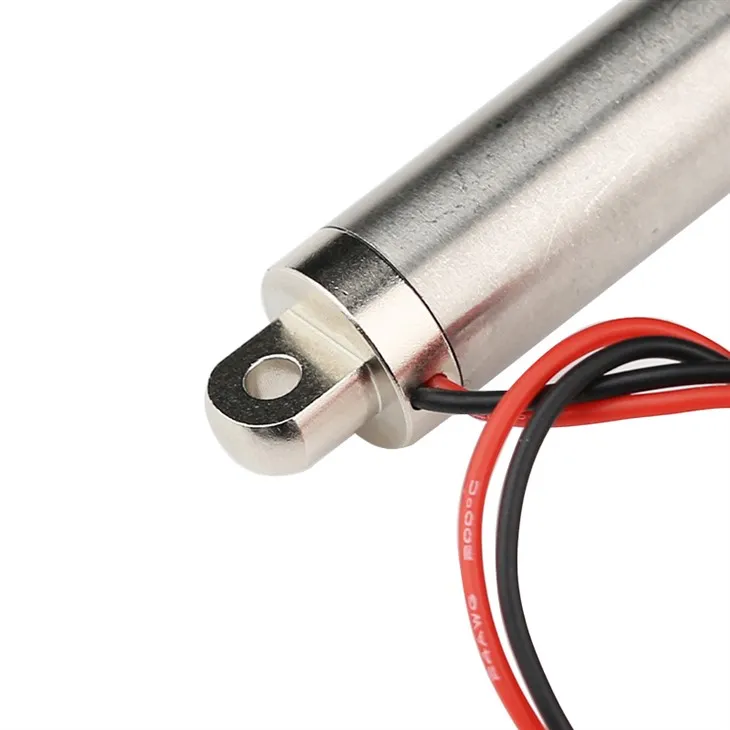
Motor design is the biggest variable. A 12V linear motor’s internal architecture—its winding resistance, number of pole pairs, and the mass of its moving component (the “plunger” or “rod” in many miniature designs)—directly impacts how quickly it can overcome inertia. A large, heavy-duty 12V linear motor built for pushing 50 pounds will have a slower response than a tiny micro unit made for moving a 1-gram lens in a smartphone camera. That’s why when we’re talking about specific 12V offerings, it’s key to look at specialized lines. For example, our Micro Linear Actuator 12V is engineered for ultra-light loads, with a plunger mass of less than 5 grams. Its response time clocks in at 15 to 25 milliseconds for a 1mm displacement—fast enough for high-speed medical devices or lab automation tools that need near-instant actuation.
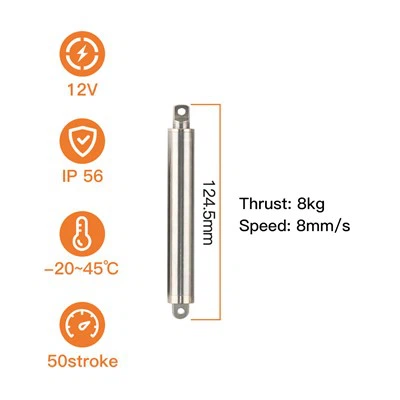
On the other end, our Miniature Linear Motor (still 12V, but with a slightly larger, more robust build) is designed for loads up to 15 pounds, common in automotive window regulators or small robotics. Its response time ranges from 40 to 60 milliseconds for a 10mm stroke. Why the difference? The larger plunger has more inertia to overcome, and the windings are sized to handle the higher force demand, which means they store slightly more energy before reaching full output. It’s a tradeoff between force, size, and speed that we tailor to application needs.
Next, the load itself is non-negotiable. A 12V linear motor can reach maximum speed unloaded, but add even a modest load, and response time slows down. Think of pushing an empty cart versus one stacked with heavy boxes: the cart doesn’t accelerate the same way. For example, our 12V miniature motor might hit 40ms response time when unloaded at 10mm, but push a 10-pound load, and that jumps to 65 to 80ms. For critical applications, this means you can’t rely on unloaded specs when sizing a motor—you need to test under your actual operating conditions. This is why many of our customers bring their load profiles to us, and we adjust recommendations accordingly, sometimes even suggesting a different motor like the Long Stroke Ventilation Actuator (which, while often specified for higher voltages, has a 12V variant for low-power ventilation systems, with response times tuned for the specific load of vent flaps).
Third, the control system plays a huge, often overlooked role. A 12V motor is only as fast as its drive electronics. If you use a simple on/off switch, the motor will trigger immediately, but it might have a “sluggish” start because it can’t deliver a controlled, ramped voltage to accelerate the plunger. Modern brushless 12V linear motors (which are our most popular line) work best with closed-loop control systems that provide a constant current, rather than a raw 12V signal. These controllers adjust voltage dynamically to reduce latency, cutting response times by up to 30% compared to open-loop designs. That’s why when we share response time data with customers, we always note whether the spec is for closed-loop, optimal control conditions.
Now, let’s address a common confusion: 12V vs. 24V linear motors. I’ve had engineers ask, “Is a 24V motor always faster?” The short answer is not necessarily. A 24V motor has a higher voltage potential, so it can deliver more power to a load faster, but a mis-sized 24V unit (too large for your application) will have more inertia, leading to slower response than a small, optimized 12V motor. For example, our Linear Actuator 24V is built for heavy loads up to 200 pounds, with a response time of 100 to 150ms for a 50mm stroke. But if you’re moving a 2-pound medical tool, a 12V micro motor will be faster than a 24V full-size unit, even with the higher voltage. The key is matching voltage and motor size to your specific load and stroke requirements. That’s why we often work with customers to compare both options—some projects do benefit from the higher power of a 24V unit, while others prioritize speed and low power of 12V.
Let’s ground this in real-world applications to make it concrete. Take a portable insulin pump, which needs to actuate a tiny piston to deliver precise doses every few seconds. The pump’s load is less than an ounce, and the required displacement is just a few millimeters. The Micro Linear Actuator 12V is the perfect fit here: its 15-25ms response time means the piston moves instantly when the dose is triggered, avoiding delays that could lead to incorrect dosing. On the flip side, a mobile robot gripper that needs to lift a 10-pound object to move a component on a assembly line: the Miniature Linear Motor’s 40-60ms unloaded response, 65-80ms under load, is fast enough to keep up with production speeds, while its 12V design runs on the robot’s existing battery, no extra power supply needed.
Another common use case is automotive sunroofs. A sunroof motor needs to move a 20-pound glass panel a few inches, with response time that feels “instant” to passengers. Our 12V miniature line, paired with a closed-loop controller, delivers a response time that’s smooth and fast, without the jolt that can come from a poorly tuned drive system. For larger ventilation systems, like those in commercial truck cabs, we offer a 12V variant of the Long Stroke Ventilation Actuator (often also available as a high-power 24V unit, depending on the system’s power setup), which has a slightly slower 80-120ms response time for its 50mm stroke, but enough force to move heavy vent flaps reliably over thousands of cycles.
It’s important to note that response time isn’t the only spec to consider—accuracy, durability, and noise matter too. For example, a surgical tool might need ultra-precise positioning, even if that means a slightly slower response, while a consumer appliance might prioritize speed and low cost. That’s why at our company, we don’t just share response time numbers; we work with customers to understand their full system needs, then recommend the right motor and controller combination. For anyone navigating this choice, testing a prototype under your actual operating conditions is always the best way to confirm performance—we’re happy to provide sample units for testing, no strings attached.
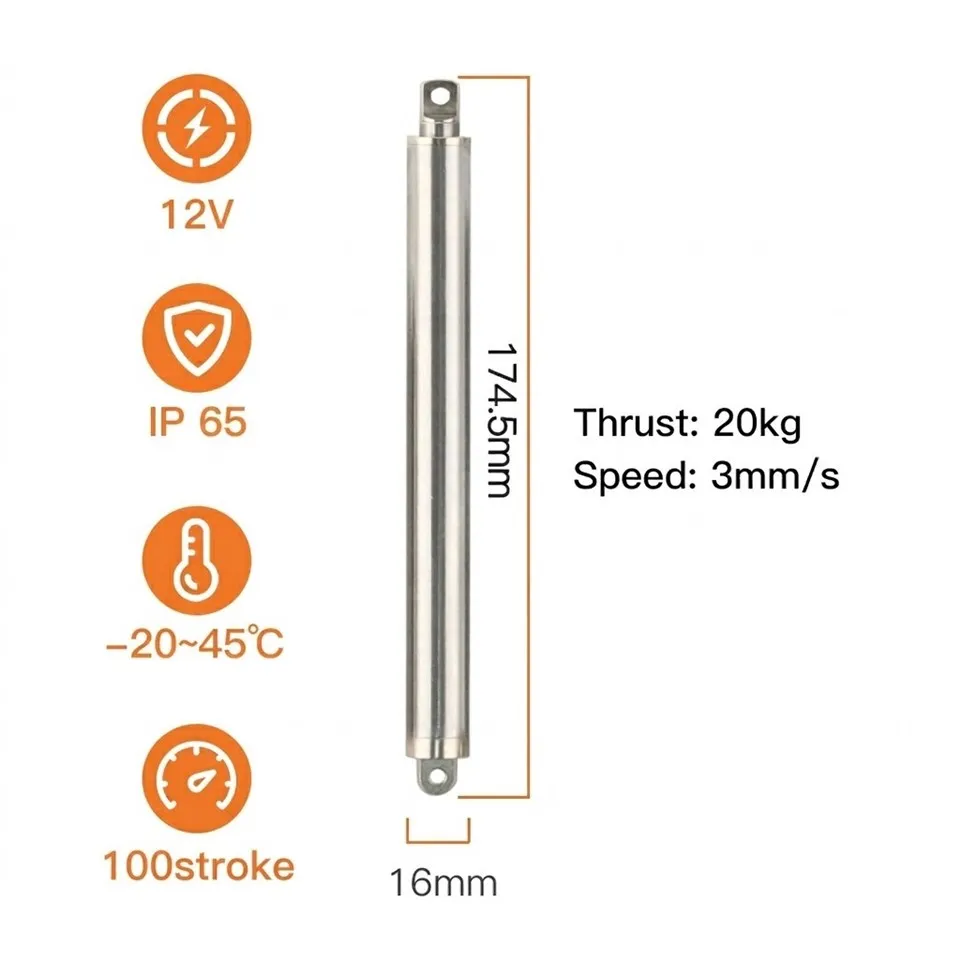
At the end of the day, the question of a 12V linear motor’s response time doesn’t have a one-size-fits-all answer, but by understanding the variables—motor design, load, control system—you can find the right fit for your project. If you’re shopping for a 12V linear motor and want to discuss your specific load, stroke, and speed requirements, we’re here to help with tailored recommendations, product details, and support for prototype testing.
References:
- Linear Motor and Actuator Design Fundamentals, Motion Control Industry Association, 2022
- Response Time Optimization for Miniature Actuators, International Journal of Precision Engineering and Manufacturing, Vol. 18, No. 4, 2017
- Low-Power Actuator Selection for Battery-Operated Devices, Industrial Electronics Society Technical Bulletin, 2021