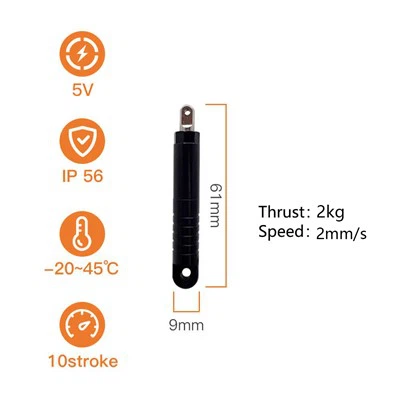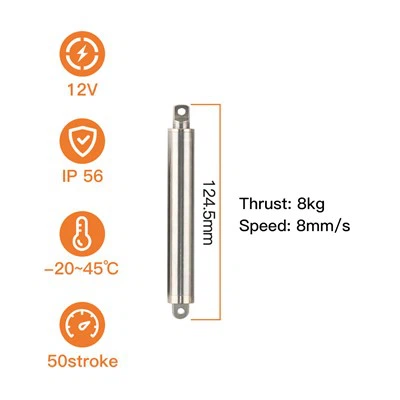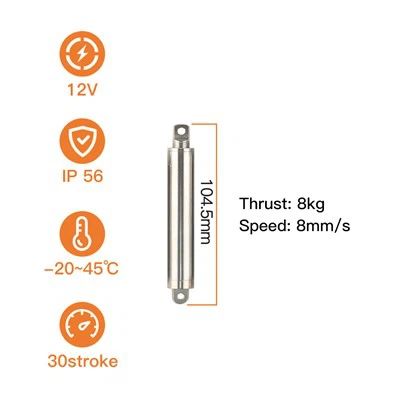
If you’ve ever wandered through a manufacturing facility, observed the automated systems in a warehouse, or watched a robotic arm assemble parts on a production line, you’ve likely encountered linear actuators at work. These humble components convert rotational motion into linear movement, quietly powering everything from conveyor belt adjustments to valve actuation. For years, industrial settings leaned heavily on higher voltage actuators—24Vdc, 48V, even 120V AC—leaving many to wonder: can a 12 Volt Dc Actuator really hold its own in the demanding, high-stakes world of industrial applications? As a supplier with years of experience designing and deploying 12 Volt Dc Actuator solutions, I’m here to cut through the skepticism and share how these compact, low-voltage devices are not just viable for industrial use, but often the smartest choice for many modern operations.
The Core Advantages That Make 12V DC Actuators Industrial-Ready
First, let’s talk about the fundamentals of why 12V DC stands out for industrial environments. For decades, industry equated “heavy-duty” with higher voltage, assuming more power meant better performance. But that’s a narrow view. 12 Volt DC systems have built-in benefits that align perfectly with modern industrial priorities: safety, energy efficiency, ease of integration, and cost-effectiveness.
Safety is non-negotiable in industrial spaces. Workers interact with equipment daily, and voltage-related accidents are a real risk. 12V is classified as an extra-low voltage (ELV) system, meaning it poses minimal risk of electric shock even in wet, dusty, or confined areas. Think of food and beverage processing plants, where washdowns are routine, or chemical manufacturing facilities where even a small electrical spark could have catastrophic consequences. Unlike higher voltage actuators that require heavy insulation, protective enclosures, and specialized wiring, 12V DC actuators operate safely with standard, low-gauge wiring. This reduces not just accident risk, but also the cost of compliance with OSHA and international electrical safety standards.
Energy efficiency is another key selling point. Industrial facilities consume enormous amounts of electricity, and even small improvements in power usage add up to massive savings over time. 12V DC actuators draw far less current than their higher voltage counterparts to produce the same linear force. For example, a typical 12V actuator generating 1,000 lbs of force might draw 8A, while a 24V model for the same load would draw 4A—wait, that’s the same power, right? Not so fast. The difference lies in auxiliary systems. 12V DC is the standard voltage for most low-power industrial controls, sensors, and battery backup systems. If your factory already runs on a 12V DC network for PLC inputs, light sensors, or emergency lighting, integrating Linear Actuator 12V means no need to install separate power supplies, transformers, or distribution panels. That eliminates the energy waste from converting higher AC voltages down to the 12V needed for actuators, a step that causes 5-10% power loss in most systems.
Ease of integration can’t be overstated in industrial settings, where downtime costs thousands of dollars per minute. Many industrial operations already have fleets of 12V DC-powered devices, from emergency door systems to mobile equipment on the factory floor. Adding linear actuation to these existing networks is seamless—no complicated programming, no custom wiring, no need for specialized technicians. I recently worked with an automotive parts manufacturer that was using 24V actuators for their conveyor line guide adjustments. They switched to our Linear Motor 12V models and cut their installation time per line by 30%. The actuators plugged directly into their existing 12V control modules, and the integration took less than an hour per station, compared to three hours for the 24V systems. The maintenance team also reported fewer issues: 12V DC motors generate less heat than higher voltage motors, so they experience less wear on internal components like brushes and windings, leading to longer service intervals.
Debunking the Myths: Can 12V DC Handle Industrial Loads?
The most common pushback I hear from potential customers is: “12V is too weak for heavy industrial work.” It’s true that a small 12V micro actuator isn’t going to move a 10,000 lb load, but modern 12 Volt Dc Actuator models are engineered with industrial-grade materials and designs that deliver plenty of power for a huge range of applications. Let’s get specific about load capabilities. Our top-of-the-line industrial 12V actuators can produce up to 2,200 lbs of dynamic force, with stroke lengths up to 48 inches and operating speeds of up to 2 inches per second. That’s comparable to many 24V actuators on the market, and more than enough for tasks like adjusting industrial machine guards, positioning packaging machinery, operating small to medium-sized valves, and controlling access gates in warehouses.
Another myth is that 12V DC actuators can’t withstand harsh industrial environments. For years, lower voltage devices were associated with consumer-grade products, built for light use in cars or small appliances. That’s no longer the case. The 12 Volt Dc Actuator line we manufacture for industrial use has IP65-rated enclosures, meaning they’re dust-tight and protected against high-pressure water jets—perfect for washdown areas in food processing, or outdoor industrial equipment exposed to rain, snow, and extreme temperatures. Our actuators also use corrosion-resistant housing materials, like anodized aluminum and stainless steel, and internal components designed to operate in temperatures from -20°C to 65°C, making them suitable for both cold storage facilities and hot, unventilated equipment rooms.
I recently saw a real-world example of this durability at a steel fabrication plant in the Midwest. They needed to replace a set of 24V actuators controlling the feed mechanism for their metal cutting shears. The 24V models were failing every 6 months, due to constant exposure to metal shavings, oil mist, and 12-hour operating shifts. We suggested our industrial 12V actuators, which have sealed gear systems and a heavy-duty motor. After 18 months of operation, those actuators are still running strong, with only minor scheduled maintenance. The plant manager told me the initial cost was slightly higher than the 24V models, but the reduced replacement and downtime costs had already saved them over $15,000 in that first year.
Another concern is reliability and cycle life. Industrial actuators need to last for millions of operating cycles, not just thousands. Our industrial-grade 12 Volt Dc Actuators are tested to last up to 1 million cycles at full load, which is on par with many 24V industrial actuators. The key is in the design: we use high-performance planetary gears, precision bearings, and thermal overload protection to prevent motor damage during extended use. Unlike cheaper consumer 12V actuators that overheat and fail under heavy loads, our industrial models have built-in temperature sensors that automatically shut down the motor if it gets too hot, preventing permanent damage and extending lifespan.
Key Industrial Applications Where 12V DC Actuators Excel
Now that we’ve covered the advantages and addressed common concerns, let’s dive into specific industrial applications where 12 Volt Dc Actuators are not just a good fit, but the optimal choice.
Material Handling and Warehouse Automation
Warehouses and distribution centers are fast-paced environments, relying on automated systems to move goods efficiently. 12V DC actuators are perfect for adjusting conveyor belt heights, positioning sorter arms, operating dock levelers, and controlling the gates on automated storage and retrieval systems (AS/RS). The low voltage is safe for use near pedestrian areas, and their compact size makes them easy to install in tight spaces. For example, we worked with a e-commerce fulfillment company that uses our Micro Linear Actuator 12V models to adjust the positions of small package chutes. The micro actuators are small enough to fit in the narrow gaps between chutes, and their 12V power means they don’t require separate power supplies for each chute. The company reported that the micro actuators reduced their package sorting error rate by 12%, and cut the time needed to reconfigure the sorting line for different package sizes by 70%.
Food and Beverage Processing
The food and beverage industry has strict hygiene standards, and equipment must be easy to clean and resistant to contamination. 12V DC actuators are ideal here because their ELV rating is safe for use around food products, and their sealed enclosures can withstand regular high-pressure washdowns. Applications include adjusting mixing tank lids, positioning filling nozzles, operating conveyor guides, and controlling valve actuators for liquid transfer. A craft brewery in Oregon recently switched from pneumatic valves to our 12V DC linear actuators for their bottling line. Pneumatic systems require compressors, which are expensive to run and maintain, and often leak, leading to inconsistent pressure. The 12V actuators deliver precise, consistent linear movement for each fill nozzle, reducing product waste by 5% and cutting their energy bill by $2,000 per month. They also love that the 12V system is so quiet—before, the compressor was a constant noise source in the bottling area, but now the only noise is the quiet hum of the actuators, making the workspace more pleasant for employees.
Industrial Machinery and Equipment
Manufacturing machinery, from metal stamping presses to plastic injection molders, requires precise, reliable linear movement. 12V DC actuators are used for adjusting machine guards to meet safety standards, positioning tooling, operating slide mechanisms, and controlling feed rates. The precise speed and force control of modern 12V actuators make them ideal for these tasks, as they can be calibrated to move at exact speeds and exert consistent force, reducing the risk of product defects and machine damage. A plastic injection molding company in Texas was experiencing frequent downtime with their 24V actuators that controlled the mold clamp adjustment. The actuators would stick after a few months of use, due to dust and grit getting into the gear system. Our 12V actuators have a sealed gear train and a self-locking feature that prevents the actuator from slipping under load, so even after extended use, they maintain precise positioning. The company reported that their machine uptime increased by 20% after switching to our 12V actuators.


Renewable Energy and Environmental Control
The growing renewable energy sector is another area where 12V DC actuators are making a big impact. Solar trackers, which adjust the angle of solar panels to follow the sun, rely on linear actuators to position the panels efficiently. 12V DC is the standard voltage for solar panel systems, as they’re powered by solar panels that produce 12V DC (or higher voltages that can be stepped down to 12V). Our Linear Actuator 12V models are lightweight and energy-efficient, perfect for solar trackers, where weight and power consumption directly affect the system’s overall efficiency. We’ve also supplied 12V actuators for wind turbine blade pitch control systems, where their reliability and low maintenance requirements reduce the cost of operating wind farms. Additionally, in environmental control systems, like industrial HVAC and wastewater treatment plants, 12V actuators are used to adjust dampers, control valve positions, and operate access panels, taking advantage of their safety and ease of integration into existing control systems.
When to Consider 24V DC vs. 12V DC: Making the Right Choice
Of course, 12V DC isn’t the answer for every industrial application. For very heavy loads, above 2,500 lbs, or for applications where speed is a critical priority (like high-speed packaging lines), 24V DC actuators may be a better fit. Higher voltage allows for lower current draw for the same power, which can reduce the size of wiring needed, making it easier to run power over longer distances. That’s important in facilities where actuators are located far from the main power supply. Our 24Vdc Linear Actuator line is designed for these heavy-duty, high-speed applications, offering even more force and faster speeds than our 12V models, while still maintaining the same safety and efficiency benefits of low voltage systems.
The key is to match the actuator to your specific application needs. As a supplier, we always work with customers to assess their load requirements, operating environment, power infrastructure, and budget to recommend the best solution. For example, a customer with a small assembly line where actuators are located near a 12V control panel will likely benefit from our 12V models, while a customer with a large warehouse spanning several acres may need 24V actuators to avoid voltage drop over long wiring runs.
The Future of 12V DC Actuators in Industry
Looking ahead, the demand for 12 Volt Dc Actuators in industrial applications is only going to grow. The rise of Industry 4.0, with its focus on automation, IoT connectivity, and energy efficiency, aligns perfectly with the strengths of 12V DC systems. Many new industrial machines are being designed with 12V DC as a primary voltage, reducing the need for power conversion and simplifying integration. IoT-enabled 12V actuators, which can be monitored and controlled remotely, are already on the market, allowing facilities to track actuator performance, predict maintenance needs, and reduce downtime even further.
As more industries recognize the benefits of low voltage actuation, the technology will continue to improve, with higher force capabilities, longer cycle life, and smarter features. At our company, we’re investing in research and development to make our 12V DC actuators even more versatile, with options for integrated sensors, wireless connectivity, and compatibility with all major industrial control systems.
Let’s Find the Right Solution for Your Industrial Needs
If you’re considering whether a 12 Volt Dc Actuator is right for your industrial application, don’t let outdated assumptions hold you back. Our team has years of experience working with manufacturers, warehouse operators, and facility managers across a wide range of industries, and we can help you evaluate your needs, recommend the best actuator model, and provide support for installation and maintenance. Whether you’re looking for a heavy-duty industrial actuator for machine control, a compact micro actuator for small parts handling, or a solar-ready linear motor for renewable energy applications, we have a solution tailored to your requirements.
Ready to learn more about how our 12V DC actuators can improve your operations? We encourage you to reach out to our team to discuss your specific needs. We’ll provide a personalized consultation, product specifications, and pricing to help you make the best decision for your facility.
References
- Occupational Safety and Health Administration (OSHA). Electrical Safety in the Workplace. U.S. Department of Labor, 2024.
- International Electrotechnical Commission (IEC). 60364-4-41: Electrical Installations of Buildings - Protection for Safety - Protection against Electric Shock, 2020.
- Food and Drug Administration (FDA). Food Safety Modernization Act (FSMA) Equipment Guidelines, 2022.
- Linear Actuator Industry Performance and Reliability Report. Industrial Automation Association, 2023.
- Solar Power World. Linear Actuators for Solar Tracking Systems, 2024.