If you’ve ever worked in medical device design, you know every component has to pull double duty: it needs to be reliable enough for patient care, safe enough for clinical settings, and flexible enough to fit the unique needs of your product. When it comes to linear motion—adjusting hospital bed heights, moving medical imaging parts, or supporting prosthetic limbs—actuators are a go-to choice, and voltage is one of the first specs designers hash out. A question I hear constantly from medical device engineers is: Can a 12V linear actuator be used in a medical device? As a supplier of linear motion components, I’ve spent years walking clients through this exact tradeoff, and the short answer is: Yes—when chosen and applied correctly. But there’s a lot more nuance to getting it right than just plugging in a part. Let’s break down why 12V actuators work for many medical applications, where they fall short, and what you need to know to pick the right option for your team.
First, let’s start with the basics: what makes a linear actuator suitable for medical use? It all boils down to three core factors: safety, power, and form factor. Medical devices live in environments that demand strict compliance, whether that’s hospital-grade electrical standards, biocompatible materials, or resistance to spills and frequent use. 12V actuators are built on low-voltage DC power, which is inherently safer than higher voltages like 24V or 120V AC for patient-facing devices. Low voltage poses a minimal risk of electric shock, even if there’s a stray wire exposed or a minor fault—critical for devices that come into direct contact with patients, like adjustable beds, examination tables, or patient lifts. That’s a big reason why 12V actuators have carved out a solid niche in medical settings.


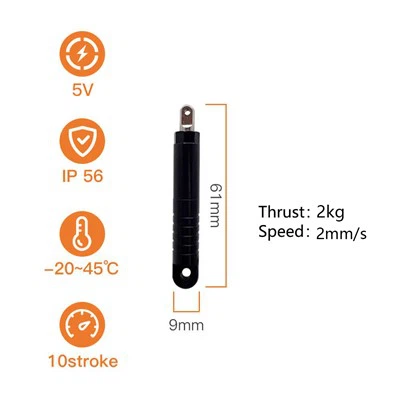
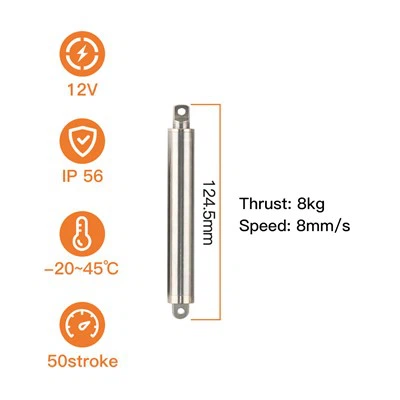
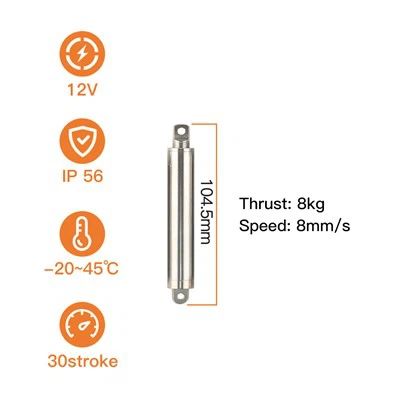
Let’s look at concrete use cases where 12V linear actuators excel. Take adjustable hospital beds, for example. A standard hospital bed needs to raise or lower the head, feet, and entire bed deck to meet clinical needs—whether that’s positioning a patient for a procedure, reducing pressure injuries, or making it easier for nurses to provide care. 12V actuators deliver enough force (usually between 100N and 10,000N, depending on the model) to handle these tasks without drawing excessive power. Unlike higher-voltage actuators that might require bulky, complex wiring for wall outlets, 12V actuators can run on low-voltage power supplies or even battery packs—ideal for semi-portable devices like home care beds, which need to operate during power outages. Another common use is portable patient lifts, which rely on compact, lightweight components to reduce caregiver strain. Compact designs, like the Compact 12V Linear Actuator for adjustable devices, fit easily into narrow frames without adding unnecessary bulk, making them a favorite for mobility-focused medical gear. Even diagnostic equipment, like portable ultrasound machines, uses small 12V actuators to adjust probe holders or table attachments, where precision and quiet operation matter as much as power.
That said, 12V isn’t a one-size-fits-all solution. The biggest limitation of 12V linear actuators is their power density. Since power = voltage × current, a 12V actuator needs twice the current of a 24V actuator to deliver the same amount of force. That means for heavy-duty medical applications—like operating room tables that need to support 500+ pounds during procedures, or continuous-use devices like patient monitoring beds that run 12+ hours a day—12V actuators can draw too much current. Too much current leads to overheating, which risks damaging internal components, shortening the actuator’s lifespan, or even creating a fire hazard in clinical settings. High current also requires thicker wiring, which adds weight and bulk to the device, a problem for portable or space-constrained medical products. For these heavy-duty, continuous-use applications, a 24V actuator is often a better bet—it delivers the same force as a 12V model with half the current, reducing heating, extending component life, and simplifying wiring. It’s worth noting that 24V is the more widely accepted standard for many Class II medical devices, so if your product needs to meet specific regulatory requirements, checking voltage compatibility early in the design process is key.
Another key consideration for medical actuators is compliance, and voltage plays a big role here. In the U.S., medical devices are regulated by the FDA, and they need to meet electrical safety standards like IEC 60601, which sets limits on leakage current and shock risk. 12V low-voltage actuators fall well below these limits for most patient-facing applications, but not all 12V actuators are designed for medical use. A lot of consumer-grade 12V actuators (like those used in RVs or power chairs) don’t have the same level of build quality, corrosion resistance, or fault protection as medical-grade options. For example, a commercial 12V actuator for a power chair might have water resistance up to IP65 for occasional spills, but a medical-grade 12V actuator needs to withstand frequent cleaning with disinfectants, since hospital environments require regular sanitation to prevent infection. That’s why it’s crucial to source actuators specifically engineered for medical use, not just any 12V model off the shelf.
If you’re still on the fence about 12V vs. higher voltage for your medical device, let’s walk through how to decide. First, define your application’s needs: is your device portable or heavy-duty? Is it used in a clinic where wall power is consistent, or in a home care setting where battery life is critical? For small, portable devices—like portable examination tables, prosthetic limbs, or home care lift chairs that run on batteries—12V is often the smarter choice. Its low voltage means longer battery life, which is a big win for patients who use devices for hours away from power outlets. For example, a compact prosthetic arm uses a tiny 12V actuator to adjust grip and position, and the low voltage keeps the device lightweight and battery-powered for all-day use. For semi-portable or fixed heavy-duty devices, 24V is the way to go, since it handles high force without the overheating issues of 12V. Many medical device manufacturers actually have both options in their lineups—you can check out our range, including the Linear Actuator 12V for general-purpose applications, the 24 Volt Actuator for heavy-duty use, and the Linear Actuator 24V for mid-range medical needs, to see which fits your specs.
It’s also important to consider future scalability. As your device evolves, you might need to add more functionality—like adjusting additional joints, integrating sensors for patient feedback, or adding remote control capabilities. A 12V actuator might work for your initial prototype, but if you plan to expand your design down the line, a 24V actuator could offer more flexibility. Higher voltage actuators can handle more complex loads as your device grows, without requiring major overhauls to the power supply or wiring. That’s why many engineers start with 24V for new medical products, even if they don’t need maximum power right away, to leave room for future updates.
One common mistake I see medical device designers make is treating all linear actuators the same. A 12V actuator for a vending machine is not the same as a 12V actuator for a hospital bed. Medical-grade actuators undergo rigorous testing to ensure they’re safe for use with patients, with features like self-locking mechanisms to prevent unintended movement, limit switches to stop the actuator at the end of its stroke, and overload protection to prevent damage if the actuator is forced beyond its rated capacity. These features are non-negotiable for medical devices, and they’re not standard on consumer-grade actuators. When sourcing components, always ask for documentation that proves the actuator meets IEC 60601 or other medical safety standards.
Let’s circle back to the original question: Can a 12V linear actuator be used in a medical device? The answer is a resounding yes—for the right application. 12V actuators offer unbeatable safety, portability, and low power draw for patient-facing, battery-powered, or light-force medical devices. They’re ideal for adjustable beds, home care equipment, portable diagnostic tools, and prosthetic limbs, where their small size and low voltage make them a perfect fit. But for heavy-duty, continuous-use applications, 24V actuators are the more reliable, long-lasting choice. The key is to match the voltage to your specific needs, and to source a medical-grade actuator that meets all safety and performance requirements.
If you’re a medical device designer weighing your options for linear motion components, our team has worked with hundreds of engineers to find the right fit for their products. Whether you’re prototyping a new home care bed, updating an examination table, or designing a portable mobility aid, we can help you choose between options like the Compact 12V Linear Actuator for small, light-force applications, the 24Vdc Linear Actuator for heavy-duty needs, or other actuators tailored to medical use. Don’t leave your device’s performance and safety to chance—reach out to our team to discuss your project, and we’ll help you find the perfect linear motion solution.
References
- International Electrotechnical Commission. (2020). IEC 60601-1: Medical electrical equipment – Part 1: General requirements for basic safety and essential performance. Geneva, Switzerland: IEC.
- U.S. Food and Drug Administration. (2022). Class II Medical Devices: Safety and Performance Requirements. Silver Spring, MD: FDA.
- Linear Actuator Performance Standards. (2021). Medical Grade Actuator Specifications for Clinical and Home Care Applications. Motion Control Association International.