Step-by-Step: The Journey from Electricity to Linear Motion
The operation of an electric linear actuator is an elegant process of energy conversion, typically divided into four critical stages:
- Power Input: A DC motor (12V/24V/48V) or AC motor receives electrical signals and initiates high-speed rotation.
- Reduction Transmission: The rotational power enters a gearbox (Worm gear or Planetary gears) where the RPM is precisely reduced while the Output Torque is significantly amplified.
- Linear Conversion: The motor drives a lead screw, which causes a drive nut to move axially along the shaft, converting rotational energy into linear motion.
- Feedback & Control: Integrated limit switches or encoders monitor the stroke in real-time. Once reached, the system cuts power immediately for mechanical safety.
Why Choose Electric Over Hydraulic or Pneumatic?
While hydraulic and pneumatic systems have their place in heavy-duty lifting, electric actuators are increasingly preferred for modern industrial applications due to:
- Precision & Control: Electric systems offer sub-millimeter accuracy and easy speed/force adjustments via software, which is difficult to achieve with air or fluid pressure.
- Total Cost of Ownership (TCO): Lower energy costs (no compressor needed), zero leak risks, and minimal maintenance lead to significant long-term savings.
- Environmental Impact: Clean operation without hydraulic fluid ensures suitability for medical, food, and semiconductor manufacturing.
Core Engineering Components: Acme vs. Ball Screw
Engineers must weigh the trade-offs between Acme and Ball Screws in our Precision Actuator Models:
|
Technical Features |
Acme Screw System |
Ball Screw System |
|
Transmission Efficiency |
20% - 40% |
90% + |
|
Self-locking Ability |
Superior |
Lower (Requires a brake) |
|
Heat Generation |
Higher (Low frequency) |
Extremely Low (High frequency) |
Engineering Selection Guide: Calculating Your Needs
Selecting the right actuator requires balancing three primary factors: Force, Speed, and Power. Use the following logic for preliminary sizing:
- Static vs Dynamic Load: Dynamic load is the force required to move the object; Static load is the force the actuator must hold when stationary.
- The Inverse Relationship: Note that for a given motor size, Speed and Force are inversely proportional. To increase thrust, speed must decrease (and vice versa).
- Power Calculation: P (Watts) = Force (Newtons) × Speed (m/s) / Efficiency. Ensure your power supply (12V/24V) can handle the peak current draw during startup.
Wiring & Signal Integration: Connecting to Your Controller
To achieve precise automation, reliable wiring is vital. We offer multiple options:
- Basic Type (2-Wire): Simple extension/retraction control via polarity reversal.
- Hall Effect Feedback: Outputs dual-channel pulse signals for precise position calculation and high-precision synchronization of multiple actuators.
- Potentiometer Feedback: Best for absolute position sensing in systems where controllers don't support high-speed pulse processing.
Engineering Troubleshooting: Common Issues & Solutions
- Actuator No Movement: Verify input voltage; check if internal limit switches are triggered; ensure the load doesn't exceed rated capacity.
- Position Inaccuracy: Check for EMI on feedback lines or screw backlash. Use shielded cables for long-distance signal transmission.
- Abnormal Noise: Inspect for dried-out lubricant or excessive duty cycle operation. If issues persist, consult our Technical Support Team.
Best Practices for Installation & Maintenance
- Strictly No Lateral Load: Actuators are for axial push/pull only. Side forces cause internal abrasive wear, shortening life by 50% or more.
- Duty Cycle Management: Standard actuators are rated for 10% or 20% (e.g., 2 mins ON, 8 mins OFF). Exceeding this triggers thermal protection.
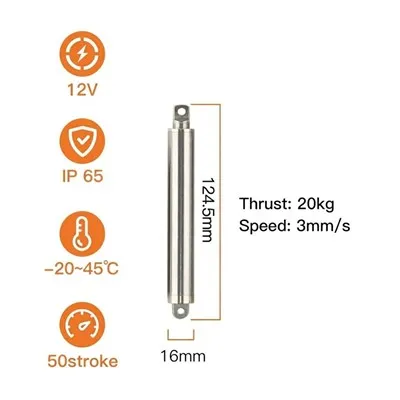
- Environment Protection: We provide specialized IP65 Rated Actuators which are fully protected against dust and low-pressure water jets, ideal for outdoor industrial and agricultural environments.
Compliance & Global Standards
Our actuators are manufactured to meet the rigorous demands of global markets. We ensure adherence to:
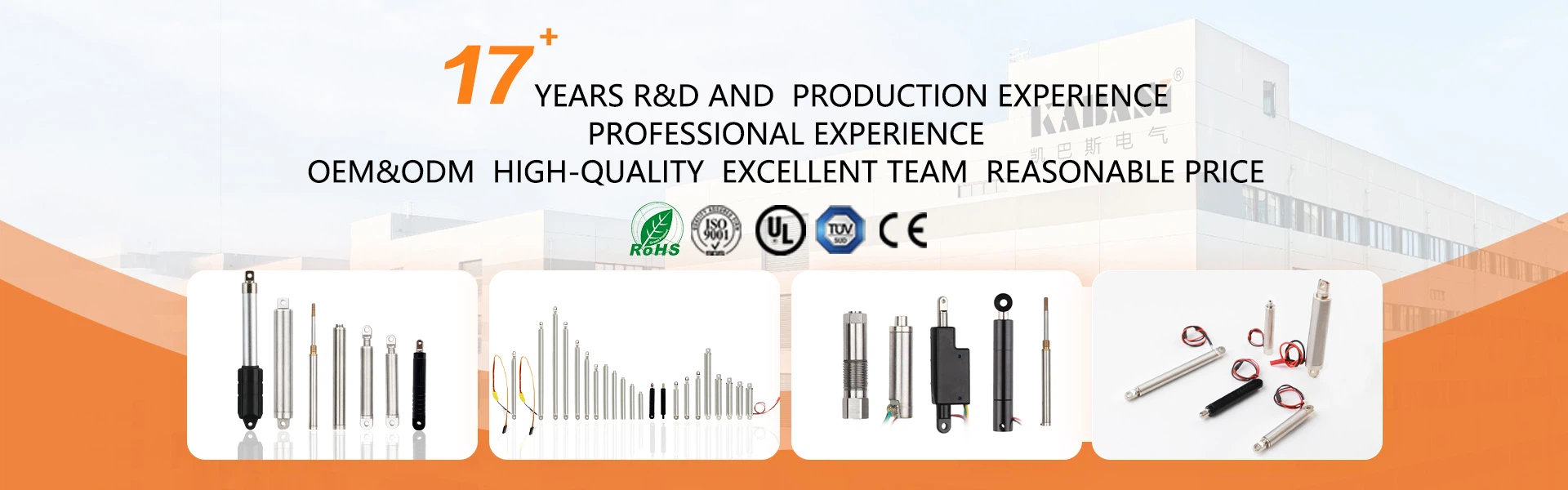
- CE & RoHS Certification: Ensuring electrical safety and the absence of hazardous materials.
- IP65 Ingress Protection: Validated via standardized laboratory testing to ensure reliability in dusty and wet environments.
Custom Engineering Solutions & Industry Applications
We provide tailored motion control solutions for Industrial Automation (AGV Lifts), Solar Tracking, and Medical Technologies.
Request a Custom Actuator Quote
• Free Project Evaluation: Mechanical calculation based on your load requirements.
• Custom Configurations: Tailored stroke lengths, mounting brackets, and feedback protocols.