

When it comes to industrial automation and precise motion control, linear motor actuators have emerged as a cornerstone technology. As a reputable supplier of linear motor actuators, I often encounter inquiries regarding the power consumption of these devices. Understanding the power consumption of a linear motor actuator is crucial for both system designers and end - users, as it impacts operational costs, energy efficiency, and overall system performance.
Basics of Linear Motor Actuators
Before delving into power consumption, let's briefly review what a linear motor actuator is. A linear motor actuator is a device that converts electrical energy into linear motion. Unlike traditional rotary motors that rely on mechanical linkages to convert rotational motion to linear motion, linear motor actuators produce linear motion directly. This direct conversion results in several advantages, such as high speed, high acceleration, and excellent positioning accuracy.
There are different types of linear motor actuators, including permanent - magnet linear motors, induction linear motors, and switched - reluctance linear motors. Each type has its own characteristics and is suitable for different applications. For instance, permanent - magnet linear motors are known for their high efficiency and power density, making them a popular choice for applications that require high - speed and high - precision motion, such as semiconductor manufacturing and high - speed packaging.
Factors Affecting Power Consumption
The power consumption of a linear motor actuator is influenced by multiple factors. Let's explore these factors in detail:
Load Requirements
One of the most significant factors affecting power consumption is the load that the actuator needs to move. The greater the load, the more power the actuator requires to move it. This includes both the mass of the load and the forces acting on it, such as friction and gravity. For example, if an actuator is used to lift a heavy object vertically, it will consume more power compared to moving the same object horizontally on a low - friction surface.
Speed and Acceleration
The speed and acceleration at which the actuator operates also have a substantial impact on power consumption. Higher speeds and accelerations generally require more power. When an actuator accelerates quickly, it needs to generate a large force in a short period, which demands more electrical energy. Similarly, maintaining a high - speed operation continuously also consumes more power. For instance, in a high - speed pick - and - place application, the actuator needs to accelerate rapidly to reach the target position and then decelerate quickly to stop accurately. This high - speed and high - acceleration operation will result in relatively high power consumption.
Duty Cycle
The duty cycle refers to the ratio of the time the actuator is in operation to the total time. A linear motor actuator with a high duty cycle, meaning it is operating for a large proportion of the total time, will consume more power over a given period compared to an actuator with a low duty cycle. For example, in a continuous - operation conveyor system, the actuator has a high duty cycle and will consume more power continuously. In contrast, an actuator used in an intermittent - operation testing machine may have a lower duty cycle and thus consume less power overall.
Efficiency of the Actuator
The efficiency of the linear motor actuator itself plays a vital role in power consumption. Higher - efficiency actuators convert a larger proportion of the input electrical energy into useful mechanical energy, resulting in lower power consumption. Factors that affect the efficiency of an actuator include the design of the motor, the quality of the materials used, and the control algorithms. For example, a well - designed permanent - magnet linear motor with high - quality magnets and advanced control algorithms can achieve higher efficiency and lower power consumption compared to a poorly designed actuator.
Calculating Power Consumption
Calculating the power consumption of a linear motor actuator can be a complex task, as it involves considering multiple factors. However, a simplified approach can be used to estimate the power consumption.
The power consumption (P) of an actuator can be estimated using the formula (P = F\times v / \eta), where (F) is the force required to move the load, (v) is the velocity of the actuator, and (\eta) is the efficiency of the actuator.
To calculate the force (F), we need to consider the load mass (m), the acceleration (a), and the frictional force (F_f). According to Newton's second law, (F = m\times a+F_f). The frictional force (F_f) can be estimated based on the coefficient of friction (\mu) and the normal force (N) acting on the load, (F_f=\mu\times N).
For example, let's assume we have a linear motor actuator moving a load with a mass (m = 10\space kg) on a horizontal surface with a coefficient of friction (\mu = 0.1). The actuator is required to accelerate the load at (a = 2\space m/s^{2}) to a velocity (v = 1\space m/s). The normal force (N = m\times g), where (g = 9.81\space m/s^{2}). So, (N=10\times9.81 = 98.1\space N), and the frictional force (F_f=\mu\times N=0.1\times98.1 = 9.81\space N). The force required to accelerate the load is (F_{acc}=m\times a = 10\times2 = 20\space N). The total force (F=F_{acc}+F_f=20 + 9.81=29.81\space N).
If the efficiency of the actuator (\eta = 0.8), then the power consumption (P = F\times v/\eta=(29.81\times1)/0.8 = 37.26\space W).
Impact of Power Consumption on Applications
The power consumption of a linear motor actuator has several implications for different applications:
Cost
High power consumption means higher operational costs. In industrial applications where actuators are used continuously, the electricity cost can be a significant part of the overall operating expenses. By choosing a linear motor actuator with lower power consumption, companies can reduce their energy bills and improve their bottom line.
Heat Generation
Power consumption is directly related to heat generation. Higher power consumption generally leads to more heat being generated by the actuator. Excessive heat can affect the performance and lifespan of the actuator. It can cause thermal expansion, which may lead to misalignment and reduced accuracy. Moreover, high temperatures can also degrade the insulation materials in the motor, increasing the risk of electrical failures. Therefore, it is essential to manage the power consumption to control heat generation and ensure the reliable operation of the actuator.
Environmental Impact
In today's environmentally conscious world, reducing power consumption is also important from an environmental perspective. Lower power consumption means less energy is drawn from the grid, which can help reduce greenhouse gas emissions associated with power generation. By using energy - efficient linear motor actuators, companies can contribute to a more sustainable future.
Our Product Offerings
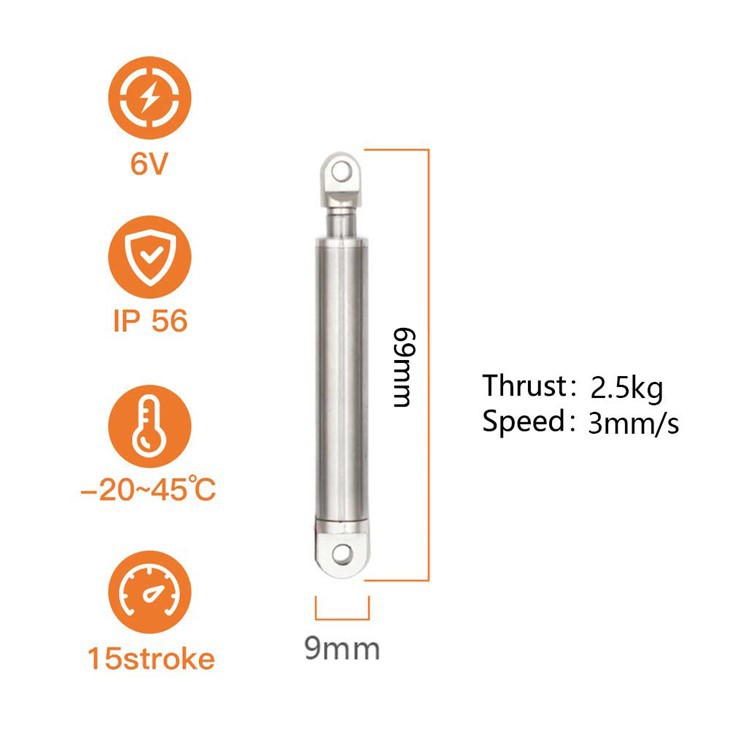
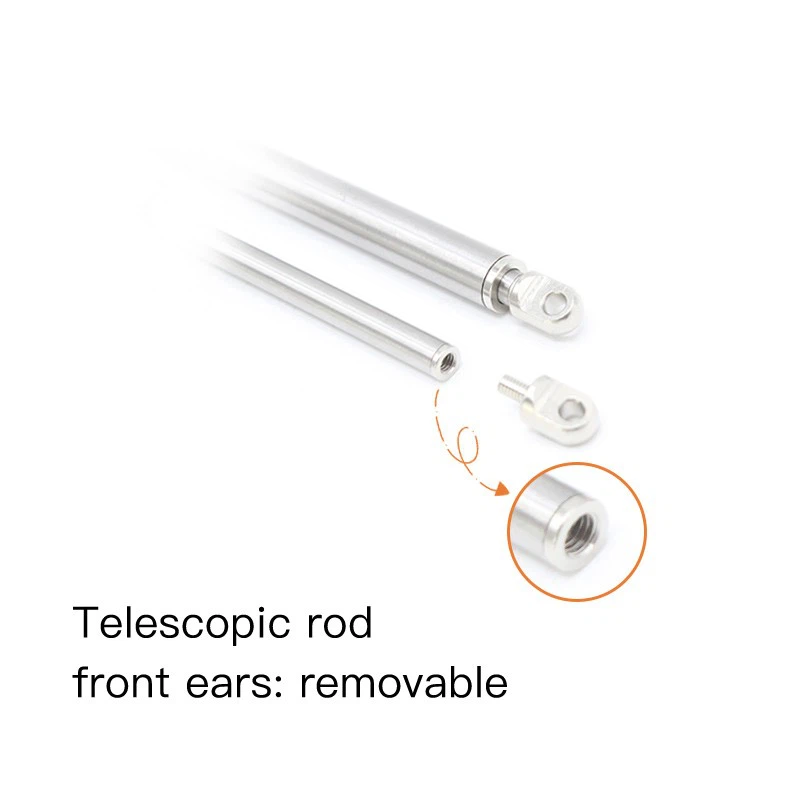
As a leading supplier of linear motor actuators, we offer a wide range of products designed to meet different application requirements while keeping power consumption in check. Our Stainless Steel Linear Actuator is made of high - quality stainless steel, which not only provides excellent corrosion resistance but also features advanced motor design and control algorithms to ensure high efficiency and low power consumption. It is suitable for applications in harsh environments, such as food processing and chemical manufacturing.
Our Ip56 Linear Actuator is designed with high - level protection against dust and water ingress. It is equipped with energy - saving features, making it an ideal choice for outdoor and industrial applications where reliability and energy efficiency are crucial.
In addition, our Linear Actuator Control system allows users to optimize the operation of the actuator, further reducing power consumption. The advanced control algorithms can adjust the speed, acceleration, and force of the actuator according to the actual load requirements, ensuring that the actuator operates at the most energy - efficient level.
Contact Us for Procurement
If you are looking for high - quality linear motor actuators with low power consumption, we are here to help. Our team of experts can provide you with detailed technical information and guidance on choosing the right actuator for your specific application. Whether you are involved in industrial automation, medical equipment, or other fields, we have the products and solutions to meet your needs. Contact us today to start a procurement discussion and take advantage of our reliable products and excellent service.
References
- "Linear Motors: Technology and Applications" by Thomas Kenjo.
- "Motion Control Handbook" edited by Peter Nachtwey.
- Technical documentation from leading linear motor actuator manufacturers.






