

Hey there! As a supplier of 24V actuators, I often get asked about the speed of these nifty devices. So, let's dive right in and break it down.
First off, what exactly is a 24V actuator? Well, it's a type of device that converts energy into motion. In the case of a 24V actuator, it uses a 24 - volt power source to generate linear or rotary movement. These actuators are used in a wide range of applications, from industrial machinery to home automation.
Now, when it comes to the speed of a 24V actuator, there's no one - size - fits - all answer. The speed can vary significantly depending on several factors.
One of the main factors is the load. Think of it like this: if you're trying to push a heavy box, you're not going to be able to move it as fast as a light one. The same principle applies to actuators. When an actuator has to move a heavy load, its speed will be slower compared to when it's moving a light load. For example, if you're using a 24V actuator to lift a small object like a book, it might move at a relatively high speed. But if you're trying to lift a heavy piece of machinery, the speed will drop.
Another important factor is the type of actuator. There are different types of 24V actuators, such as hydraulic, pneumatic, and electric. Each type has its own characteristics when it comes to speed.
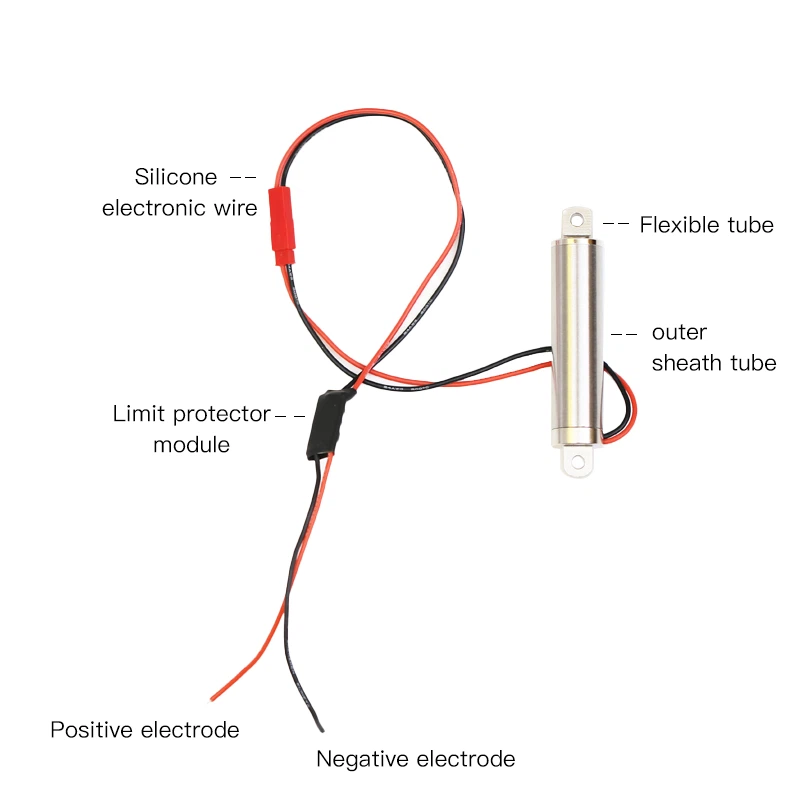

Hydraulic actuators use fluid pressure to generate motion. They can be quite powerful and are often used in heavy - duty applications. However, their speed can be a bit slower compared to electric actuators, especially when it comes to quick, repeated movements. The fluid in the hydraulic system needs time to build up pressure and move the actuator.
Pneumatic actuators, on the other hand, use compressed air. They are generally faster than hydraulic actuators and can provide a good balance between speed and power. But they also have some limitations. For instance, the air pressure needs to be maintained at a certain level, and if there are any leaks in the system, it can affect the speed and performance of the actuator.
Electric actuators are becoming increasingly popular, especially in applications where precision and speed are required. A 24V electric actuator can offer a wide range of speeds, depending on its design and the control system used. Some electric actuators can be programmed to move at different speeds for different tasks. They are also very efficient and can provide a high level of accuracy.
When it comes to our link text: Actuator 24V, we offer a variety of models with different speed capabilities. We understand that different customers have different needs, so we've designed our actuators to be flexible. Whether you need a high - speed actuator for a fast - paced production line or a slower, more precise actuator for a delicate operation, we've got you covered.
Let's talk a bit more about how you can control the speed of a 24V actuator. In most cases, the speed can be adjusted using a controller. The controller allows you to set the desired speed based on your specific requirements. Some controllers also offer additional features, such as acceleration and deceleration control. This means you can make the actuator start and stop smoothly, which is important in many applications.
For example, in a robotic arm application, you might want the arm to move quickly to a certain position and then slow down as it approaches the target. With a good controller, you can program the 24V actuator to do just that.
Now, you might be wondering how the speed of a 24V actuator compares to other voltage actuators. For instance, there are link text: Linear Actuator 12V available in the market. Generally, a 24V actuator will be able to provide more power and potentially higher speeds compared to a 12V actuator. The higher voltage allows the actuator to draw more current, which in turn can generate more force and speed. However, it's important to note that the actual speed also depends on the design and the load, as we discussed earlier.
If you're looking for a compact and precise actuator, you might also be interested in link text: Miniature Linear Motor. These motors are designed to be small in size but can still offer good speed and performance. They are often used in applications where space is limited, such as in medical devices or small - scale automation systems.
As a supplier, we've done a lot of testing on our 24V actuators to ensure that they meet the highest standards of quality and performance. We've tested them under different load conditions and with various control systems to see how they perform. This way, we can provide our customers with accurate information about the speed and other specifications of our actuators.
We also offer technical support to our customers. If you're not sure which 24V actuator is right for your application or if you have any questions about speed or other aspects, our team of experts is here to help. We can work with you to understand your needs and recommend the best actuator for your project.
In conclusion, the speed of a 24V actuator depends on multiple factors, including the load, the type of actuator, and the control system. At our company, we offer a wide range of 24V actuators with different speed capabilities to suit various applications. Whether you're in the industrial, automotive, or home automation sector, we have an actuator that can meet your requirements.
If you're interested in learning more about our 24V actuators or if you're looking to make a purchase, we'd love to hear from you. Just reach out to us, and we can start a discussion about your specific needs. We're committed to providing you with the best products and services, and we're confident that our 24V actuators will meet your expectations.
References
- "Actuator Handbook" - A comprehensive guide on different types of actuators and their performance characteristics.
- "Automation Technology Journal" - Articles on the latest trends and developments in actuator technology.






