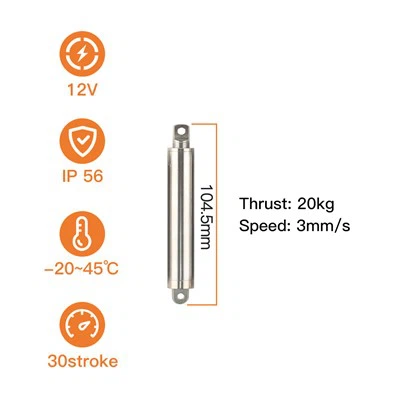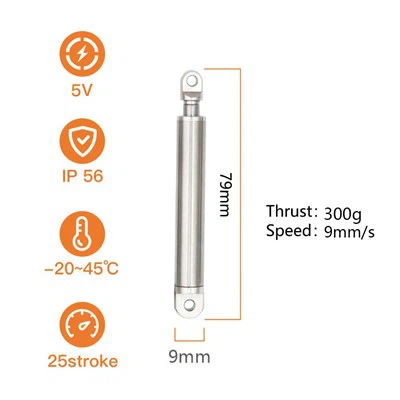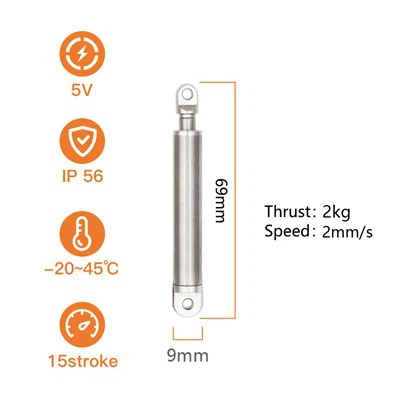
The mounting style of an IP56 linear actuator is a crucial aspect that determines its functionality, efficiency, and suitability for various applications. As a leading supplier of IP56 linear actuators, we understand the importance of providing clear information about these mounting styles to our customers. In this blog post, we will delve into the different mounting styles of IP56 linear actuators, their advantages, and how to choose the right one for your specific needs.
Understanding IP56 Linear Actuators
Before we explore the mounting styles, let's briefly understand what an IP56 linear actuator is. The IP56 rating indicates that the actuator is protected against dust ingress (the '5' in IP56) and powerful water jets from any direction (the '6' in IP56). This makes it suitable for use in harsh environments where exposure to dust and water is a concern, such as industrial settings, outdoor applications, and marine environments.
A linear actuator is a device that converts rotational motion into linear motion. It can be used to push, pull, lift, or lower objects with precision and control. IP56 linear actuators are typically powered by electricity and can be controlled remotely or automatically, depending on the application requirements.
Common Mounting Styles of IP56 Linear Actuators
1. Clevis Mounting
Clevis mounting is one of the most common mounting styles for IP56 linear actuators. It involves using a clevis, which is a U-shaped metal bracket with holes at the ends, to attach the actuator to the load or the mounting surface. The clevis allows for some angular movement, which is useful in applications where the load may move slightly during operation.
Advantages of Clevis Mounting:
- Flexibility: The clevis provides some flexibility in the mounting, allowing the actuator to accommodate small angular misalignments between the load and the mounting surface.
- Easy Installation: Clevis mounts are relatively easy to install and can be used with a variety of actuator sizes and types.
- Versatility: They can be used in both push and pull applications, making them suitable for a wide range of industrial and commercial applications.
2. Flange Mounting
Flange mounting involves attaching the actuator to a flat surface using a flange, which is a flat, circular or rectangular plate with holes around the perimeter. The flange is bolted or screwed to the mounting surface, providing a secure and stable connection.
Advantages of Flange Mounting:
- Stability: Flange mounting provides a very stable connection, which is important in applications where the actuator needs to support heavy loads or operate in high-vibration environments.
- Precision: The flat surface of the flange allows for precise alignment of the actuator, ensuring accurate linear motion.
- Space Efficiency: Flange-mounted actuators can be installed in tight spaces, as they do not require additional clearance for angular movement like clevis mounts.
3. Trunnion Mounting
Trunnion mounting uses a pair of cylindrical pins or shafts, called trunnions, to support the actuator. The trunnions are typically located on either side of the actuator body and are mounted on bearings or bushings, allowing the actuator to rotate around the trunnion axis.
Advantages of Trunnion Mounting:
- Swinging Motion: Trunnion mounting allows the actuator to swing or pivot around the trunnion axis, which is useful in applications where the load needs to move in an arc or a circular path.
- Load Distribution: The trunnions help distribute the load evenly across the actuator body, reducing stress and wear on the internal components.
- Long Stroke Applications: Trunnion-mounted actuators are often used in applications with long strokes, as they can provide a more stable and controlled motion.
4. Foot Mounting
Foot mounting involves attaching the actuator to the mounting surface using a base or a footplate. The footplate is usually a flat, rectangular or square plate with holes for bolts or screws. Foot mounting is similar to flange mounting but is typically used for smaller actuators or applications where a more compact design is required.
Advantages of Foot Mounting:
- Compact Design: Foot-mounted actuators have a low profile and can be installed in tight spaces, making them suitable for applications where space is limited.
- Easy Installation: Foot mounts are easy to install and can be used with a variety of mounting surfaces, including flat plates, frames, and brackets.
- Cost-Effective: Foot mounting is often a more cost-effective option compared to other mounting styles, especially for smaller actuators.
Choosing the Right Mounting Style
Choosing the right mounting style for your IP56 linear actuator depends on several factors, including the application requirements, the load characteristics, and the available space. Here are some guidelines to help you make the right decision:
1. Application Requirements
Consider the type of motion required by your application. If the load needs to move in a straight line with no angular movement, a flange or foot mount may be the best option. If the load needs to move in an arc or a circular path, a trunnion or clevis mount may be more suitable.
2. Load Characteristics
The weight, size, and shape of the load can also affect the choice of mounting style. Heavy loads may require a more stable mounting style, such as flange or trunnion mounting, to ensure proper support and prevent damage to the actuator. Light loads may be adequately supported by a clevis or foot mount.


3. Available Space
The available space for installation is another important factor to consider. If space is limited, a compact mounting style, such as foot mounting, may be the best choice. If there is enough space, a more flexible mounting style, such as clevis or trunnion mounting, may be preferred.
Our Product Offerings
As a supplier of IP56 linear actuators, we offer a wide range of products with different mounting styles to meet the diverse needs of our customers. Our actuators are designed and manufactured to the highest quality standards, ensuring reliable performance and long service life.
Some of our popular products include the 6 Volt Linear Actuator with Remoteactuators, which is suitable for small-scale applications and can be controlled remotely. We also offer Fast Actuators Linear and Fast Linear Actuator for applications that require high-speed operation.
Contact Us for Procurement
If you are interested in purchasing IP56 linear actuators or have any questions about our products and mounting styles, please do not hesitate to contact us. Our team of experts is ready to assist you in choosing the right actuator and mounting style for your specific application. We can provide detailed product information, technical support, and competitive pricing.
References
- Linear Actuator Handbook, published by the International Linear Actuator Association.
- Industrial Automation Guide, published by the Industrial Automation Institute.
- IP Rating Standards, published by the International Electrotechnical Commission.