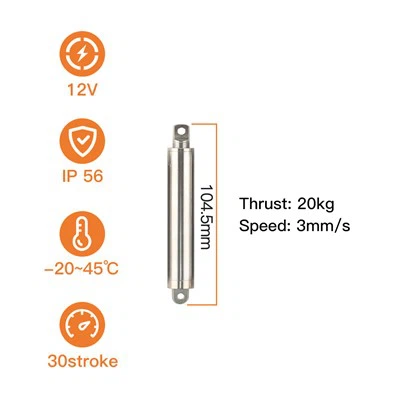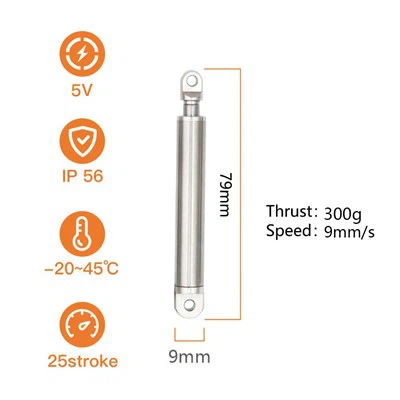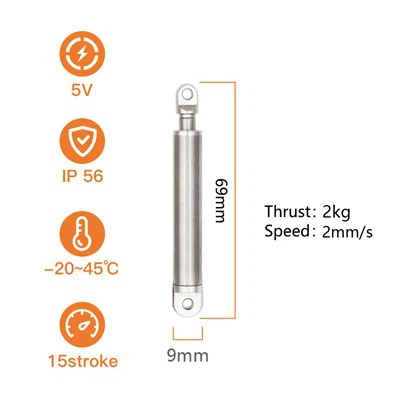
Hey there! As a supplier of 12V linear motors, I often get asked about all sorts of technical stuff. One question that pops up quite a bit is, "What is the hysteresis loss of a 12V linear motor?" So, I thought I'd take some time to break it down for you in a way that's easy to understand.
First off, let's talk about what a 12V linear motor is. A linear motor is a type of electric motor that produces a linear force instead of a rotational one. It's like a regular motor, but instead of spinning a shaft, it moves in a straight line. The 12V part just means it runs on a 12 - volt power supply, which is pretty common in a lot of applications, from small DIY projects to some industrial setups.
Now, onto the main topic: hysteresis loss. Hysteresis is basically a property of magnetic materials. When you have a magnetic material in a linear motor, and you apply a magnetic field to it, the magnetic domains within the material start to align with the field. But here's the thing - when you remove the magnetic field, the magnetic domains don't just snap back to their original positions right away. There's a bit of a lag, or a delay, in this realignment process.
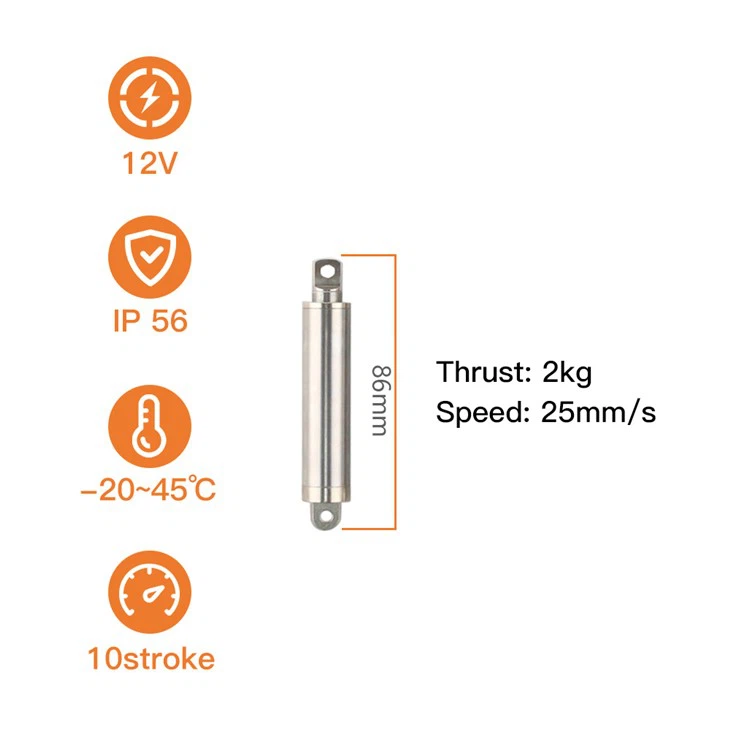
This lag is what causes hysteresis loss. It's essentially the energy that's wasted in the process of realigning those magnetic domains over and over again as the motor operates. Every time the magnetic field changes direction (which happens constantly in a linear motor as it moves back and forth), the magnetic domains have to readjust, and this takes energy. That energy is then dissipated as heat, which is not what we want because it means less efficiency for the motor.
The amount of hysteresis loss in a 12V linear motor depends on a few factors. One of the main factors is the type of magnetic material used in the motor. Different materials have different levels of hysteresis. For example, some soft magnetic materials have relatively low hysteresis, which means they're better at realigning their magnetic domains quickly and thus have less hysteresis loss. On the other hand, hard magnetic materials have higher hysteresis and will result in more energy being wasted.
Another factor is the frequency at which the magnetic field changes. The faster the magnetic field changes (i.e., the higher the operating frequency of the motor), the more often the magnetic domains have to realign, and the greater the hysteresis loss. So, if you're using a 12V linear motor in an application where it needs to move really fast, you might expect to see more hysteresis loss compared to a slower - moving application.
So, why does hysteresis loss matter? Well, for starters, it affects the efficiency of the motor. A motor with high hysteresis loss has to consume more energy to do the same amount of work as a motor with low hysteresis loss. This means higher operating costs over time, especially if the motor is running continuously. It can also lead to overheating, which can damage the motor and reduce its lifespan.
As a 12V linear motor supplier, we're always looking for ways to minimize hysteresis loss in our products. We carefully select the magnetic materials used in our motors to ensure they have low hysteresis. We also optimize the design of the motor to reduce the frequency at which the magnetic field changes as much as possible without sacrificing performance.
Now, if you're in the market for a 12V linear motor, you might also be interested in some related products. For example, we also offer Linear Actuator 24V. These are great for applications that require a bit more power than a 12V motor can provide. And if you need something even more compact, our Micro Linear Actuator 12V is a perfect choice. It's small but powerful and can be used in a variety of tight - space applications. There's also the 24V Actuator, which is another option for those looking for a bit more voltage.
If you're still not sure which product is right for your specific application, or if you have more questions about hysteresis loss or any other technical aspect of our 12V linear motors, don't hesitate to reach out. We're here to help you make the best choice for your needs. Whether you're a hobbyist working on a cool DIY project or an engineer designing an industrial system, we've got the expertise and the products to support you.
In conclusion, understanding hysteresis loss in a 12V linear motor is crucial for getting the most out of your motor. By being aware of the factors that contribute to hysteresis loss and choosing a motor that's designed to minimize it, you can save energy, reduce operating costs, and extend the life of your motor. So, if you're thinking about purchasing a 12V linear motor, give us a shout, and we'll be happy to discuss your options and help you find the perfect motor for your application.
References
- "Electric Machinery Fundamentals" by Stephen J. Chapman
- "Linear Motors: Principles, Performance, and Applications" by A. B. J. Laithwaite