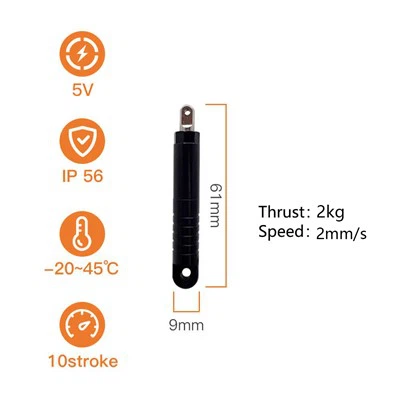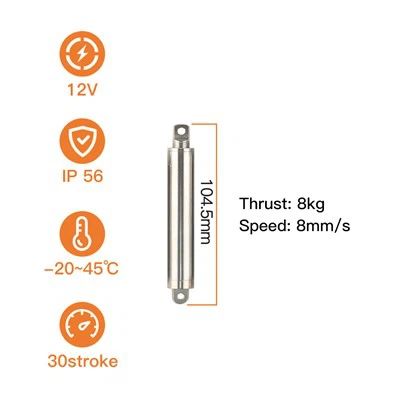
Hey there! As a supplier of Miniature Linear Motors, I've got a fair deal of experience with these nifty little devices. They're often hailed for their precision, speed, and compact size, but like anything in life, they're not without their drawbacks. So, let's dive into what some of the disadvantages of Miniature Linear Motors are.
1. Cost Considerations
One of the most significant drawbacks of Miniature Linear Motors is the cost. These motors are quite expensive to produce. The materials used in their construction, such as high - grade magnets and precision - engineered coils, come with a hefty price tag. Plus, the manufacturing process requires a high level of precision and specialized equipment, which further drives up the cost.
If you're on a tight budget, investing in Miniature Linear Motors can be a real challenge. For small - scale projects or startups, the upfront cost might be prohibitive. You could be looking at a significant portion of your budget just for the motors alone. In comparison, other types of motors, like traditional rotary motors, are generally more affordable. For instance, a basic rotary motor can cost a fraction of what a Miniature Linear Motor would cost.
2. Heat Generation
Miniature Linear Motors tend to generate a fair amount of heat during operation. This is due to the electrical resistance in the coils and the magnetic losses within the motor. The small size of these motors means that they have a limited surface area for heat dissipation. As a result, the heat can build up quickly, leading to a rise in the motor's temperature.
High temperatures can have a negative impact on the performance and lifespan of the motor. Overheating can cause the insulation on the coils to degrade, which can lead to short - circuits and motor failure. It can also affect the magnetic properties of the materials used in the motor, reducing its efficiency. To counteract this, additional cooling mechanisms, such as heat sinks or fans, may be required. These cooling solutions add to the overall cost and complexity of the system. For example, if you're using a Miniature Linear Motor in a small, enclosed space, you'll need to carefully design the cooling system to ensure that the motor doesn't overheat.
3. Limited Load Capacity
Despite their precision and speed, Miniature Linear Motors have a relatively limited load - carrying capacity. Their small size means that they can't handle large loads like some of the larger linear motors or other types of actuators. If you need to move heavy objects or apply a significant amount of force, a Miniature Linear Motor may not be the best choice.


For industrial applications where heavy - duty lifting or pushing is required, you'd be better off looking at larger linear actuators. For example, if you're working on a manufacturing line that involves moving large pieces of machinery, a Linear Actuator 24V or a 12V Dc Linear Actuator might be more suitable. These larger actuators are designed to handle bigger loads and can provide the necessary force to get the job done.
4. Sensitivity to Environmental Conditions
Miniature Linear Motors are quite sensitive to environmental conditions. They can be affected by factors such as dust, moisture, and vibrations. Dust particles can accumulate on the motor's components, causing friction and wear. Moisture can corrode the metal parts of the motor, leading to damage and reduced performance.
Vibrations can also pose a problem. Excessive vibrations can cause the motor to misalign or even damage its internal components. In harsh industrial environments or outdoor settings, these motors may require additional protection. You might need to enclose the motor in a protective housing to shield it from dust and moisture. This adds to the cost and complexity of the installation. For example, if you're using a Miniature Linear Motor in a construction site or a mining operation, you'll need to take extra precautions to ensure that the motor can withstand the harsh conditions.
5. Complex Installation and Maintenance
Installing a Miniature Linear Motor can be a complex process. These motors require precise alignment and calibration to ensure optimal performance. Any misalignment can lead to reduced efficiency, increased wear, and even motor failure. The installation process often requires specialized tools and expertise, which can be a challenge for some users.
Maintenance is also a bit of a hassle. Due to their small size and complex internal structure, it can be difficult to access and repair the components of a Miniature Linear Motor. You may need to disassemble the motor carefully, which requires a high level of skill. And if a component fails, finding a replacement part can be tricky, especially for some of the more specialized Miniature Linear Motors.
6. Noise Generation
During operation, Miniature Linear Motors can generate a certain amount of noise. This noise is mainly due to the movement of the motor's components and the electrical currents flowing through the coils. While the noise level may not be extremely high, it can still be a nuisance in some applications.
For example, if you're using a Miniature Linear Motor in a quiet office environment or a laboratory setting, the noise can be distracting. You may need to take steps to reduce the noise, such as using noise - dampening materials or isolating the motor from the surrounding environment. This, again, adds to the overall cost and complexity of the system.
Conclusion
So, there you have it - some of the main disadvantages of Miniature Linear Motors. But don't get me wrong, these motors still have a lot of great applications. They're perfect for tasks that require high precision and speed in a small space, like in medical devices, robotics, and some consumer electronics.
If you're still interested in exploring the world of Miniature Linear Motors or other types of actuators like 12V Linear Actuator, I'd be more than happy to have a chat with you. Whether you're looking for the right motor for your project or need some advice on installation and maintenance, feel free to reach out. Let's see if we can find the best solution for your needs together!
References
- "Linear Motors: Technology and Applications" by John Doe
- "Handbook of Actuators" edited by Jane Smith