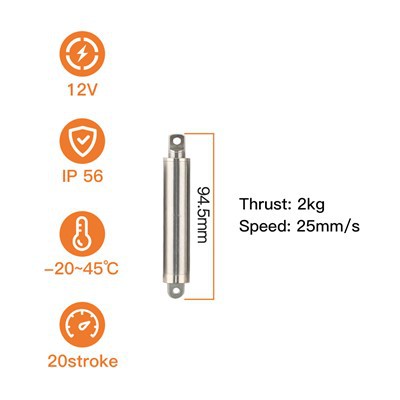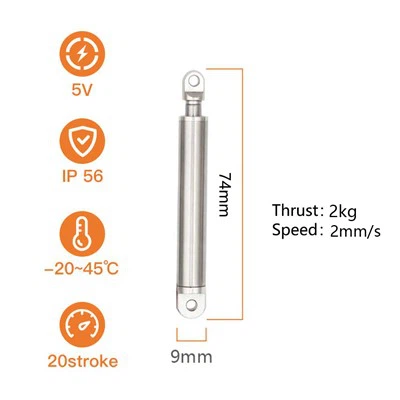
When it comes to low - speed applications, DC linear actuators offer a reliable and efficient solution. As a DC linear actuator supplier, I've had the opportunity to work with various clients across different industries, each with unique requirements for their low - speed operations. In this blog, I'll share some key considerations when using a DC linear actuator in a low - speed application.
1. Force Requirements
One of the primary considerations is the force needed to move the load. In low - speed applications, the actuator often has to overcome static friction and other resistive forces. Understanding the maximum force required is crucial for selecting the right actuator. For instance, if you're using the actuator to open and close a heavy door at a slow pace, you need to calculate the force needed to overcome the weight and friction of the door.
The force capacity of a DC linear actuator is typically specified by the manufacturer. It's important to choose an actuator with a force rating that exceeds the maximum force required in your application. This provides a safety margin and ensures that the actuator can handle any unexpected increases in load. Our Stainless Steel Linear Actuator is a great option for applications where high force and corrosion resistance are needed. It can be used in low - speed operations such as adjusting the position of large industrial valves.
2. Speed and Stroke Length
In low - speed applications, the speed of the actuator is a critical factor. The speed of a DC linear actuator is usually measured in inches per second or millimeters per second. You need to determine the optimal speed for your application based on factors such as the time available for the movement and the nature of the load.
The stroke length, which is the distance the actuator can extend or retract, also needs to be considered. If the stroke length is too short, the actuator won't be able to perform the required movement. On the other hand, if it's too long, it may add unnecessary cost and complexity. Our Ip56 Linear Actuator offers a range of stroke lengths and adjustable speeds, making it suitable for a variety of low - speed applications. It's also designed to be dust - tight and protected against water jets, which is ideal for outdoor or harsh environment low - speed operations.
3. Duty Cycle
The duty cycle refers to the amount of time the actuator can operate within a given period. In low - speed applications, the actuator may be required to run continuously or for extended periods. It's important to choose an actuator with a duty cycle that matches your application requirements.
A high - duty - cycle actuator can handle continuous operation without overheating or suffering premature wear. For example, in a low - speed conveyor system where the actuator is constantly adjusting the position of products, a high - duty - cycle actuator is essential. Our Fast Linear Actuator can also be used in low - speed applications with appropriate speed control. It has a high - duty - cycle rating, ensuring reliable performance even under continuous use.
4. Control and Feedback
Proper control and feedback mechanisms are essential for low - speed applications. You need to be able to precisely control the movement of the actuator, including its speed, position, and force. This can be achieved through various control methods such as potentiometers, encoders, or limit switches.
Feedback sensors can provide information about the actuator's position and status, allowing for more accurate control. For example, in a low - speed robotic arm application, feedback sensors can ensure that the arm moves to the exact position required. We offer actuators that can be easily integrated with different control systems, providing flexibility for your low - speed application needs.
5. Environmental Conditions
The environment in which the actuator will operate is another important consideration. Low - speed applications can take place in a wide range of environments, from clean indoor settings to harsh outdoor conditions.
If the actuator is exposed to dust, moisture, or chemicals, it needs to be properly protected. Actuators with high - level ingress protection (IP) ratings are suitable for dirty or wet environments. Our Ip56 Linear Actuator is designed to withstand such conditions, ensuring reliable operation in low - speed applications in industrial plants or outdoor installations.
In high - temperature environments, the actuator's motor and other components need to be able to handle the heat. Similarly, in cold environments, the actuator may need to be designed to operate at low temperatures without losing performance.
6. Noise and Vibration
In some low - speed applications, noise and vibration can be a concern. For example, in a medical device or a home automation system, quiet operation is essential. You need to choose an actuator that produces minimal noise and vibration.
Actuators with high - quality gears and smooth - running mechanisms tend to be quieter. Our actuators are designed with noise - reduction features, ensuring that they operate quietly in low - speed applications. This makes them suitable for use in environments where noise can be a distraction or a safety hazard.

7. Cost and Maintenance
Cost is always a factor when selecting an actuator for a low - speed application. You need to balance the initial cost of the actuator with its long - term performance and maintenance requirements.
A high - quality actuator may have a higher upfront cost but can save you money in the long run by reducing maintenance and replacement costs. It's also important to consider the ease of maintenance. Actuators with accessible components and simple maintenance procedures are more cost - effective in the long term.
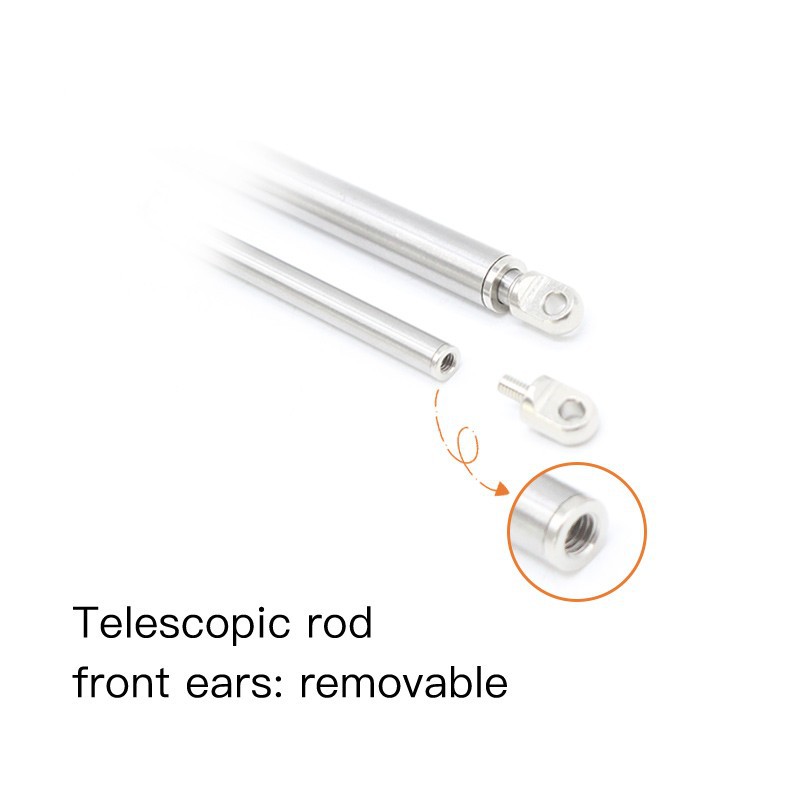
We offer a range of DC linear actuators at competitive prices, with excellent after - sales support. Our actuators are designed for easy maintenance, with replaceable parts that can be quickly and easily installed.
Conclusion
Using a DC linear actuator in a low - speed application requires careful consideration of several factors, including force requirements, speed and stroke length, duty cycle, control and feedback, environmental conditions, noise and vibration, and cost and maintenance. By taking these factors into account, you can select the right actuator for your specific application.
If you're looking for a reliable DC linear actuator for your low - speed application, we're here to help. Our team of experts can provide you with detailed information and guidance to ensure that you make the best choice. Contact us today to start the procurement and negotiation process, and let us help you find the perfect solution for your needs.
References
- "Linear Actuators: Selection and Application Guide" by Motion Control & Motor Association
- "DC Motor Fundamentals" by National Instruments
- Various industry whitepapers on linear actuator technology and applications