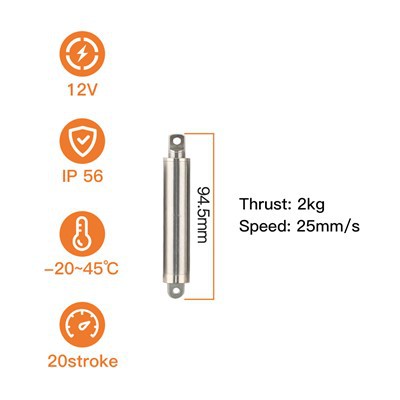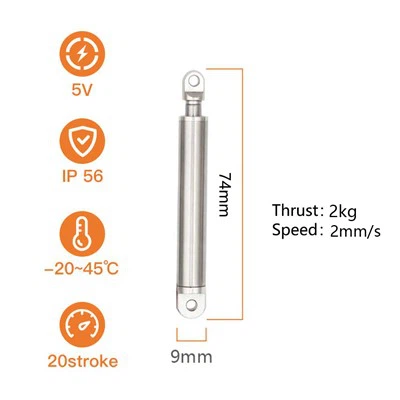
In the ever - evolving field of aerospace, the demand for high - performance components is constantly on the rise. As a supplier of Fast Actuators Linear, I am often asked whether these actuators can be used in aerospace applications. In this blog, I will delve into the characteristics of fast linear actuators and explore their potential in the aerospace industry.
Understanding Fast Linear Actuators
Fast linear actuators are devices that convert rotational motion into linear motion at high speeds. They are designed to provide rapid and precise movement, which is crucial in many applications. These actuators typically consist of a motor, a drive mechanism (such as a screw or a belt), and a control system. The motor provides the power, the drive mechanism translates the rotational motion into linear motion, and the control system ensures accurate positioning and speed control.
There are several types of fast linear actuators, including electric, hydraulic, and pneumatic actuators. Electric linear actuators are becoming increasingly popular due to their high efficiency, precise control, and low maintenance requirements. For example, our Electric Lift Cylinder is a type of electric fast linear actuator that offers smooth and reliable operation.
Requirements in Aerospace Applications
The aerospace industry has extremely high standards and unique requirements for components. Firstly, weight is a critical factor. Every additional kilogram in an aircraft or spacecraft can significantly increase fuel consumption and reduce payload capacity. Therefore, components need to be as lightweight as possible without sacrificing performance.
Secondly, reliability is non - negotiable. In aerospace applications, a single component failure can lead to catastrophic consequences. Actuators must be able to operate flawlessly under extreme conditions, including high temperatures, low pressures, and intense vibrations.

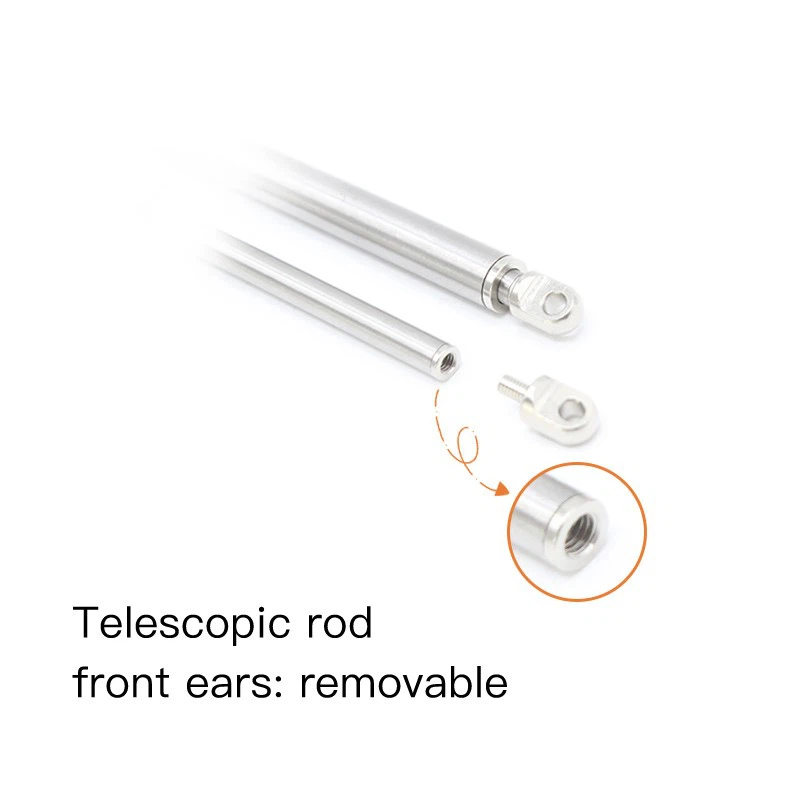
Precision is also of utmost importance. Many aerospace systems, such as flight control surfaces and landing gear, require accurate and repeatable positioning. Even a small deviation in the movement of an actuator can affect the stability and safety of the aircraft or spacecraft.
Can Fast Linear Actuators Meet Aerospace Requirements?
Weight Considerations
Modern fast linear actuators, especially electric ones, are designed with lightweight materials. For instance, the use of advanced composites and aluminum alloys in the construction of actuator bodies can significantly reduce weight. Our Linear Motor Actuator is engineered with lightweight yet strong materials, making it suitable for aerospace applications where weight is a concern.
Reliability
Fast linear actuators can be highly reliable when properly designed and manufactured. Electric actuators, in particular, have fewer moving parts compared to hydraulic or pneumatic actuators, which reduces the risk of mechanical failure. They also do not rely on fluid systems, eliminating the potential for leaks. Additionally, advanced control systems can monitor the performance of the actuator in real - time and detect any potential issues before they become critical.
Precision
Fast linear actuators are capable of providing high - precision movement. With the use of advanced feedback sensors and control algorithms, they can achieve accurate positioning within a very small tolerance. Our Linear Actuator Control system is designed to ensure precise and repeatable movement, which is essential for aerospace applications.
Applications of Fast Linear Actuators in Aerospace
Flight Control Surfaces
Fast linear actuators can be used to control the movement of flight control surfaces, such as ailerons, elevators, and rudders. These surfaces need to be adjusted quickly and precisely to maintain the stability and maneuverability of the aircraft. The high - speed and precision capabilities of fast linear actuators make them ideal for this application.
Landing Gear
The operation of landing gear requires rapid and reliable movement. Fast linear actuators can be used to extend and retract the landing gear, as well as to control the braking system. Their ability to operate under high loads and extreme conditions makes them suitable for this critical aerospace application.
Satellite Deployment
In the field of space exploration, fast linear actuators can be used for satellite deployment. They can quickly and accurately position satellites in their desired orbits, ensuring the success of space missions.
Challenges and Solutions
While fast linear actuators have great potential in aerospace applications, there are still some challenges that need to be addressed. One of the main challenges is the harsh space environment. Radiation, extreme temperatures, and micrometeoroids can all damage the actuator. To overcome these challenges, we can use radiation - hardened materials and protective coatings.
Another challenge is the need for long - term operation without maintenance. In space, it is often impossible to perform on - site repairs. Therefore, actuators need to be designed with high - reliability components and self - diagnostic systems to ensure long - term operation.
Conclusion
In conclusion, fast linear actuators have significant potential in aerospace applications. Their lightweight design, high reliability, and precision make them suitable for a wide range of aerospace systems, including flight control surfaces, landing gear, and satellite deployment. As a supplier of Fast Actuators Linear, we are committed to continuously improving our products to meet the strict requirements of the aerospace industry.
If you are interested in exploring how our fast linear actuators can be integrated into your aerospace projects, we invite you to contact us for a detailed discussion. Our team of experts is ready to provide you with customized solutions and support throughout the procurement process.
References
- "Aerospace Engineering Principles" by John J. Bertin
- "Actuators for Aerospace Applications" - Journal of Aerospace Technology and Management
- "Advanced Linear Actuator Technologies" - IEEE Transactions on Industrial Electronics