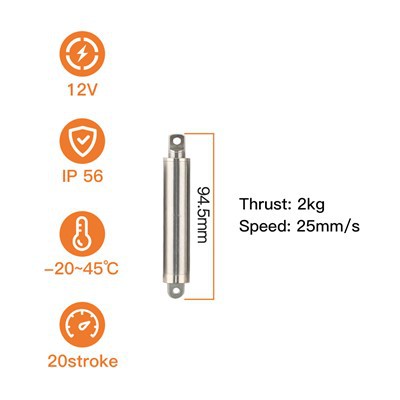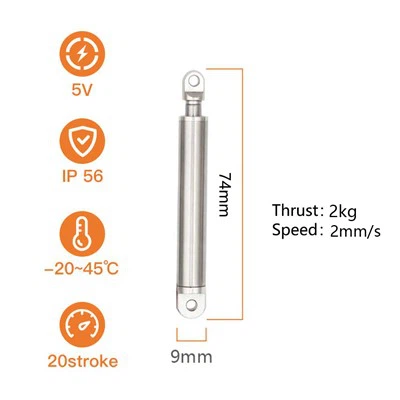
Hey there! As a supplier of tiny linear actuators, I often get asked if these little powerhouses can be used in food processing equipment. Well, let's dive right into it and find out.
First off, what exactly is a tiny linear actuator? It's a device that converts rotational motion into linear motion, and it's small in size but mighty in performance. These actuators can be found in all sorts of applications, from robotics to medical devices. But when it comes to food processing, there are some unique considerations.
One of the main advantages of using a tiny linear actuator in food processing equipment is its precision. In the food industry, accuracy is key. Whether you're portioning ingredients, filling containers, or moving products along a conveyor belt, you need a device that can perform these tasks with high precision. Tiny linear actuators can be programmed to move to specific positions with great accuracy, ensuring that each product is processed consistently.
For example, let's say you're running a bakery. You need to fill muffin tins with the exact same amount of batter in each cup. A tiny linear actuator can be used to control the flow of batter, making sure that each muffin is the same size and shape. This not only improves the quality of your products but also increases efficiency and reduces waste.
Another benefit is the compact size of these actuators. Food processing equipment often has limited space, and traditional actuators may be too large to fit. Tiny linear actuators, on the other hand, can be easily integrated into tight spaces without taking up too much room. This allows for more flexibility in the design of the equipment and can help to optimize the layout of the production line.
In addition to precision and compact size, tiny linear actuators are also known for their reliability. They are built to withstand the rigors of continuous operation, which is essential in a food processing environment. With proper maintenance, these actuators can last for a long time, reducing the need for frequent replacements and minimizing downtime.
Now, let's talk about some of the specific applications of tiny linear actuators in food processing equipment. One common use is in the filling and packaging process. As I mentioned earlier, these actuators can be used to control the flow of liquids or solids into containers. They can also be used to seal packages, ensuring that the products are properly protected and preserved.
For instance, in a beverage bottling plant, a tiny linear actuator can be used to control the filling level of each bottle. It can also be used to cap the bottles, providing a tight seal that prevents leakage. This helps to maintain the quality of the beverages and ensures that they reach the consumers in perfect condition.
Tiny linear actuators are also used in the cutting and slicing process. They can be used to control the movement of blades, allowing for precise cuts at high speeds. This is particularly useful in the meat and cheese industry, where products need to be sliced to specific thicknesses.
Let's take a look at some of the different types of tiny linear actuators that are suitable for food processing equipment. One option is the Electric Lift Cylinder. This type of actuator is designed to provide a lifting or pushing force, making it ideal for applications such as lifting conveyor belts or pushing products through a processing machine.
Another popular choice is the 6 Volt Linear Actuator with Remoteactuators. This actuator is powered by a 6-volt battery and can be controlled remotely, providing added convenience and flexibility. It's a great option for applications where the actuator needs to be operated from a distance.
Finally, there's the Linear Motor Actuator. This type of actuator uses a linear motor to provide precise and high-speed motion. It's often used in applications where rapid and accurate movement is required, such as in the sorting and packaging of small food items.
Of course, when using tiny linear actuators in food processing equipment, there are some important considerations. One of the main concerns is hygiene. The food industry has strict regulations regarding the cleanliness of equipment, and the actuators need to be designed and maintained in a way that prevents the growth of bacteria and other contaminants.
To address this issue, many tiny linear actuators are made from materials that are resistant to corrosion and easy to clean. They may also be coated with a special finish to prevent the accumulation of dirt and debris. In addition, regular cleaning and maintenance are essential to ensure that the actuators remain in good working condition and meet the hygiene standards.
Another consideration is the compatibility of the actuators with the food processing environment. Some foods may be acidic or corrosive, and the actuators need to be able to withstand these conditions without being damaged. It's important to choose actuators that are specifically designed for use in the food industry and that have been tested to ensure their compatibility with different types of foods.
In conclusion, tiny linear actuators can definitely be used in food processing equipment. They offer precision, compact size, reliability, and a wide range of applications. Whether you're looking to improve the quality of your products, increase efficiency, or optimize the layout of your production line, these actuators can be a great solution.
If you're interested in learning more about how our tiny linear actuators can be used in your food processing equipment, or if you have any questions or need further information, please don't hesitate to get in touch. We'd be more than happy to discuss your specific requirements and help you find the right actuator for your needs.


References
- "Food Processing Technology: Principles and Practice" by P. Fellows
- "Handbook of Food Engineering" by D. Heldman and D. Lund
- Industry standards and guidelines for food processing equipment