Hey there, fellow 3D printing enthusiasts! I'm a supplier of Tiny Linear Actuators, and I've been getting a lot of questions lately about whether these little powerhouses can be used in 3D printers. So, I thought I'd take a deep dive into this topic and share my insights with you.
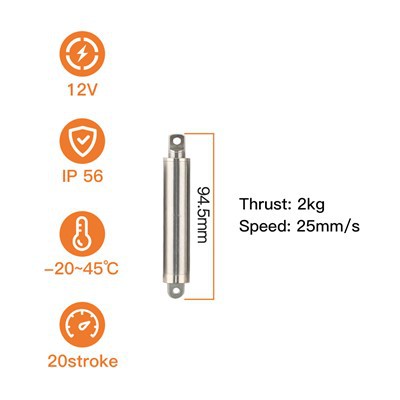
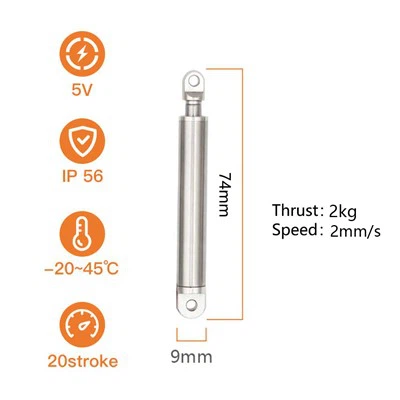
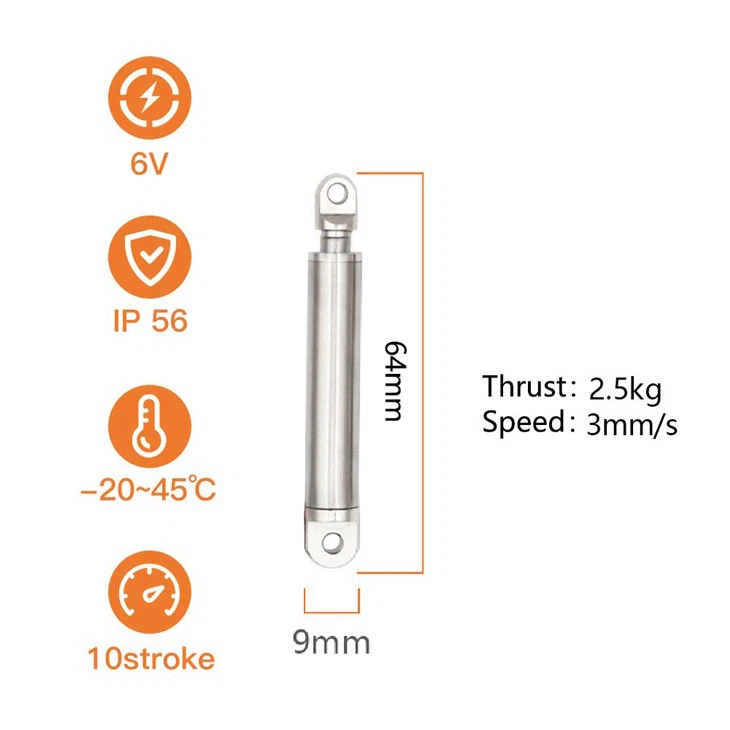
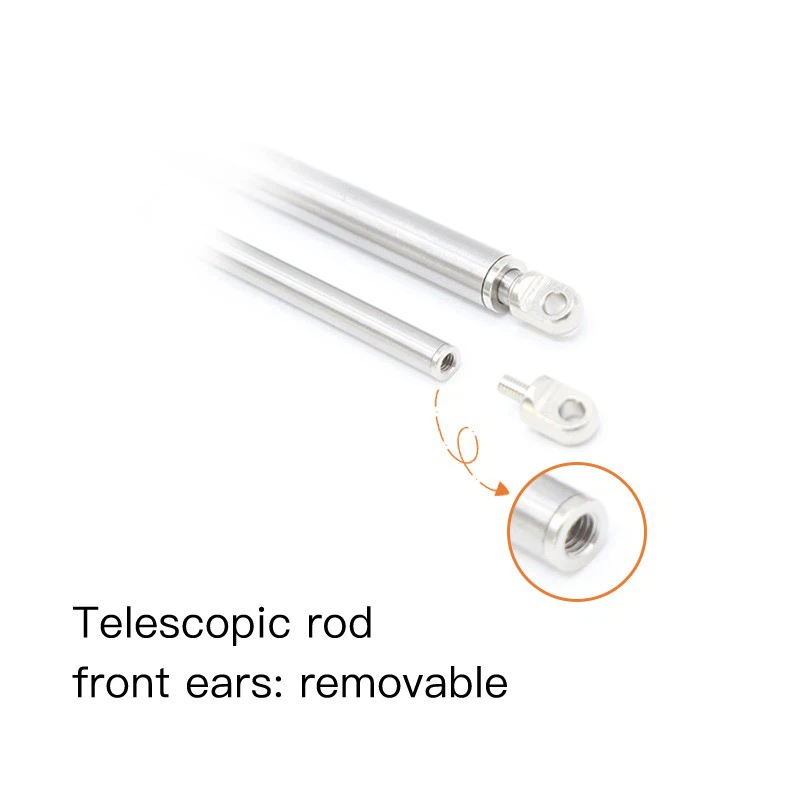
First off, let's talk about what a Tiny Linear Actuator is. It's a compact device that can convert rotational motion into linear motion. In simpler terms, it can move things in a straight line. These actuators are known for their precision, reliability, and small size, which makes them ideal for applications where space is limited. You can check out our Tiny Linear Actuator on our website to get a better idea of what they look like and what they can do.
Now, let's get to the big question: Can a tiny linear actuator be used in 3D printers? The short answer is yes! In fact, there are several reasons why these actuators can be a great fit for 3D printing.
Precision and Accuracy
One of the most important aspects of 3D printing is precision. You want your prints to be as accurate as possible, and that's where tiny linear actuators shine. These actuators can provide extremely precise linear motion, which means they can move the print head or the build platform with high accuracy. This precision translates into better print quality, with smoother surfaces and more detailed features.
For example, when printing a complex model with fine details, a tiny linear actuator can ensure that the print head moves exactly where it needs to go, layer by layer. This results in a more accurate representation of the original design, with fewer errors and imperfections.
Speed and Efficiency
In addition to precision, speed is also crucial in 3D printing. You want to be able to print your models as quickly as possible without sacrificing quality. Tiny linear actuators can help with that too. They are designed to be fast and efficient, which means they can move the print head or the build platform quickly and smoothly.
Some of our Fast Actuators Linear are specifically engineered for high-speed applications. These actuators can significantly reduce the printing time, allowing you to get your projects done faster. Whether you're a hobbyist looking to print a few small models or a professional in a production environment, the speed and efficiency of tiny linear actuators can make a big difference.
Space Saving
As I mentioned earlier, tiny linear actuators are compact in size. This is a huge advantage in 3D printers, where space is often limited. These actuators can be easily integrated into the printer's design without taking up too much room.
For example, if you're building a small desktop 3D printer, you need components that are small and lightweight. A tiny linear actuator can fit neatly into the printer's frame, allowing you to keep the overall size of the printer down. This makes it more portable and easier to use in a home or office environment.
Customization and Flexibility
Another great thing about tiny linear actuators is their flexibility. They can be customized to meet the specific needs of your 3D printer. Whether you need a certain stroke length, force output, or speed, we can work with you to design an actuator that fits your requirements.
For instance, if you're printing large models, you might need an actuator with a longer stroke length to move the build platform further. On the other hand, if you're printing small, detailed models, you might need an actuator with a higher force output to ensure precise movement. Our team of experts can help you choose the right actuator for your application and make any necessary modifications.
Compatibility with Different Types of 3D Printers
Tiny linear actuators can be used in a variety of 3D printers, including Fused Deposition Modeling (FDM), Stereolithography (SLA), and Selective Laser Sintering (SLS) printers. Each type of printer has its own unique requirements, but our actuators can be adapted to work with them all.
For example, in an FDM printer, the actuator can be used to move the extruder head, which deposits the molten plastic layer by layer. In an SLA printer, the actuator can be used to move the build platform up and down as the resin is cured by the laser. And in an SLS printer, the actuator can be used to move the powder bed or the laser scanner.
Cost-Effectiveness
When it comes to choosing components for your 3D printer, cost is always a consideration. Tiny linear actuators are a cost-effective solution compared to some other types of actuators. They offer high performance at a reasonable price, which makes them a great choice for both hobbyists and professionals.
In addition, because these actuators are durable and reliable, you won't have to replace them as often. This can save you money in the long run, as you won't have to keep buying new actuators or dealing with costly repairs.
Challenges and Considerations
Of course, like any technology, there are some challenges and considerations when using tiny linear actuators in 3D printers. One of the main challenges is the power requirements. These actuators need a certain amount of power to operate, and you need to make sure your printer's power supply can handle it.
Another consideration is the noise level. Some actuators can produce a certain amount of noise when in operation, which might be a concern if you're using the printer in a quiet environment. However, we offer low-noise actuators that can minimize this issue.
Conclusion
So, to sum it up, a tiny linear actuator can definitely be used in 3D printers. They offer precision, speed, space-saving, customization, compatibility, and cost-effectiveness. While there are some challenges and considerations, these can be easily overcome with the right planning and selection.
If you're interested in using tiny linear actuators in your 3D printer or have any questions about our products, I'd love to hear from you. We can discuss your specific requirements and help you find the perfect actuator for your application. Whether you're a DIY enthusiast building your own printer or a manufacturer looking to upgrade your existing models, we're here to support you.
Don't hesitate to reach out to us to start a conversation about your 3D printing needs and how our Tiny Linear Actuator can enhance your printing experience. We look forward to working with you!
References
- "3D Printing Technology: Principles and Applications" by Ian Gibson, David W. Rosen, and Brent Stucker.
- "Linear Actuators: Design, Selection, and Application" by Peter H. Nachtwey.