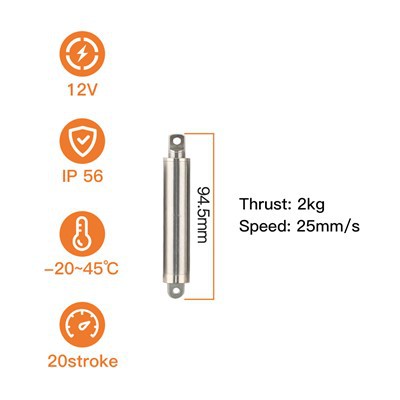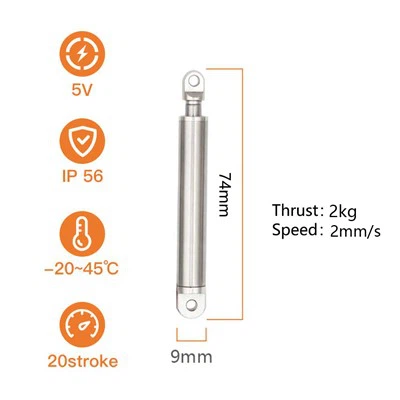
Hey there! As a supplier of Miniature Linear Motors, I've seen firsthand how crucial it is to pick the right drive system. It can make or break your project, whether you're working on a small-scale automation setup or a high-tech gadget. So, let's dive into how you can select the perfect drive system for your Miniature Linear Motor.
Understanding the Basics
First off, let's get on the same page about what a Miniature Linear Motor is. It's a type of motor that produces linear motion directly, without the need for any intermediate mechanisms like gears or belts. This makes it super efficient and precise, which is why it's used in so many applications, from medical devices to robotics.
Now, the drive system is what controls the motor. It provides the electrical power and signals needed to make the motor move in the way you want. There are a few different types of drive systems out there, and each has its own pros and cons.
Types of Drive Systems
DC Drive Systems
DC drive systems are pretty straightforward. They use direct current (DC) to power the motor. One of the biggest advantages of DC drive systems is their simplicity. They're easy to understand and operate, which makes them a great choice for beginners or for applications where simplicity is key.
Another plus is that they offer good speed control. You can easily adjust the speed of the motor by changing the voltage. However, DC drive systems do have some limitations. They're not as efficient as some other types of drive systems, and they can generate a lot of heat, which can be a problem in some applications.
If you're considering a DC drive system, you might want to check out our Linear Motor 12V and 12V Dc Linear Actuator. These are great options for small-scale projects that require a reliable and easy-to-use drive system.
AC Drive Systems
AC drive systems, on the other hand, use alternating current (AC) to power the motor. They're more complex than DC drive systems, but they also offer some significant advantages. One of the biggest advantages is their efficiency. AC drive systems are generally more efficient than DC drive systems, which means they can save you money on energy costs in the long run.
Another advantage is that they offer better torque control. Torque is the force that makes the motor turn, and having good torque control is important for applications that require precise movement. However, AC drive systems can be more expensive and more difficult to install and maintain than DC drive systems.
Servo Drive Systems
Servo drive systems are a type of closed-loop control system. They use feedback from the motor to adjust the power and signals sent to the motor, which allows for very precise control of the motor's position, speed, and torque. This makes them a great choice for applications that require high precision, such as robotics and CNC machines.
Servo drive systems are more expensive than DC and AC drive systems, but they offer the highest level of performance. If you're working on a project that requires the utmost precision, a servo drive system might be the way to go.
Factors to Consider When Selecting a Drive System
Application Requirements
The first thing you need to consider when selecting a drive system is your application requirements. What kind of movement do you need the motor to make? Do you need precise control of the motor's position, speed, or torque? How much power do you need the motor to generate?
For example, if you're working on a project that requires precise positioning, such as a 3D printer, a servo drive system might be the best choice. On the other hand, if you're working on a project that requires simple linear motion, such as a conveyor belt, a DC drive system might be sufficient.
Cost
Cost is always a factor when selecting a drive system. DC drive systems are generally the cheapest option, followed by AC drive systems and then servo drive systems. However, you need to consider the long-term costs as well. For example, a more expensive servo drive system might save you money in the long run by reducing energy costs and improving productivity.
Efficiency
Efficiency is another important factor to consider. As I mentioned earlier, AC drive systems are generally more efficient than DC drive systems. This means they can save you money on energy costs over time. However, you also need to consider the efficiency of the motor itself. Some Miniature Linear Motors are more efficient than others, so make sure you choose a motor that is compatible with your drive system and that meets your efficiency requirements.
Size and Weight
The size and weight of the drive system are also important considerations, especially if you're working on a project that has limited space or that requires a lightweight solution. DC drive systems are generally smaller and lighter than AC and servo drive systems, which makes them a good choice for applications where space and weight are a concern.
Making the Right Choice
Selecting the right drive system for your Miniature Linear Motor can be a challenging task, but it doesn't have to be. By considering your application requirements, cost, efficiency, and size and weight, you can narrow down your options and choose the drive system that is best for your project.
If you're still not sure which drive system to choose, don't hesitate to reach out to us. We're here to help you make the right decision and to provide you with the support and resources you need to get your project up and running. Whether you're a hobbyist or a professional engineer, we have the expertise and the products to meet your needs.


So, if you're interested in learning more about our Miniature Linear Motors and drive systems, or if you're ready to place an order, just get in touch. We're looking forward to working with you and helping you take your project to the next level.
References
- "Linear Motors: Theory, Design, and Application" by T. Kenjo
- "Motion Control Handbook" by Brian H. Kueck