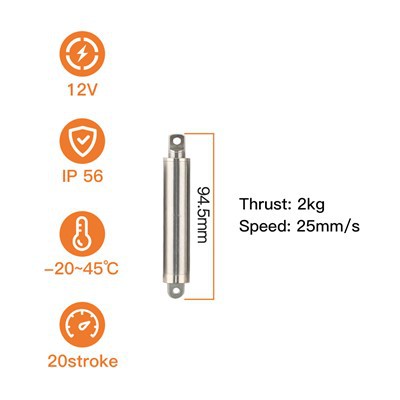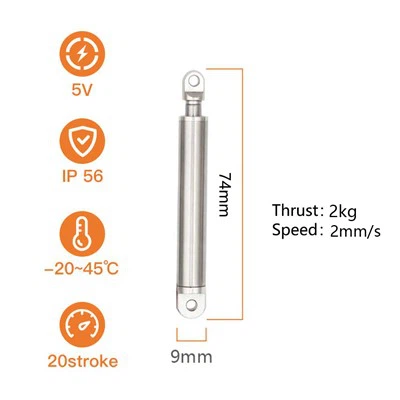
Selecting the right size of a linear actuator is crucial for ensuring optimal performance in your application. As a linear actuator supplier, I've seen firsthand how choosing the wrong size can lead to inefficiencies, malfunctions, and even safety hazards. In this blog post, I'll share some tips on how to select the right size of a linear actuator for your specific needs.
Understanding the Basics of Linear Actuators
Before we dive into the selection process, let's quickly go over what a linear actuator is and how it works. A linear actuator is a device that converts rotational motion into linear motion. It's commonly used in various applications, such as industrial machinery, automotive systems, and home automation.
There are different types of linear actuators, including electric, hydraulic, and pneumatic. Electric linear actuators are the most popular choice due to their ease of use, precise control, and relatively low cost. They typically consist of a motor, a gearbox, and a lead screw or ball screw that converts the rotational motion of the motor into linear motion.
Factors to Consider When Selecting a Linear Actuator
Now that we have a basic understanding of linear actuators, let's look at the key factors you need to consider when selecting the right size for your application.
1. Load Capacity
The load capacity of a linear actuator refers to the maximum amount of weight it can move or support. It's one of the most important factors to consider because if the actuator's load capacity is too low, it won't be able to handle the load, leading to premature wear and failure. On the other hand, if the load capacity is too high, you'll end up paying for more actuator than you need.
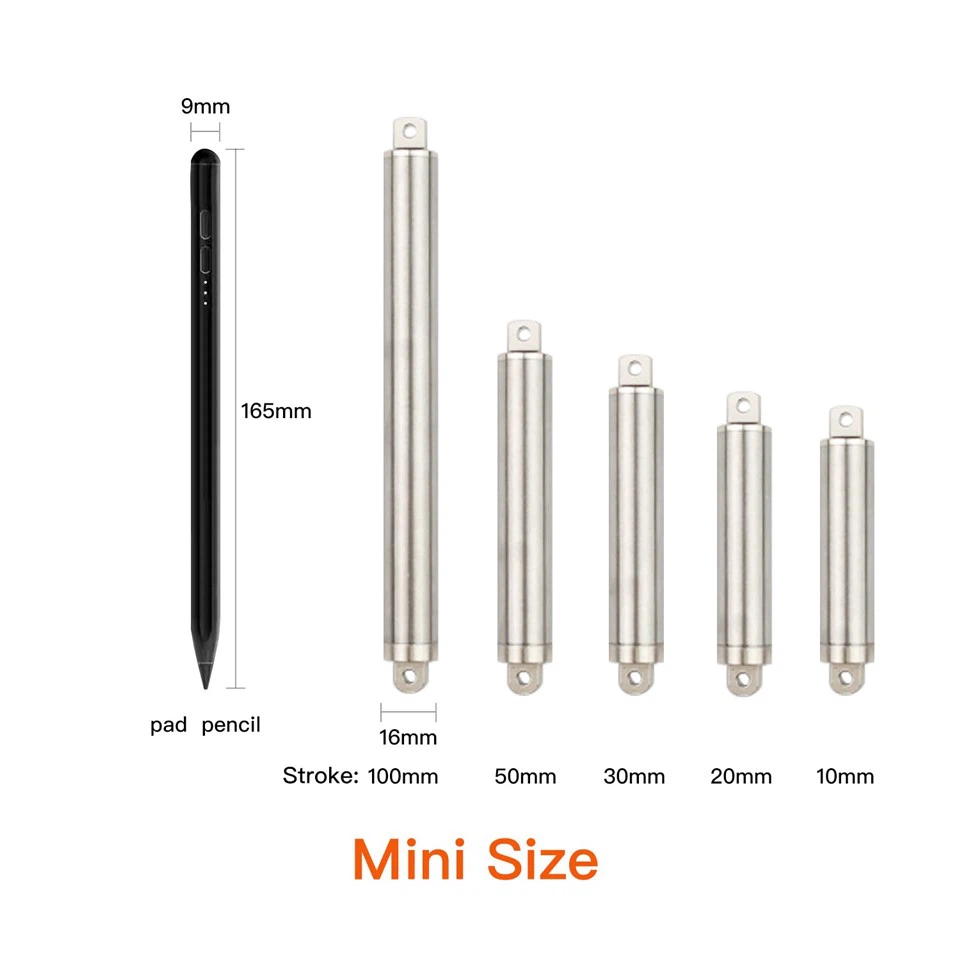

To determine the load capacity you need, you'll first need to calculate the total weight of the load that the actuator will be moving or supporting. This includes the weight of the object itself, as well as any additional forces, such as friction or inertia. Once you have the total weight, you can choose an actuator with a load capacity that is slightly higher than the calculated value to ensure a safety margin.
2. Stroke Length
The stroke length of a linear actuator is the distance that the actuator can extend or retract. It's another important factor to consider because it determines how far the actuator can move the load. You'll need to measure the distance that the load needs to travel and choose an actuator with a stroke length that is equal to or greater than this distance.
Keep in mind that longer stroke lengths may require more powerful actuators, as the motor will need to work harder to move the load over a greater distance. Additionally, longer stroke lengths may also increase the overall size and cost of the actuator.
3. Speed
The speed of a linear actuator refers to how fast it can extend or retract. It's measured in inches per second (IPS) or millimeters per second (mm/s). The speed you need will depend on your application. For example, if you're using the actuator in a high-speed automation system, you'll need a faster actuator. On the other hand, if you're using it in a low-speed application, such as a home automation system, a slower actuator may be sufficient.
It's important to note that the speed of an actuator is often inversely proportional to its load capacity. This means that as the load capacity increases, the speed of the actuator may decrease. So, you'll need to find a balance between speed and load capacity based on your specific requirements.
4. Duty Cycle
The duty cycle of a linear actuator refers to the amount of time that the actuator can operate continuously without overheating. It's expressed as a percentage, such as 25% or 50%. For example, a 25% duty cycle means that the actuator can operate for 25% of the time and then needs to rest for 75% of the time to cool down.
The duty cycle you need will depend on how often and for how long you'll be using the actuator. If you're using the actuator in a continuous operation application, such as a conveyor belt system, you'll need an actuator with a high duty cycle. On the other hand, if you're using it in an intermittent operation application, such as a door opener, a lower duty cycle may be sufficient.
5. Power Supply
The power supply of a linear actuator refers to the voltage and current required to operate the actuator. Most electric linear actuators are available in different voltage options, such as 12V, 24V, or 48V. You'll need to choose an actuator with a power supply that is compatible with your existing electrical system.
For example, if you're using the actuator in a 12V automotive application, you'll need to choose a 12V Actuator Linear. If you're using it in a 24V industrial application, a Actuator 24V would be a better choice.
Other Considerations
In addition to the factors mentioned above, there are a few other things you may want to consider when selecting a linear actuator.
1. Mounting Options
Linear actuators come with different mounting options, such as flange mounts, clevis mounts, or trunnion mounts. You'll need to choose a mounting option that is compatible with your application and allows for easy installation and adjustment.
2. Control Options
Most linear actuators can be controlled using a variety of methods, such as switches, potentiometers, or programmable controllers. You'll need to choose a control option that is easy to use and meets your specific requirements.
3. Environmental Conditions
If the actuator will be used in a harsh environment, such as a dusty or wet location, you'll need to choose an actuator that is designed to withstand these conditions. Look for actuators with sealed enclosures, corrosion-resistant materials, and IP ratings that indicate their level of protection against dust and water.
Conclusion
Selecting the right size of a linear actuator is a critical decision that can have a significant impact on the performance and reliability of your application. By considering factors such as load capacity, stroke length, speed, duty cycle, and power supply, you can choose an actuator that meets your specific requirements and provides optimal performance.
If you're still unsure which linear actuator is right for your application, don't hesitate to reach out to us. As a linear actuator supplier, we have the expertise and experience to help you select the perfect actuator for your needs. We can also provide you with detailed product information, technical support, and competitive pricing. Contact us today to start the procurement process and take your project to the next level.
References
- "Linear Actuators: A Comprehensive Guide," Engineering.com
- "How to Select the Right Linear Actuator," AutomationDirect.com