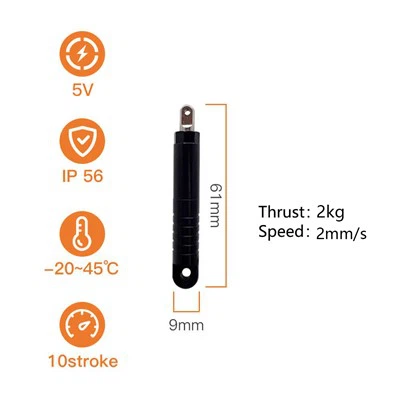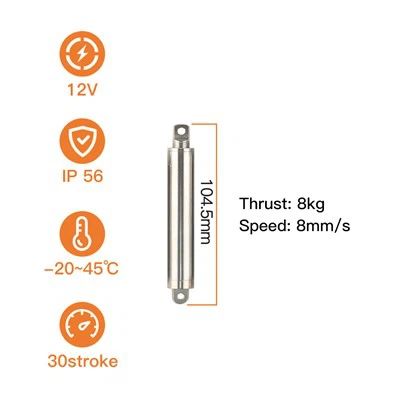
When embarking on a project that requires a 6V electric cylinder, the selection process can be both critical and challenging. As a supplier of 6V electric cylinders, I understand the intricacies involved in choosing the right one for your specific needs. In this blog post, I'll share some essential factors to consider to ensure you make an informed decision.
Understanding Your Project Requirements
The first step in choosing the right 6V electric cylinder is to have a clear understanding of your project requirements. Consider the following aspects:
Load Capacity
The load capacity of the electric cylinder is one of the most crucial factors. You need to determine the maximum weight or force that the cylinder will need to move or support. This includes both the static load (the weight of the object at rest) and the dynamic load (the additional force during movement). For example, if you're using the electric cylinder in a robotic arm to lift small parts, the load capacity will be relatively low. On the other hand, if it's for a heavy - duty industrial application like moving large machinery components, you'll need a cylinder with a much higher load capacity.
Stroke Length
The stroke length refers to the maximum distance the electric cylinder can extend. Measure the exact distance that the cylinder needs to travel in your project. If the stroke length is too short, the cylinder won't be able to perform its intended function. Conversely, an overly long stroke length may add unnecessary cost and complexity to your system. For instance, in a simple drawer - opening mechanism, a short stroke length might be sufficient, while in a telescopic conveyor system, a longer stroke length would be required.
Speed
The operating speed of the 6V electric cylinder is another important consideration. Determine how fast the cylinder needs to move to meet your project's requirements. Different applications have different speed needs. In a high - speed assembly line, a faster - moving electric cylinder may be necessary to keep up with the production pace. However, in a precision - positioning application, a slower and more controlled speed might be preferred to ensure accuracy.
Types of 6V Electric Cylinders
There are several types of 6V electric cylinders available in the market, each with its own advantages and suitable applications.
Electric Actuator 6V
These actuators are known for their compact size and ease of installation. They are often used in applications where space is limited, such as in small robotic devices or home automation systems. Electric Actuator 6V can provide precise linear motion and are relatively easy to control, making them a popular choice for many DIY projects and small - scale industrial applications.
Electric Motor Linear Actuator
This type of actuator uses an electric motor to convert rotational motion into linear motion. Electric Motor Linear Actuators are capable of providing high force and can be used in a wide range of applications, from automotive to heavy - machinery. They are known for their durability and reliability, making them suitable for long - term and high - stress applications.
Electric Linear Actuator 6V
These actuators are designed specifically for linear motion and offer excellent precision and repeatability. They are commonly used in applications where accurate positioning is crucial, such as in medical equipment, 3D printers, and laboratory automation. Electric Linear Actuator 6V can be easily integrated into existing systems and are available in various sizes and configurations.
Other Considerations
In addition to the above factors, there are a few other things to keep in mind when choosing a 6V electric cylinder.
Environmental Conditions
Consider the environment in which the electric cylinder will operate. If it will be exposed to dust, moisture, or extreme temperatures, you'll need a cylinder that is designed to withstand these conditions. For example, in a food processing plant, the cylinder may need to be made of corrosion - resistant materials and have a high level of IP (Ingress Protection) rating to prevent contamination.
Control Options
Think about how you want to control the electric cylinder. Some cylinders come with built - in control systems, while others require an external controller. If you're using the cylinder in a complex automation system, you may need a cylinder that can be easily integrated with your existing control infrastructure. Options include manual control, remote control, and programmable control, depending on your project's needs.
Cost
Cost is always a factor in any project. Compare the prices of different 6V electric cylinders while considering their features and performance. Keep in mind that the cheapest option may not always be the best in the long run. A high - quality cylinder may cost more upfront but can save you money on maintenance and replacement costs over time.
Quality and Reliability
As a supplier, I emphasize the importance of quality and reliability. Look for electric cylinders that are made by reputable manufacturers. Check for certifications and customer reviews to ensure that the product meets industry standards. A reliable cylinder will have a longer lifespan, fewer breakdowns, and better performance, which is essential for the success of your project.
Conclusion
Choosing the right 6V electric cylinder for your project requires careful consideration of various factors, including load capacity, stroke length, speed, type, environmental conditions, control options, and cost. By understanding your project requirements and doing thorough research, you can select a cylinder that will meet your needs and provide reliable performance.


If you're still unsure about which 6V electric cylinder is right for your project, or if you have any questions, feel free to reach out to me. I'm here to help you make the best choice and ensure the success of your project. Whether you're a hobbyist, a DIY enthusiast, or an industrial professional, I can provide you with the guidance and products you need.
References
- Industry standards and guidelines for electric cylinders
- Manufacturer's product specifications and brochures
- Technical papers on linear motion control systems