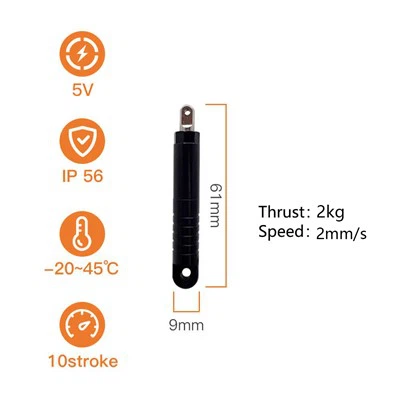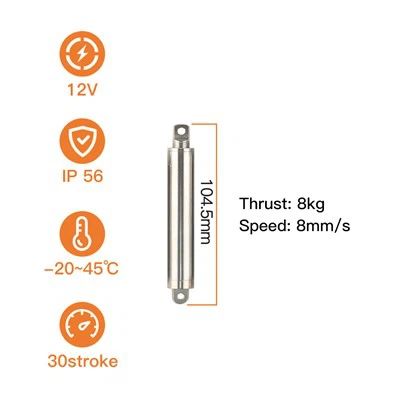
Hey there! As a supplier of 24V actuators, I often get asked whether a 24V actuator can be used in a corrosive environment. It's a crucial question, especially for industries where corrosion is a real concern, like chemical processing, marine, and wastewater treatment. In this blog, I'll break down the factors you need to consider and share some insights to help you make an informed decision.
Understanding the Basics of 24V Actuators
First off, let's quickly go over what a 24V actuator is. A 24V actuator is a device that converts electrical energy into mechanical motion. It's widely used in various applications, from simple automation tasks to complex industrial systems. You can find different types of 24V actuators, such as 24Vdc Linear Actuator, which provides linear motion, and rotary actuators that produce rotational movement.
The 24V power supply is popular because it offers a good balance between power and safety. It's not too high to pose a significant electrical hazard, but it can still deliver enough force to drive many types of loads. Whether you're looking for a Linear Motor 12V for a low - power application or a 24 Volt Actuator for a more demanding task, there are options available.
Corrosive Environments: What Are We Talking About?
Corrosive environments are places where materials are exposed to substances that can cause chemical reactions leading to deterioration. This can include exposure to acids, alkalis, salts, and even just high humidity in some cases. For example, in a chemical plant, actuators might be in contact with various corrosive chemicals. In a marine environment, the saltwater can be extremely corrosive to metals.
Factors Affecting the Use of 24V Actuators in Corrosive Environments
Material Selection
The materials used in the construction of the actuator play a huge role. Most standard 24V actuators are made of metals like steel and aluminum. While these metals are strong and can handle mechanical loads well, they are also prone to corrosion. For instance, steel can rust when exposed to moisture and oxygen, and aluminum can corrode in the presence of certain chemicals.
However, there are corrosion - resistant materials available. Stainless steel is a popular choice because it contains chromium, which forms a protective oxide layer on the surface. This layer helps prevent further corrosion. Some actuators are also made with plastics or composites that are inherently resistant to many corrosive substances.
Sealing and Enclosure
A good seal is essential to keep corrosive substances out of the actuator. Actuators should have proper gaskets and seals to prevent liquids and gases from entering the internal components. The enclosure of the actuator also matters. A well - designed enclosure can protect the actuator from direct exposure to the corrosive environment. For example, an IP67 - rated enclosure can provide a high level of protection against dust and water ingress.
Surface Treatments
Surface treatments can enhance the corrosion resistance of an actuator. For example, powder coating can provide a protective layer on the actuator's exterior. Electroplating is another option, where a thin layer of a corrosion - resistant metal is deposited on the surface of the actuator.
Advantages of Using 24V Actuators in Corrosive Environments
Despite the challenges, there are some advantages to using 24V actuators in corrosive environments.
Flexibility
24V actuators are relatively small and lightweight compared to higher - voltage actuators. This makes them easier to install in tight spaces, which can be common in many industrial setups where corrosion is a concern.
Energy Efficiency
As mentioned earlier, the 24V power supply is energy - efficient. In a corrosive environment where the actuator might need to operate continuously, energy efficiency can lead to cost savings over time.
Disadvantages and Challenges
Of course, there are also some disadvantages and challenges.
Cost
Actuators made with corrosion - resistant materials and advanced sealing and surface treatments are generally more expensive than standard ones. This can be a significant factor, especially for large - scale projects.


Maintenance
Even with all the protective measures, 24V actuators in corrosive environments will still require regular maintenance. This includes inspecting the seals, checking for signs of corrosion, and replacing any damaged components.
Case Studies
Let's look at a couple of real - world examples. In a chemical processing plant, a company was using standard 24V actuators in a section where they were exposed to mild acids. After a few months, they noticed that the actuators were starting to corrode, which led to reduced performance and eventually failure. They then switched to actuators made of stainless steel with a powder - coated finish and improved seals. These new actuators lasted much longer and reduced the downtime and maintenance costs.
In a marine application, a boat manufacturer was using 24V actuators for some of the onboard systems. The saltwater environment was causing corrosion issues. By using actuators with an IP67 - rated enclosure and a special electroplated surface treatment, they were able to significantly improve the reliability of the actuators.
Making the Right Decision
So, can a 24V actuator be used in a corrosive environment? The answer is yes, but it depends on several factors. You need to carefully assess the specific corrosive environment, including the type of corrosive substances, the level of exposure, and the operating conditions.
If the corrosion is mild and the actuator is properly protected with the right materials, sealing, and surface treatments, it can work well. However, for more severe corrosive environments, you might need to invest in more specialized and expensive actuators.
Contact Us for Your 24V Actuator Needs
If you're considering using 24V actuators in a corrosive environment, we're here to help. As a supplier of 24V actuators, we have a wide range of products to suit different needs. Whether you need a standard actuator or a custom - built one with enhanced corrosion resistance, we can provide you with the right solution.
Get in touch with us to discuss your requirements. We can offer expert advice on material selection, sealing options, and surface treatments. Let's work together to find the best 24V actuator for your project in a corrosive environment.
References
- "Corrosion Basics: An Introduction" by NACE International
- "Handbook of Actuators" by various authors
- Industry reports on actuator applications in corrosive environments.