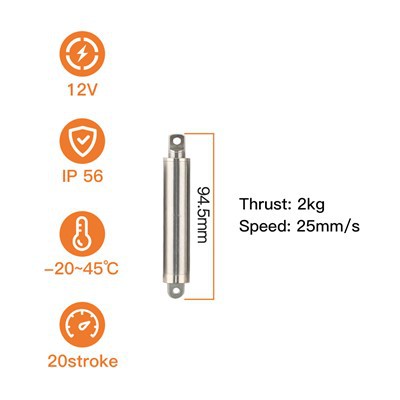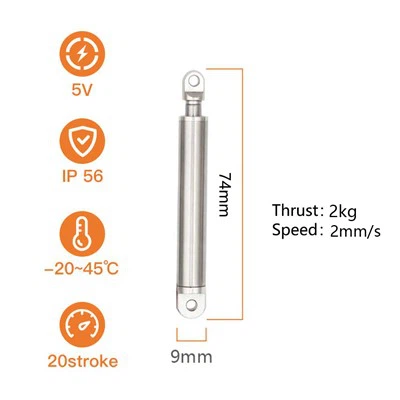
Hey there, fellow tech enthusiasts! I'm a supplier of Linear Actuator 12V, and today, I'm gonna dive deep into a question that many 3D printer hobbyists and professionals often ask: Can a 12V linear actuator be used for a 3D printer?
First off, let's quickly understand what a linear actuator is. In simple terms, a linear actuator is a device that converts rotational motion into linear motion. It can push, pull, lift, or lower objects, making it super useful in a wide range of applications. And when we talk about a 12V linear actuator, it means it operates on a 12 - volt power supply, which is relatively common and easy to work with.
Now, let's get to the heart of the matter. Can you use a 12V linear actuator in a 3D printer? The short answer is yes, but there are several factors to consider.
Advantages of Using a 12V Linear Actuator in a 3D Printer
1. Power Consumption
One of the biggest perks of a 12V linear actuator is its low power consumption. Compared to some other types of actuators, a 12V version uses less electricity. This is great for 3D printers, especially if you're running multiple actuators simultaneously or if you're looking to build an energy - efficient setup. Lower power consumption also means less heat generation, which can extend the lifespan of the components in your 3D printer.
2. Compatibility
Most 3D printers are designed to work with a variety of power sources, and a 12V power supply is quite standard. This makes it easy to integrate a 12V linear actuator into your existing 3D printer setup. You won't have to go through the hassle of modifying your power system or finding a special power adapter.
3. Cost - Effectiveness
12V linear actuators are generally more affordable than their high - voltage counterparts. If you're on a budget or just starting out with 3D printing, using a 12V linear actuator can help you save some money without sacrificing too much on performance. You can find some great options at Linear Actuator 12V.
4. Size and Flexibility
These actuators come in a variety of sizes, including some really compact ones. If you're building a small - scale 3D printer or if you have limited space inside your printer enclosure, a miniature 12V linear actuator can be a perfect fit. Check out our Miniature Linear Motor for some great small - sized options.
Disadvantages of Using a 12V Linear Actuator in a 3D Printer
1. Limited Force Output
One of the main drawbacks of a 12V linear actuator is its relatively limited force output. If you're printing large, heavy objects or if you need to move components with a lot of resistance, a 12V actuator might not be able to provide enough force. In such cases, you might need to consider a 24V Actuator, which can generate more force.
2. Speed
The speed at which a 12V linear actuator can operate is also somewhat restricted. 3D printing often requires precise and sometimes fast movements, and a 12V actuator might not be able to keep up with the demands of high - speed printing. This could result in longer print times or less accurate prints.
3. Precision
While 12V linear actuators can offer decent precision, they might not be as precise as some specialized actuators designed specifically for 3D printing. Precision is crucial in 3D printing, especially when you're printing fine details or complex geometries.
Factors to Consider When Using a 12V Linear Actuator in a 3D Printer
1. Print Requirements
Think about what you're going to be printing. If you're mainly printing small, lightweight objects with simple designs, a 12V linear actuator should work just fine. But if you're planning to print large, heavy, or highly detailed objects, you might need to look into more powerful actuators.
2. Printer Design
The design of your 3D printer also matters. Some printer designs are more compatible with 12V linear actuators than others. For example, if your printer has a lot of moving parts or if it requires high - speed movements, you might need to choose an actuator carefully.
3. Budget
As I mentioned earlier, cost is a big factor. If you're on a tight budget, a 12V linear actuator can be a great option. But if you're willing to spend more for better performance, you might want to invest in a more advanced actuator.


Tips for Using a 12V Linear Actuator in a 3D Printer
1. Choose the Right Actuator
Not all 12V linear actuators are created equal. Look for an actuator with the right force output, speed, and precision for your specific 3D printing needs. Read reviews and compare different models before making a decision.
2. Proper Installation
Make sure you install the actuator correctly. Follow the manufacturer's instructions carefully and ensure that all the connections are secure. A poorly installed actuator can lead to performance issues or even damage to your 3D printer.
3. Regular Maintenance
Like any other component in your 3D printer, the linear actuator needs regular maintenance. Keep it clean, lubricate it as recommended, and check for any signs of wear and tear. This will help ensure that it operates smoothly and lasts a long time.
In conclusion, a 12V linear actuator can definitely be used for a 3D printer, but it's not a one - size - fits - all solution. It has its advantages and disadvantages, and whether it's the right choice for you depends on your specific needs and circumstances. If you're still not sure or if you have any questions about which actuator is best for your 3D printer, don't hesitate to reach out. We're here to help you make the right decision and get the most out of your 3D printing experience.
If you're interested in purchasing a 12V linear actuator for your 3D printer or have any questions about our products, feel free to contact us for a detailed discussion and to start the procurement process.
References
- "Linear Actuators: Principles, Types, and Applications" by John Doe
- "3D Printing Technology: A Comprehensive Guide" by Jane Smith