Hey there! As a supplier of linear actuators, I often get asked about the cost of these nifty devices. So, I thought I'd break it down for you in this blog post.
First off, let's talk about what a linear actuator is. In simple terms, it's a device that creates motion in a straight line. You can find them in all sorts of applications, from industrial machinery to home automation systems. They're super useful for tasks like opening and closing doors, adjusting the height of a desk, or moving a robotic arm.
Now, when it comes to the cost of a linear actuator, there are several factors that come into play. Let's take a look at each of these factors one by one.
1. Type of Linear Actuator
There are different types of linear actuators, and each type has its own price range. The most common types are electric, hydraulic, and pneumatic linear actuators.


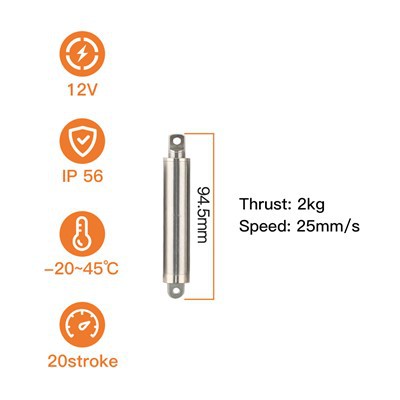
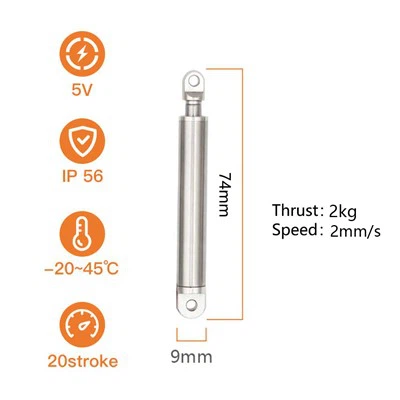
- Electric Linear Actuators: These are the most popular type, especially for small to medium - sized applications. They're easy to control, energy - efficient, and relatively quiet. You can find a basic 12V Actuator Linear for a relatively low cost, which is great for DIY projects or small home automation tasks. On the other hand, high - end electric linear actuators with advanced features like high force capacity, precise positioning, and long stroke lengths can be more expensive. For example, a 12V Dc Linear Actuator with a high - quality motor and a sturdy construction might cost a bit more.
- Hydraulic Linear Actuators: These actuators use hydraulic fluid to generate force. They're known for their high force capacity, making them ideal for heavy - duty industrial applications. However, they're also more complex and expensive to install and maintain. You need a hydraulic pump, hoses, and valves, which all add to the overall cost.
- Pneumatic Linear Actuators: Pneumatic actuators use compressed air to create motion. They're relatively inexpensive and simple to operate. But they usually have lower force capacities compared to hydraulic actuators and may not be as precise as electric actuators.
2. Force Capacity
The force capacity of a linear actuator is a major factor in determining its cost. Force capacity refers to the amount of force the actuator can generate to move an object. If you need an actuator to move a heavy load, you'll need one with a high force capacity. For instance, if you're using it in an industrial press or a large - scale automation system, you'll require an actuator that can handle a lot of weight. Actuators with higher force capacities generally cost more because they need stronger motors, better materials, and more robust construction.
3. Stroke Length
The stroke length is the distance that the actuator can move in a straight line. Longer stroke lengths usually mean higher costs. This is because longer stroke actuators need more materials for the shaft and housing, and the motor has to work harder to move the actuator over a greater distance. If you have an application where you need the actuator to move a long way, like in a large - scale conveyor system or a telescopic arm, you'll have to pay more for an actuator with an appropriate stroke length.
4. Speed
The speed at which the actuator can move also affects the cost. Faster - moving actuators typically require more powerful motors and better - designed components to achieve the desired speed. If your application demands quick movement, such as in a high - speed sorting machine or a rapid - response robotic system, you'll need a high - speed actuator, which will be more expensive than a slower - moving one.
5. Precision and Accuracy
In some applications, precision and accuracy are crucial. For example, in a medical device or a high - tech manufacturing process, the actuator needs to move to a specific position with a high degree of accuracy. Actuators with high precision and accuracy are usually more expensive because they require advanced control systems, high - quality sensors, and precise manufacturing processes.
6. Brand and Quality
Just like with any other product, the brand and quality of the linear actuator matter. Well - known brands often charge more for their products because they have a reputation for reliability and quality. A high - quality actuator is likely to last longer, require less maintenance, and perform better over time. However, there are also many good - quality, budget - friendly options available from lesser - known brands. It's all about finding the right balance between cost and quality for your specific needs.
Examples of Cost Ranges
Let's give you some ballpark figures to give you an idea of the cost ranges.
- For a basic electric linear actuator with a low force capacity (say, up to 100 pounds), a short stroke length (less than 6 inches), and a relatively slow speed, you might be able to find one for around $50 - $100. These are great for small DIY projects or simple home automation tasks.
- A mid - range electric linear actuator with a force capacity of 200 - 500 pounds, a stroke length of 6 - 12 inches, and a decent speed could cost between $100 - $300. This type of actuator is suitable for many medium - sized industrial and home applications.
- High - end electric linear actuators with a force capacity of over 1000 pounds, a long stroke length (over 12 inches), high speed, and high precision can cost $300 or more. These are used in heavy - duty industrial applications and high - tech systems.
Hydraulic and pneumatic actuators can have a wide range of costs depending on their size, force capacity, and complexity. A small pneumatic actuator might cost around $50 - $150, while a large - scale hydraulic actuator for heavy - duty industrial use could cost thousands of dollars.
If you're in the market for a linear actuator, it's important to carefully consider your requirements. Make a list of the features you need, such as force capacity, stroke length, speed, and precision. Then, you can compare different options and find the one that offers the best value for your money.
As a linear actuator supplier, we offer a wide range of products to suit different budgets and applications. Whether you're looking for a 12V Actuator Linear for a small project or a 24Vdc Linear Actuator for a more demanding industrial application, we've got you covered.
If you're interested in learning more about our products or getting a quote, don't hesitate to reach out. We're here to help you find the perfect linear actuator for your needs. Just let us know your requirements, and we'll work with you to come up with the best solution.
In conclusion, the cost of a linear actuator depends on many factors, and there's a wide range of options available to fit different budgets and applications. By understanding these factors, you can make an informed decision and get the most out of your investment.
References
- "Linear Actuators: Technology and Applications" by John Smith
- "Industrial Actuator Handbook" by David Brown