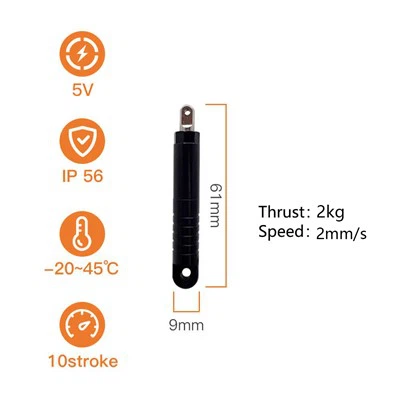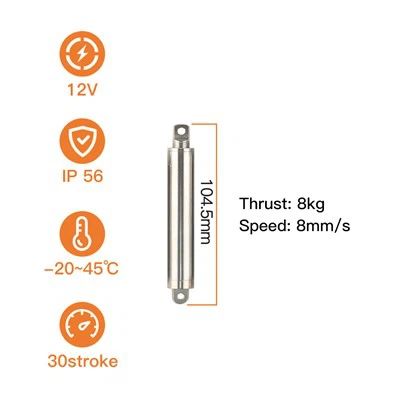
As a supplier of 12V linear motors, I often encounter questions from customers about the maximum thrust of these motors. Understanding the maximum thrust is crucial for various applications, as it determines the motor's ability to move loads effectively. In this blog post, I will delve into the factors that influence the maximum thrust of a 12V linear motor and provide some insights to help you make informed decisions.
Understanding Linear Motors
Before we discuss the maximum thrust, let's briefly understand what a linear motor is. A linear motor is a type of electric motor that converts electrical energy directly into linear motion, as opposed to the rotational motion produced by traditional motors. This direct conversion eliminates the need for additional mechanical components such as gears or belts, resulting in a more efficient and precise motion.
Linear motors are commonly used in a wide range of applications, including automation, robotics, medical devices, and automotive systems. They offer several advantages over traditional motors, such as high speed, high acceleration, and precise positioning.
Factors Affecting the Maximum Thrust of a 12V Linear Motor
The maximum thrust of a 12V linear motor is influenced by several factors, including:
1. Motor Design
The design of the linear motor plays a significant role in determining its maximum thrust. Different motor designs, such as iron-core and ironless-core motors, have different performance characteristics. Iron-core motors typically offer higher thrust capabilities due to the presence of a ferromagnetic core, which increases the magnetic field strength. However, they also tend to have higher cogging forces, which can affect the smoothness of motion. Ironless-core motors, on the other hand, offer lower cogging forces and higher acceleration capabilities but generally have lower thrust ratings.
2. Coil Configuration
The coil configuration of the linear motor also affects its maximum thrust. The number of turns in the coil, the wire gauge, and the type of winding can all impact the motor's performance. A higher number of turns in the coil generally results in a higher magnetic field strength and, therefore, a higher thrust. However, increasing the number of turns also increases the resistance of the coil, which can lead to higher power consumption and heat generation.
3. Magnetic Field Strength
The strength of the magnetic field in the linear motor is another important factor that determines its maximum thrust. The magnetic field is typically generated by permanent magnets or electromagnets. A stronger magnetic field results in a higher force of attraction or repulsion between the motor's stator and rotor, which translates into a higher thrust. The type and quality of the magnets used in the motor can significantly affect the magnetic field strength.
4. Power Supply
The power supply voltage and current also play a crucial role in determining the maximum thrust of a 12V linear motor. A higher voltage and current can provide more power to the motor, resulting in a higher thrust. However, it is important to note that the motor must be designed to handle the specified voltage and current. Exceeding the motor's rated voltage or current can lead to overheating, damage to the motor, and reduced performance.
5. Load Characteristics
The characteristics of the load being driven by the linear motor, such as its mass, friction, and inertia, can also affect the maximum thrust required. A heavier load or a load with high friction or inertia will require a higher thrust to move. Additionally, the type of motion required, such as continuous or intermittent motion, can also impact the motor's performance.
Determining the Maximum Thrust
To determine the maximum thrust of a 12V linear motor, it is important to consider the specific requirements of your application. Here are some steps you can follow:
1. Define the Load Requirements
Start by defining the load requirements of your application, including the mass of the load, the required speed and acceleration, and the type of motion. This information will help you determine the minimum thrust required to move the load effectively.
2. Select the Appropriate Motor Design
Based on the load requirements, select the appropriate motor design that can provide the required thrust. Consider factors such as the motor's size, weight, and performance characteristics.
3. Calculate the Required Power
Once you have selected the motor design, calculate the required power based on the load requirements and the motor's efficiency. The power required is equal to the force (thrust) multiplied by the velocity. Make sure to account for any losses due to friction, heat, and other factors.
4. Choose the Right Power Supply
Select a power supply that can provide the required voltage and current to the motor. Make sure the power supply is compatible with the motor's specifications and can handle the load requirements.
5. Test and Validate
Finally, test and validate the motor's performance in your application to ensure it meets the required thrust and performance specifications. Make any necessary adjustments to the motor or the load to optimize the performance.

Applications of 12V Linear Motors
12V linear motors are commonly used in a wide range of applications, including:
1. Automation and Robotics
In automation and robotics applications, 12V linear motors are used to provide precise linear motion for tasks such as pick-and-place operations, assembly, and material handling. Their high speed, high acceleration, and precise positioning capabilities make them ideal for these applications.
2. Medical Devices
In medical devices, 12V linear motors are used in applications such as syringe pumps, infusion pumps, and surgical robots. Their precise motion control and low noise operation make them suitable for these sensitive applications.
3. Automotive Systems
In automotive systems, 12V linear motors are used in applications such as power windows, seat adjustment, and sunroof operation. Their compact size and high efficiency make them ideal for these applications.
4. Consumer Electronics
In consumer electronics, 12V linear motors are used in applications such as camera lens focusing, vibration feedback, and haptic feedback. Their small size and low power consumption make them suitable for these applications.
Conclusion
The maximum thrust of a 12V linear motor is influenced by several factors, including motor design, coil configuration, magnetic field strength, power supply, and load characteristics. By understanding these factors and following the steps outlined above, you can determine the appropriate motor for your application and ensure it meets the required thrust and performance specifications.
As a supplier of 12V Linear Actuator, we offer a wide range of high-quality linear motors that are designed to meet the diverse needs of our customers. Our motors are available in different designs, sizes, and performance specifications to ensure you can find the right motor for your application.
If you are interested in learning more about our 12V linear motors or have any questions about the maximum thrust or other performance specifications, please feel free to contact us. We would be happy to assist you in selecting the right motor for your application and providing you with the necessary technical support.
References
- "Linear Motors: Principles, Design, and Applications" by Thomas Kenjo and Brian C. Cable
- "Electric Motors and Drives: Fundamentals, Types, and Applications" by Austin Hughes and Bill Drury
- "Motion Control Handbook" by Peter Nachtwey