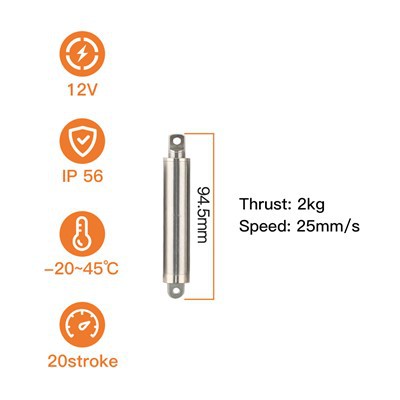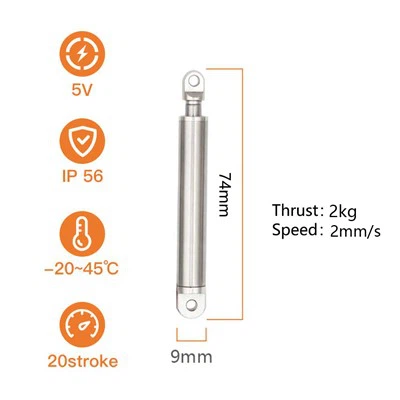
Hey there! As a supplier of IP56 linear actuators, I often get asked about the maximum load capacity of these nifty devices. So, I thought I'd take a deep dive into this topic and share everything you need to know.
First off, let's understand what an IP56 linear actuator is. The IP56 rating indicates that the actuator is well - protected against dust and water. The '5' in the rating means it's protected against dust ingress to a degree that won't interfere with its normal operation, and the '6' means it can withstand powerful water jets from any direction without suffering damage. This makes IP56 linear actuators suitable for a wide range of harsh environments, from industrial settings to outdoor applications.
Now, onto the main question: what's the maximum load capacity? Well, it's not a one - size - fits - all answer. The load capacity of an IP56 linear actuator can vary significantly depending on several factors.
Factors Affecting Load Capacity
1. Motor Power
The motor is the heart of the linear actuator. A more powerful motor can generate more force, which directly translates to a higher load - carrying capacity. Actuators with larger motors usually have a higher maximum load. For example, if you're looking at our Fast Linear Actuator, it's designed with a relatively high - power motor, allowing it to handle heavier loads compared to some of our more compact models.
2. Gear Ratio
The gear ratio in an actuator determines how the motor's rotational force is converted into linear motion. A higher gear ratio can increase the force output but may reduce the speed of the actuator. Actuators with a carefully optimized gear ratio can achieve a good balance between load capacity and speed. Our Fast Actuators Linear are engineered with a gear ratio that provides a decent load capacity while still maintaining a relatively fast operating speed.
3. Screw Type
There are different types of screws used in linear actuators, such as lead screws and ball screws. Ball screws are generally more efficient and can handle higher loads compared to lead screws. They have less friction, which means less energy is wasted, and more of the motor's power can be used to move the load. So, if you need an actuator with a high maximum load capacity, a ball - screw - based IP56 linear actuator might be the way to go.
4. Material and Construction
The materials used in the construction of the actuator also play a crucial role. Actuators made from high - strength materials can withstand greater stress and thus have a higher load capacity. For instance, if the actuator's body and moving parts are made from strong metals like steel or aluminum alloys, it can handle heavier loads without deforming or breaking.
Typical Load Capacity Ranges
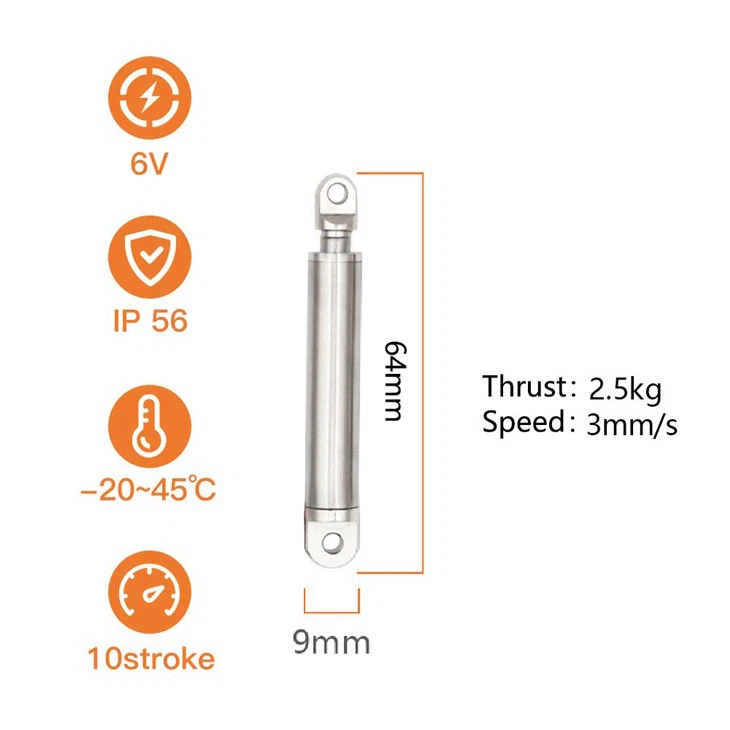
In general, the load capacity of IP56 linear actuators can range from a few kilograms to several thousand kilograms. For light - duty applications, such as in small automation projects or some consumer products, you might find actuators with a load capacity of around 10 - 50 kg. These are often more compact and suitable for tasks where the load is not too heavy.
Our Tiny Linear Actuator falls into this category. It's great for applications where space is limited, and the load requirements are relatively low.
On the other hand, for heavy - duty industrial applications, like in manufacturing plants or large - scale machinery, you can find IP56 linear actuators with load capacities of 500 kg or more. These actuators are built to be robust and can handle the high - stress demands of industrial environments.
How to Determine the Right Load Capacity for Your Application
When choosing an IP56 linear actuator, it's essential to accurately determine the load requirements of your specific application. Here are some steps to help you:
1. Calculate the Load
First, figure out the weight of the object that the actuator will need to move. This includes the actual load itself, as well as any additional forces acting on it, such as friction or inertia. If you're not sure how to calculate these forces, you might want to consult an engineer or someone with more technical knowledge.
2. Consider Safety Factors
It's always a good idea to add a safety factor to your load calculations. A common safety factor is around 1.5 - 2 times the actual calculated load. This accounts for any unexpected forces or variations in the operating conditions. For example, if your calculated load is 100 kg, you might want to choose an actuator with a load capacity of at least 150 - 200 kg.

3. Evaluate the Operating Conditions
Think about the environment in which the actuator will operate. If it's a harsh environment with high temperatures, vibrations, or exposure to chemicals, you might need an actuator with a higher load capacity to ensure its long - term reliability.
Why Choose Our IP56 Linear Actuators
As a supplier, we take pride in offering high - quality IP56 linear actuators. Our actuators are designed and manufactured with the latest technology and strict quality control measures. We offer a wide range of load capacities to meet different customer needs, whether you're working on a small - scale project or a large - scale industrial application.
Our team of experts is always ready to help you choose the right actuator for your specific requirements. We can provide technical support and advice to ensure that you get the most out of your linear actuator.
If you're in the market for an IP56 linear actuator and want to discuss your load - capacity requirements, don't hesitate to reach out. We're here to assist you in finding the perfect solution for your project. Whether you need a high - load - capacity actuator for heavy - duty industrial use or a more compact one for a light - duty application, we've got you covered.
References
- Engineering textbooks on linear motion systems
- Manufacturer's specifications for linear actuators
- Industry research reports on actuator technology