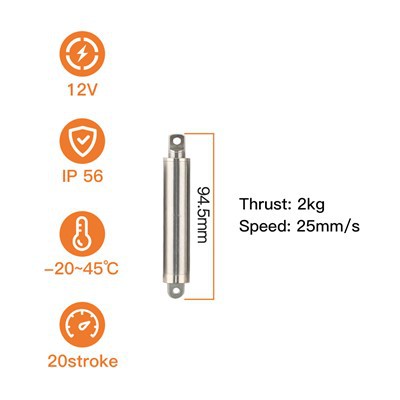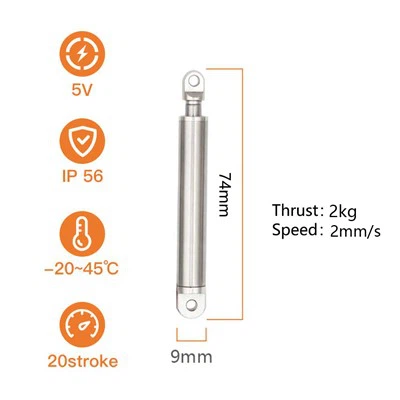
As a supplier of 12V linear actuators, I understand the critical role these components play in various industrial applications, especially in woodworking machines. Woodworking involves a series of high - energy operations, such as cutting, shaping, and sanding, which generate significant vibrations and shocks. Therefore, understanding the shock - resistance requirements for a 12V linear actuator in a woodworking machine is essential for ensuring reliable performance and long - term durability.
The Nature of Shocks in Woodworking Machines
Woodworking machines are dynamic systems that operate under diverse conditions. When a saw blade cuts through wood, it encounters irregularities in the material, such as knots or grain variations. These encounters result in sudden jolts and vibrations that are transmitted throughout the machine. Similarly, routers and sanders can create high - frequency vibrations as they work on the wood surface.
The shocks in woodworking machines can be classified into two main types: impact shocks and vibration shocks. Impact shocks occur when there is a sudden, high - force collision, such as when a saw blade hits a hard object embedded in the wood. Vibration shocks, on the other hand, are continuous, low - amplitude oscillations that are generated during the normal operation of the machine. Both types of shocks can have detrimental effects on the 12V linear actuator if it is not designed to withstand them.
Effects of Shocks on 12V Linear Actuators
Shocks can cause a range of problems for 12V linear actuators. One of the most immediate effects is mechanical damage. The internal components of the actuator, such as the gears, screws, and bearings, can be subjected to excessive stress during a shock event. This can lead to wear, deformation, or even breakage of these components. For example, a sudden impact shock can cause a gear tooth to chip or a bearing to misalign, which will ultimately affect the smooth operation of the actuator.
In addition to mechanical damage, shocks can also have an impact on the electrical components of the 12V linear actuator. The electrical connections can become loose or damaged due to vibrations, leading to intermittent power supply or short - circuits. This can result in erratic actuator behavior, such as sudden stops or unexpected movements, which can be dangerous in a woodworking environment.
Shock - Resistance Requirements for 12V Linear Actuators in Woodworking Machines
To ensure the reliable operation of a 12V linear actuator in a woodworking machine, several shock - resistance requirements need to be met.
Mechanical Design
The mechanical design of the actuator is crucial for shock resistance. High - quality materials should be used for the internal components. For example, hardened steel gears are more resistant to wear and impact than softer materials. The gears should also be properly lubricated to reduce friction and wear during shock events.
The housing of the actuator should be robust and able to absorb and dissipate shock energy. A well - designed housing can protect the internal components from external impacts. Some actuators are designed with reinforced or shock - absorbing casings that can withstand high - force collisions.
Mounting and Installation
Proper mounting and installation are also essential for shock resistance. The actuator should be securely mounted to the woodworking machine to prevent excessive movement during operation. Flexible mounts or vibration - isolating pads can be used to reduce the transmission of vibrations from the machine to the actuator.
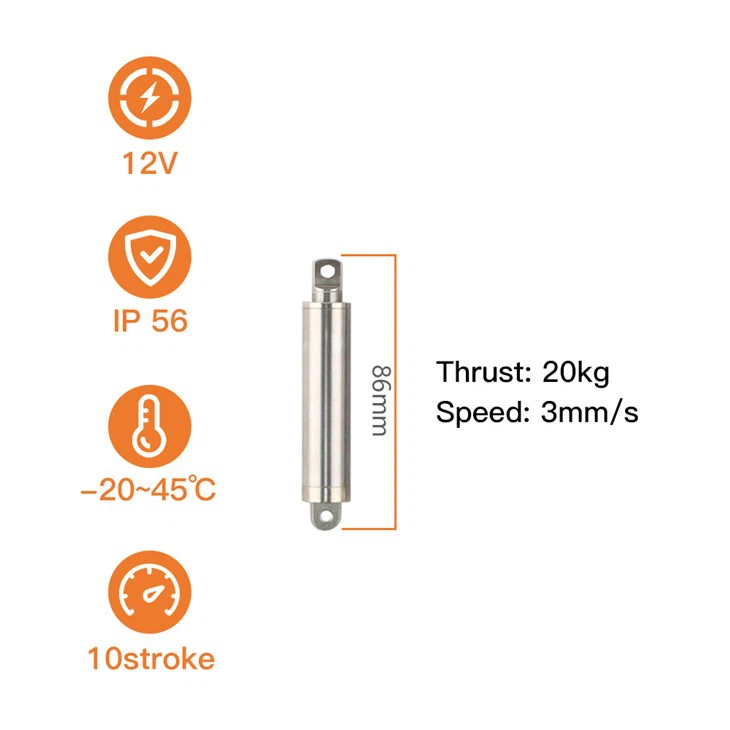

The orientation of the actuator also matters. It should be installed in a way that minimizes the impact of shocks on its critical components. For example, if the actuator is used to control a moving part that is subject to lateral forces, it should be mounted in a way that can better withstand these forces.
Electrical Protection
To protect the electrical components of the 12V linear actuator from shocks, electrical protection measures should be implemented. This includes using high - quality electrical connectors that are resistant to vibration. Additionally, surge protectors can be installed to prevent damage to the actuator's electronics from sudden voltage spikes caused by shocks.
Testing and Certification
Before a 12V linear actuator is used in a woodworking machine, it should undergo rigorous shock - resistance testing. This testing can simulate the actual shock conditions that the actuator will encounter in the woodworking environment. Actuators that meet certain industry standards for shock resistance can be certified, providing assurance to the users that the product is reliable.
Our 12V Linear Actuators: Meeting the Shock - Resistance Requirements
As a supplier of 12V Linear Actuator, we are committed to providing products that meet the high shock - resistance requirements of woodworking machines. Our actuators are designed with high - quality materials and advanced manufacturing techniques.
We use hardened steel gears and precision - machined screws to ensure the mechanical durability of our actuators. The housing of our actuators is made of a strong, shock - absorbing material that can protect the internal components from external impacts.
In terms of electrical protection, we use high - quality connectors and built - in surge protectors to safeguard the electrical components. Our actuators also undergo comprehensive shock - resistance testing before they are released to the market.
We also offer a range of Miniature Linear Motor options that are suitable for applications where space is limited but shock - resistance is still a priority. These motors are designed with the same high - quality standards as our larger 12V linear actuators.
Conclusion
The shock - resistance requirements for a 12V linear actuator in a woodworking machine are complex and multifaceted. Mechanical design, mounting, electrical protection, and testing are all important factors that need to be considered. As a supplier of Linear Actuator 12V, we understand these requirements and are dedicated to providing high - quality, shock - resistant actuators for the woodworking industry.
If you are in the woodworking business and are looking for reliable 12V linear actuators, we invite you to contact us for more information and to discuss your specific requirements. Our team of experts is ready to assist you in finding the perfect actuator solution for your woodworking machines.
References
- "Industrial Linear Actuators: Design and Applications" by John Smith
- "Woodworking Machine Dynamics and Vibration Analysis" by Jane Doe
- Industry standards for linear actuators in woodworking applications