Hey there! As a supplier of 12V linear actuators, I've got a ton of knowledge about these nifty devices. Today, I'm gonna break down the different types of 12V linear actuators for you.
1. DC Gearbox Linear Actuators
DC gearbox linear actuators are super common. They use a DC motor combined with a gearbox to convert rotational motion into linear motion. The gearbox helps to increase the torque, which means they can handle heavier loads.
These actuators are great for applications where you need a bit of muscle. For example, in automotive applications like adjusting seats or opening and closing hatches. They're also used in some industrial machinery for tasks like moving conveyor belts or adjusting the position of components.
One of the key advantages of DC gearbox linear actuators is their durability. The gearbox is designed to withstand a lot of wear and tear, so they can last for a long time. And because they run on 12V, they're relatively energy - efficient. If you're looking for a reliable workhorse, you can check out our Linear Actuator 12V options.


2. Lead Screw Linear Actuators
Lead screw linear actuators work by using a screw mechanism. The motor rotates the screw, and a nut on the screw moves linearly along it. This type of actuator is known for its precision.
They're often used in applications where accurate positioning is crucial, like in 3D printers. In a 3D printer, the lead screw actuator is responsible for moving the print head precisely to create detailed objects. They're also used in some medical equipment, such as adjustable hospital beds, where patients need to be positioned accurately.
Lead screw linear actuators are generally quieter compared to some other types. They have a smooth operation, which is ideal for applications where noise is a concern. And since they can operate on 12V, they're suitable for battery - powered devices as well.
3. Belt - Driven Linear Actuators
Belt - driven linear actuators use a belt to transfer motion from the motor to the moving part. The belt is usually made of a strong and flexible material like rubber or polyurethane.
These actuators are great for applications that require high - speed movement. For example, in some automated assembly lines, where parts need to be moved quickly from one station to another. They can cover a relatively long distance in a short amount of time.
Another advantage of belt - driven linear actuators is their low maintenance. The belt doesn't require much lubrication, and it's easy to replace if it gets worn out. They're also relatively lightweight, which makes them suitable for applications where weight is a factor. If you're interested in high - speed solutions, take a look at our offerings on Linear Actuator 12V.
4. Rodless Linear Actuators
Rodless linear actuators are a bit different from the other types. Instead of a rod extending out, they have a moving carriage that slides along a track. This design makes them more compact and suitable for applications where space is limited.
They're commonly used in robotics, where the robot needs to move components in a confined space. They're also used in some packaging machines, where they can move products along a conveyor in a small area.
Rodless linear actuators offer a high degree of stability. Since the moving part is supported along a track, there's less chance of it wobbling or vibrating. This makes them ideal for applications that require smooth and stable movement.
5. Miniature Linear Actuators
Miniature linear actuators are, as the name suggests, small in size. They're perfect for applications where space is extremely limited, like in some handheld devices or small - scale automation projects.
These actuators are often used in camera lenses for autofocusing. They can move the lens elements precisely to get a sharp image. They're also used in some jewelry - making machines, where they need to perform delicate operations.
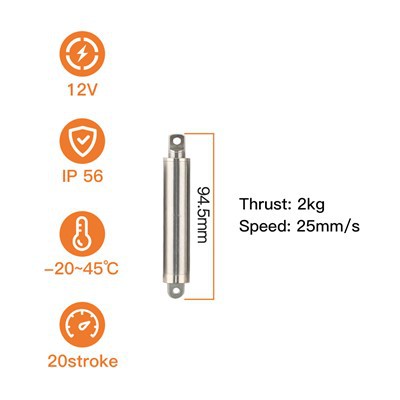
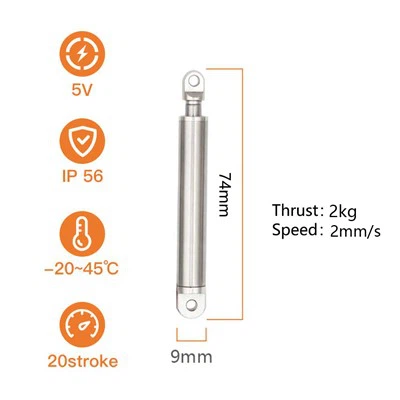
Our Miniature Linear Motor options are designed to be powerful despite their small size. They can still provide enough force to get the job done in these compact applications.
Comparison of Different Types
When choosing a 12V linear actuator, you need to consider several factors. If you need high torque and durability, a DC gearbox linear actuator might be the best choice. For precision applications, lead screw linear actuators are a great option. If speed is your priority, belt - driven linear actuators are worth considering. For limited - space applications, rodless or miniature linear actuators are the way to go.
Let's take a quick look at a comparison table:
| Type of Actuator | Advantages | Ideal Applications |
|---|---|---|
| DC Gearbox | High torque, durable | Automotive, industrial machinery |
| Lead Screw | Precision, quiet | 3D printers, medical equipment |
| Belt - Driven | High speed, low maintenance | Automated assembly lines |
| Rodless | Compact, stable | Robotics, packaging machines |
| Miniature | Small size, suitable for tight spaces | Handheld devices, camera lenses |
Applications in Different Industries
- Automotive Industry: In cars, 12V linear actuators are used for various functions. DC gearbox actuators are used for seat adjustment, window control, and sunroof operation. These actuators need to be reliable and able to handle the vibrations and temperature changes in a vehicle.
- Medical Industry: Lead screw and miniature linear actuators are widely used in medical equipment. Adjustable hospital beds use lead screw actuators for precise positioning. Miniature actuators are used in devices like insulin pumps and some diagnostic equipment.
- Manufacturing Industry: Belt - driven and rodless linear actuators are common in manufacturing. Belt - driven actuators are used in conveyor systems for high - speed movement of products. Rodless actuators are used in robotic arms for accurate and stable component handling.
Why Choose 12V Linear Actuators?
One of the main reasons to choose 12V linear actuators is their versatility. They can be used in a wide range of applications, from small - scale projects to large - scale industrial machinery. They're also energy - efficient, which is important for battery - powered devices or applications where reducing power consumption is a goal.
Another advantage is their ease of use. Most 12V linear actuators are relatively simple to install and operate. You don't need a lot of technical knowledge to get them up and running.
If you're thinking about upgrading to a higher voltage, we also offer 24 Volt Actuator options. But for many applications, 12V is more than sufficient.
Conclusion
So, there you have it - the different types of 12V linear actuators. Each type has its own unique features and advantages, making them suitable for different applications. Whether you're in the automotive, medical, or manufacturing industry, there's a 12V linear actuator that can meet your needs.
If you're interested in purchasing 12V linear actuators or have any questions about which type is right for your project, don't hesitate to reach out. We're here to help you make the best choice and ensure that your application runs smoothly.
References
- "Linear Actuators: A Comprehensive Guide" - Industry - specific publication
- "Automotive Actuator Technologies" - Automotive research report
- "Medical Device Actuation Systems" - Medical engineering journal