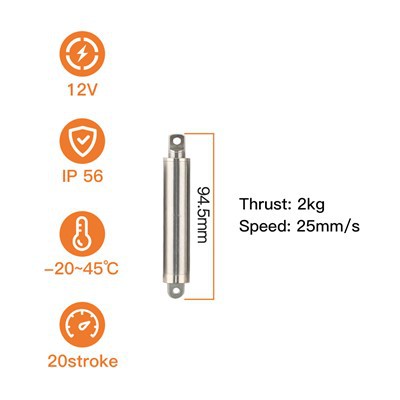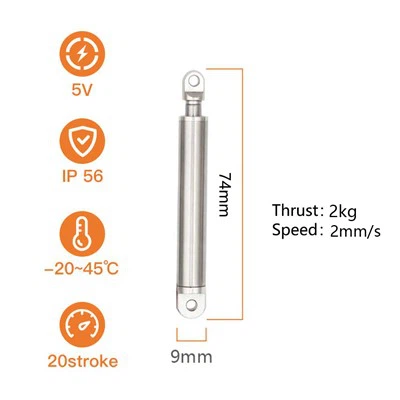
Hey there! As a supplier of 12V actuator motors, I've seen my fair share of these motors not working as they should. It can be super frustrating, especially when you're counting on them for a project. But don't worry! I'm here to walk you through some steps to troubleshoot a 12V actuator motor that doesn't work.
Check the Power Supply
The first thing you should do is to check the power supply. A 12V actuator motor needs a stable 12V power source to operate correctly. If the power supply is not providing the right voltage, the motor won't work.
- Use a Multimeter: Grab a multimeter and set it to measure DC voltage. Connect the probes to the power source terminals. You should get a reading close to 12V. If the reading is significantly lower or higher, there's a problem with the power supply. It could be a faulty battery, a bad power adapter, or loose connections.
- Inspect the Wires: Look at the wires connecting the power supply to the motor. Make sure they're not frayed, broken, or loose. A loose connection can interrupt the flow of electricity, causing the motor to stop working. You can try gently wiggling the wires while the power is on (be careful not to touch the exposed metal parts) to see if the motor starts working. If it does, then you know there's a loose connection that needs to be fixed.
Examine the Motor Connections
Even if the power supply is fine, the problem could be with the connections between the motor and the power source or other components in the system.
- Check the Terminals: The motor has terminals where the wires are connected. Make sure these terminals are clean and free of corrosion. Corrosion can prevent a good electrical connection. You can use a small wire brush to clean the terminals if they're dirty.
- Verify the Wiring Diagram: Double - check the wiring diagram to make sure the motor is connected correctly. Sometimes, a simple wiring mistake can cause the motor not to work. If you're not sure about the wiring, refer to the motor's manual or contact the manufacturer for assistance.
Look for Mechanical Obstructions
Sometimes, the issue isn't electrical at all but mechanical. A 12V actuator motor has moving parts, and if something is blocking these parts, the motor won't be able to operate.
- Inspect the Shaft: Check the motor shaft to see if it's free to rotate. Try turning it by hand (make sure the power is off first). If it's difficult to turn or won't turn at all, there could be something stuck inside the motor or an issue with the gears. You may need to disassemble the motor carefully to remove the obstruction.
- Check for Debris: Look for any debris or foreign objects around the motor. Dust, dirt, or small pieces of metal can get into the motor and cause problems. Use a can of compressed air to blow out any debris that you can see.
Test the Motor with a Different Controller
If your 12V actuator motor is controlled by a controller, the controller could be the problem.
- Swap the Controller: If you have another compatible controller, try swapping it with the current one. This can help you determine if the controller is the root cause of the problem. If the motor works with the new controller, then you know the old controller needs to be repaired or replaced.
- Check the Controller Settings: Make sure the controller settings are correct. Some controllers have adjustable parameters such as speed, direction, and torque. Incorrect settings can prevent the motor from working properly. Refer to the controller's manual to set the parameters correctly.
Consider the Motor's Age and Usage
Over time, a 12V actuator motor can wear out, especially if it's been used frequently or in harsh conditions.
- Assess the Motor's Age: If the motor is old, it may be more prone to failure. Components like the brushes, bearings, and windings can degrade over time. If you suspect that the motor is worn out, it may be more cost - effective to replace it rather than trying to repair it.
- Evaluate the Usage Conditions: Think about how the motor has been used. If it's been exposed to extreme temperatures, moisture, or vibrations, these factors can also contribute to its failure. In such cases, you may need to take steps to protect the motor in the future, such as using a protective enclosure or adding vibration - damping mounts.
Additional Resources
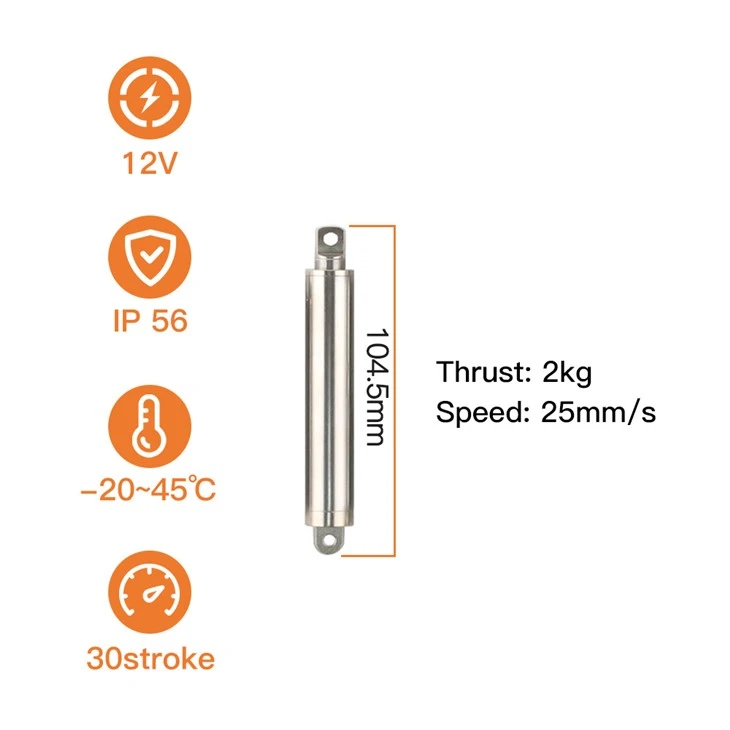
If you're still having trouble troubleshooting your 12V actuator motor, there are some additional resources that might help. You can check out our Actuator 24V and 24Vdc Linear Actuator pages for more information on related products. Also, our Micro Linear Actuator 12V page can provide details about smaller 12V options.

Conclusion
Troubleshooting a 12V actuator motor that doesn't work can be a bit of a challenge, but by following these steps, you should be able to identify and fix the problem. Remember to always take safety precautions when working with electrical components. If you're still having issues after trying all these steps, don't hesitate to reach out to us. We're a 12V actuator motor supplier, and we have a team of experts who can provide further assistance. Whether you need more in - depth troubleshooting advice or are looking to purchase a new motor, we're here to help. Contact us to start a discussion about your needs and how we can assist you in getting the right 12V actuator motor for your project.
References
- General knowledge of 12V actuator motors from years of experience in the industry.
- Manufacturer's manuals for various 12V actuator motors and controllers.