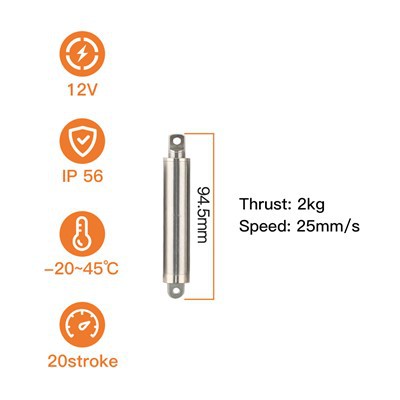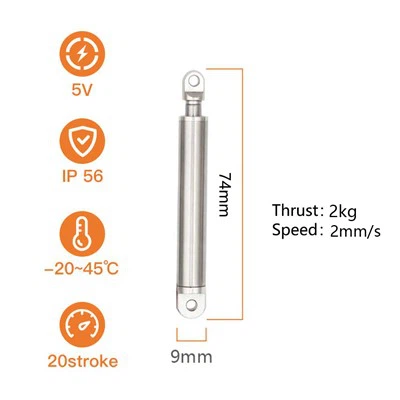
Hey there! As a supplier of tiny linear actuators, I often get asked about how to test these little powerhouses. Tiny linear actuators are super handy in all sorts of applications, from small robotics projects to precision medical devices. Testing them properly is crucial to ensure they perform as expected. So, let's dive into the world of testing tiny linear actuators!
1. Visual Inspection
Before we start any fancy testing, a good old - fashioned visual inspection is in order. Grab a magnifying glass if you need to, and take a close look at the actuator. Check for any obvious signs of damage, like dents, scratches, or loose parts. Make sure the wires are intact and properly connected. If you see any issues at this stage, it's best to address them right away. A damaged actuator might not work correctly, or worse, could cause problems in your application.
2. Checking Electrical Continuity
Next up, we're going to check the electrical continuity. You'll need a multimeter for this. Set your multimeter to the resistance or continuity setting. Connect the probes to the actuator's electrical terminals. If the actuator has a good electrical connection, you should get a reading close to zero ohms (indicating low resistance) or hear a beep if your multimeter has a continuity beeper. A high resistance reading or no reading at all could mean there's a break in the wiring or a problem with the internal components. This simple test can quickly tell you if the electrical side of the actuator is working as it should.
3. Measuring Stroke Length
The stroke length is how far the actuator can extend and retract. To measure this, you'll need a ruler or a caliper. First, make sure the actuator is in its fully retracted position and mark the position of the moving part. Then, power the actuator to make it extend fully and mark the new position. Measure the distance between the two marks. This is your stroke length. Compare this measurement to the specifications provided by the manufacturer. If the measured stroke length is significantly different from the specified value, there could be an issue with the actuator's internal mechanism.
4. Force Testing
One of the most important aspects of a linear actuator is its force output. There are a few ways to test this. One simple method is to use a spring scale. Attach the spring scale to the moving part of the actuator. As the actuator extends, it will pull on the spring scale. Read the value on the spring scale when the actuator reaches its maximum force. This gives you an approximation of the actuator's force output.
However, for more accurate force testing, you might want to use a load cell. A load cell is a device that can measure force more precisely. Connect the load cell to the actuator and use a data acquisition system to record the force readings as the actuator moves. Compare the measured force to the manufacturer's specifications. If the force output is lower than expected, it could be due to a weak motor, a worn - out gearbox, or other internal problems.
5. Speed Testing
The speed at which a linear actuator moves is also an important factor. To test the speed, you can use a stopwatch. Mark a known distance on the actuator's path of movement. Power the actuator and start the stopwatch as soon as it starts moving. Stop the stopwatch when it reaches the marked distance. Divide the distance by the time taken to get the average speed. You can also do this test multiple times to get a more accurate average.
If you want a more precise measurement, you can use an optical encoder or a laser sensor. These devices can measure the position of the actuator at very short intervals, allowing you to calculate the speed more accurately. Compare the measured speed to the manufacturer's specifications. If the speed is too slow or too fast, it could be due to issues with the power supply, the motor, or the control system.
6. Cycle Testing
Cycle testing involves running the actuator through multiple extend - retract cycles to see how it performs over time. Set up a simple control system to automatically cycle the actuator. You can use a microcontroller or a relay to control the power supply to the actuator. Run the actuator through a large number of cycles, say 1000 or more. During the cycle test, monitor the actuator's performance. Look for any signs of overheating, unusual noises, or changes in the stroke length, force, or speed.
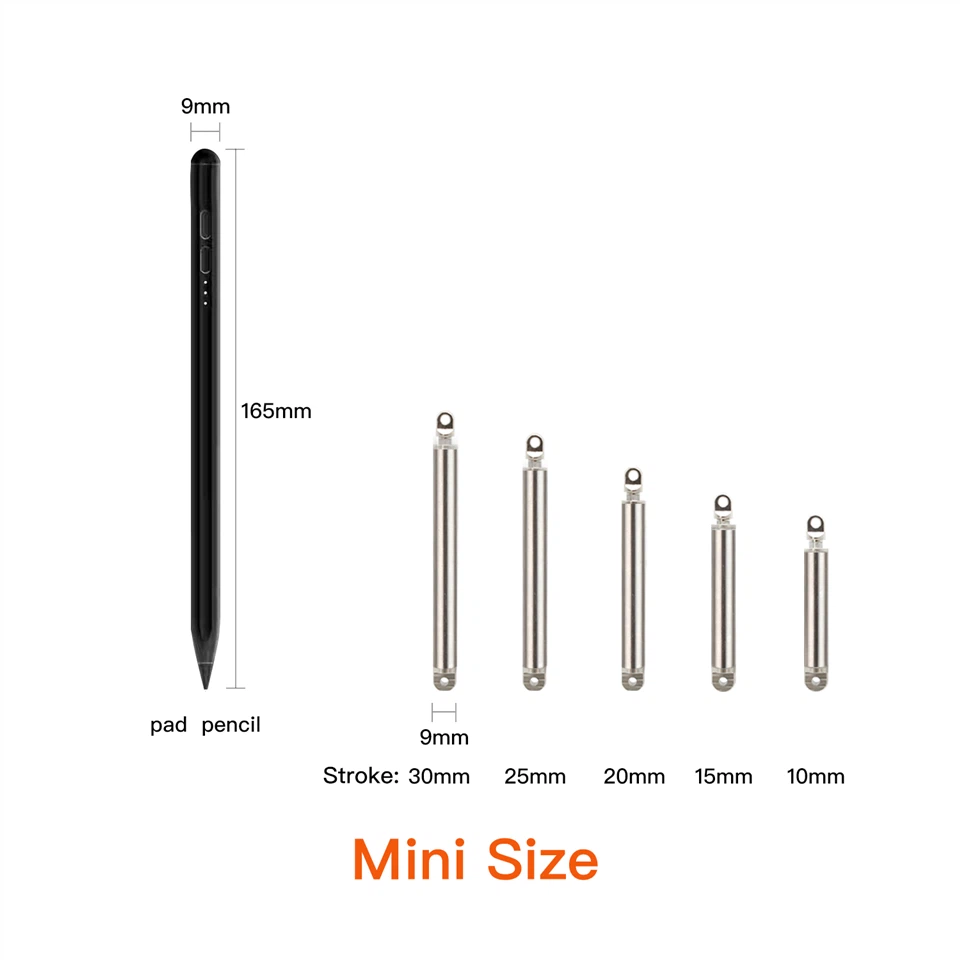
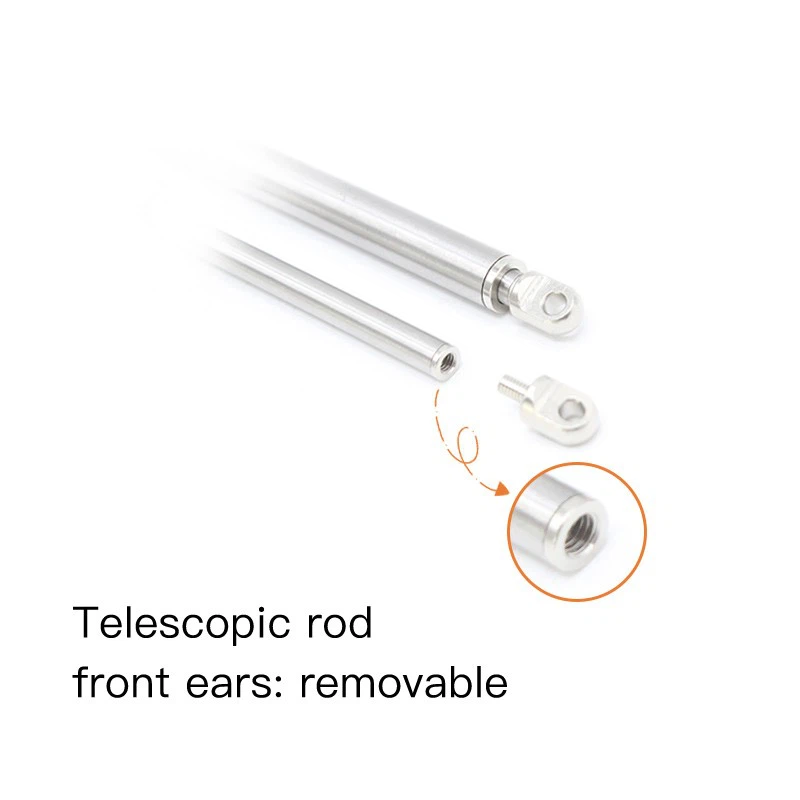
Cycle testing is important because it can reveal any long - term reliability issues. For example, if the actuator starts to lose force or speed after a certain number of cycles, it could be due to wear and tear on the internal components. This information can help you determine the actuator's expected lifespan and whether it's suitable for your application.
7. Environmental Testing
Depending on where the actuator will be used, you might need to perform environmental testing. For example, if the actuator will be used in a dusty or dirty environment, you can expose it to a controlled amount of dust and see how it performs. Check for any clogging of the moving parts or changes in the electrical performance.
If the actuator will be used in a wet or humid environment, you can test its waterproof or moisture - resistant capabilities. You can immerse the actuator in a small amount of water (if it's rated for that) or expose it to high humidity for a period of time. Monitor the actuator's performance during and after the exposure.
Importance of Testing
Testing your tiny linear actuators is not just a formality. It can save you a lot of headaches in the long run. By testing, you can ensure that the actuators you're using or supplying meet the required specifications. This means fewer failures in your applications, less downtime, and ultimately, happier customers.
If you're looking for high - quality tiny linear actuators or want to learn more about Fast Linear Actuator, Stainless Steel Linear Actuator, or Linear Actuator Control, we've got you covered.
If you're interested in purchasing our tiny linear actuators or have any questions about testing or our products, don't hesitate to reach out. We're here to help you find the perfect actuator for your needs and ensure it performs flawlessly.
References
- Engineering textbooks on electromechanical devices
- Manufacturer's documentation for linear actuators
- Industry standards for linear actuator testing