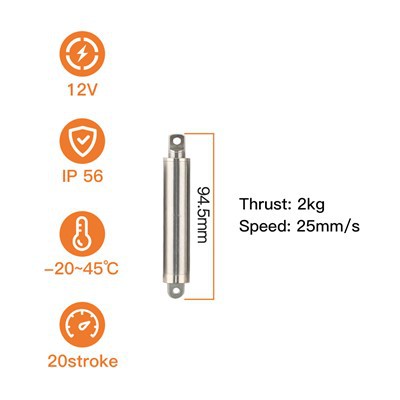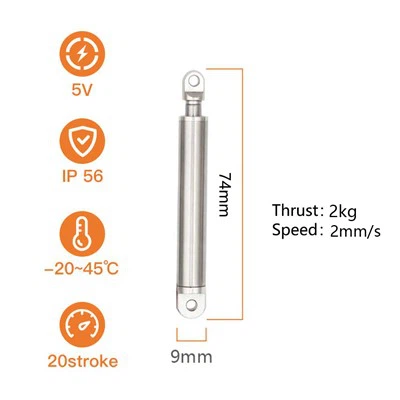
Hey there! As a supplier of 6V electric actuators, I often get asked about the phase angle of these nifty devices. So, I thought I'd take a moment to break it down for you in a way that's easy to understand.
First off, let's talk about what an electric actuator is. Simply put, it's a device that converts electrical energy into mechanical motion. In the case of our 6V electric actuators, they're designed to operate on a 6 - volt power supply, which makes them suitable for a wide range of applications, from small robotics projects to automotive accessories.

Now, onto the phase angle. The phase angle is a crucial concept when it comes to understanding how an electric actuator works, especially in alternating current (AC) systems. In an AC circuit, the voltage and current don't always rise and fall at the same time. The phase angle is the difference in the timing between the voltage waveform and the current waveform.
For a 6V electric actuator, the phase angle can have a significant impact on its performance. If the phase angle is not properly managed, it can lead to inefficiencies, increased power consumption, and even damage to the actuator over time.
Let's take a closer look at how the phase angle affects the operation of a 6V electric actuator. When the phase angle is zero, it means that the voltage and current are in phase. In this ideal scenario, the actuator is operating at its maximum efficiency because the power is being used most effectively. However, in real - world applications, achieving a zero - phase angle is often difficult due to factors such as the inductance and capacitance of the actuator's components.
Inductance is a property of electrical circuits that causes the current to lag behind the voltage. In a 6V electric actuator, the coils in the motor can introduce inductance. As a result, the current waveform will be shifted relative to the voltage waveform, creating a non - zero phase angle. This lagging current can cause the actuator to draw more power than necessary, reducing its overall efficiency.
On the other hand, capacitance can cause the current to lead the voltage. While this is less common in electric actuators, it can still occur in some cases, especially if there are capacitors in the circuit for filtering or other purposes. A leading current can also have an impact on the actuator's performance and power consumption.
So, how do we deal with the phase angle in a 6V electric actuator? Well, one way is to use power factor correction techniques. Power factor is a measure of how effectively electrical power is being used in a circuit. By improving the power factor, we can reduce the phase angle and increase the efficiency of the actuator.
There are several methods for power factor correction. One common approach is to use capacitors in parallel with the actuator. These capacitors can compensate for the inductive reactance of the actuator, bringing the current and voltage waveforms closer together and reducing the phase angle. Another method is to use more advanced control algorithms in the actuator's drive electronics. These algorithms can adjust the voltage and current waveforms in real - time to optimize the phase angle and improve the actuator's performance.
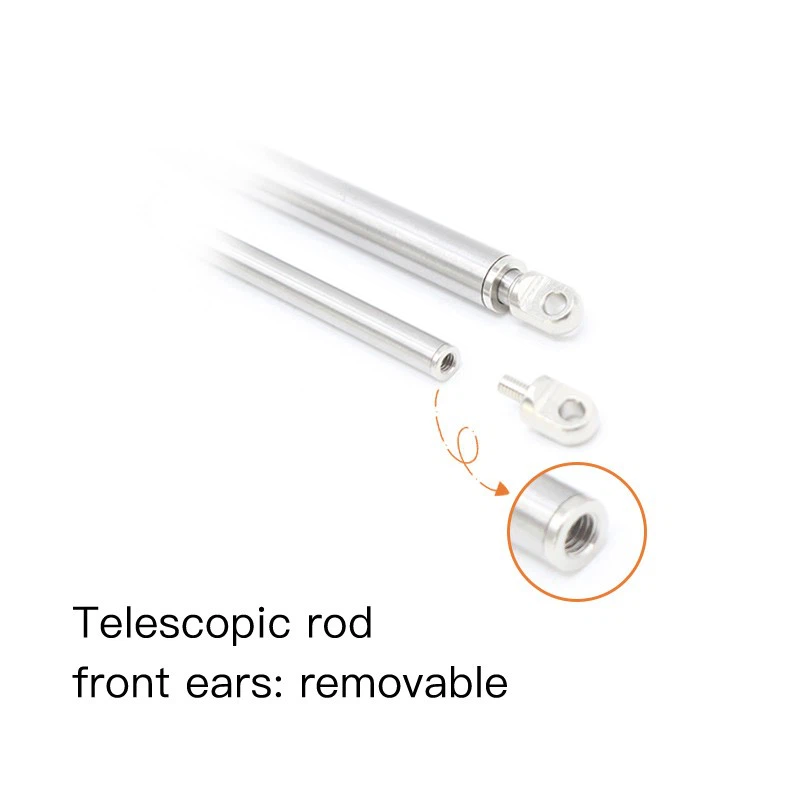
Now, let me tell you a bit about the different types of 6V electric actuators we offer. We have the Electric Motor Linear Actuator, which is great for applications where you need a straight - line motion. These actuators are known for their precision and reliability, making them a popular choice for industrial automation and robotics.
Our Electric Linear Actuator is another versatile option. It can be used in a variety of applications, from medical equipment to home automation. With its compact design and high - torque output, it's a great solution for projects where space is limited.
And if you're specifically looking for a 6V electric cylinder, we've got you covered with our Electric Cylinder 6V. These cylinders are perfect for applications that require a high - force linear motion, such as in hydraulic systems or heavy - duty machinery.
We understand that every project is unique, and that's why we offer a wide range of customization options for our 6V electric actuators. Whether you need a specific stroke length, speed, or load capacity, we can work with you to design an actuator that meets your exact requirements.
If you're in the market for a 6V electric actuator, I encourage you to reach out to us. We have a team of experts who are ready to help you choose the right actuator for your application and answer any questions you may have about phase angles or other technical aspects. By working with us, you can ensure that you get a high - quality, efficient, and reliable 6V electric actuator that will meet your needs for years to come.
In conclusion, the phase angle of a 6V electric actuator is an important factor that can significantly impact its performance and efficiency. By understanding how the phase angle works and using appropriate power factor correction techniques, we can optimize the operation of the actuator and get the most out of it. Whether you're a hobbyist working on a small project or an engineer designing a large - scale industrial system, our 6V electric actuators are a great choice. So, don't hesitate to contact us to start discussing your procurement needs.
References
- Electrical Engineering textbooks on AC circuits and power systems
- Manufacturer's specifications for 6V electric actuators