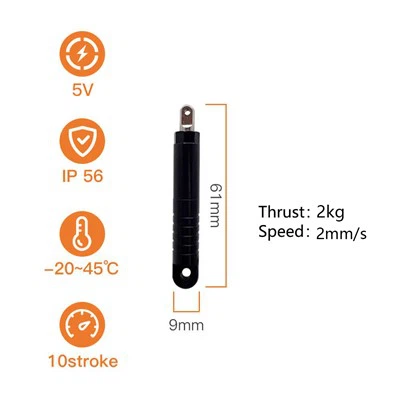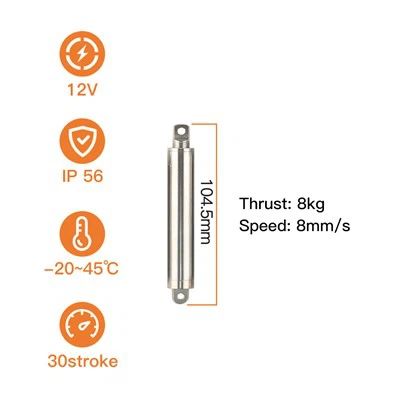
Selecting a fast linear actuator for a specific application is a critical decision that can significantly impact the performance and efficiency of your project. As a trusted supplier of fast linear actuators, I understand the complexities involved in this process. In this blog post, I will share some valuable insights to help you make an informed choice.
Understanding the Basics of Fast Linear Actuators
Before delving into the selection process, it's essential to have a clear understanding of what fast linear actuators are and how they work. A linear actuator is a device that converts rotational motion into linear motion. Fast linear actuators are designed to achieve high speeds, enabling rapid movement in various applications.
There are several types of fast linear actuators available in the market, each with its own unique features and advantages. Some of the common types include electric linear actuators, hydraulic linear actuators, and pneumatic linear actuators. Electric linear actuators are particularly popular due to their precision, controllability, and ease of integration with automation systems.
Key Factors to Consider When Selecting a Fast Linear Actuator
1. Speed Requirements
The first and most obvious factor to consider is the speed requirements of your application. Determine the maximum speed at which the actuator needs to operate. This will depend on the specific task the actuator is intended to perform. For example, in a high - speed pick - and - place application, you may require an actuator that can achieve speeds of several meters per second.
It's important to note that while high speed is desirable, it should not come at the expense of accuracy and stability. Some actuators may offer extremely high speeds but may lack the precision needed for certain applications. Therefore, strike a balance between speed and other performance parameters.
2. Load Capacity
Another crucial factor is the load capacity of the actuator. You need to know the weight of the object that the actuator will be moving. This includes not only the static load but also any dynamic loads that may occur during operation, such as acceleration and deceleration forces.
If the load capacity of the actuator is insufficient, it may lead to premature wear and tear, reduced performance, and even failure. On the other hand, choosing an actuator with an overly large load capacity can result in unnecessary costs and a larger, bulkier system.
3. Stroke Length
The stroke length refers to the maximum distance that the actuator can move. Measure the distance that the object needs to travel in your application and select an actuator with an appropriate stroke length. Make sure to account for any additional space required for mounting and clearance.
4. Accuracy and Repeatability
Accuracy and repeatability are vital in many applications, especially those involving precision positioning. Accuracy refers to how closely the actuator can reach the desired position, while repeatability refers to the ability of the actuator to return to the same position consistently.
For applications such as CNC machining or optical alignment, high accuracy and repeatability are essential. Look for actuators with features such as high - resolution encoders and advanced control systems to ensure precise movement.
5. Environmental Conditions
Consider the environmental conditions in which the actuator will operate. Factors such as temperature, humidity, dust, and corrosive substances can have a significant impact on the performance and lifespan of the actuator.
If the actuator will be used in a harsh environment, such as a chemical plant or an outdoor setting, you may need to choose an actuator with appropriate protection. For example, a Stainless Steel Linear Actuator is a good choice for applications where corrosion resistance is required.
6. Control and Integration
The ease of control and integration with your existing system is also an important consideration. Determine the type of control signals that your system uses, such as analog or digital signals. Look for actuators that are compatible with your control system and offer features such as programmability and communication interfaces.
Some actuators can be easily integrated with PLCs (Programmable Logic Controllers) or other automation devices, allowing for seamless operation in a larger system.
Types of Fast Linear Actuators and Their Suitability
Electric Linear Actuators
Electric linear actuators are widely used due to their versatility and ease of use. They offer precise control, high efficiency, and low maintenance. Linear Motor Actuator is a type of electric linear actuator that can achieve very high speeds and accelerations. It is suitable for applications that require rapid and precise movement, such as semiconductor manufacturing and high - speed testing equipment.
Hydraulic Linear Actuators
Hydraulic linear actuators are known for their high power density and ability to handle heavy loads. They can generate large forces and are often used in applications such as construction equipment and heavy machinery. However, they require a hydraulic power unit, which can be bulky and complex to install and maintain.
Pneumatic Linear Actuators
Pneumatic linear actuators are relatively inexpensive and simple to operate. They are powered by compressed air and are suitable for applications where speed and moderate force are required. However, they may not offer the same level of precision as electric or hydraulic actuators.
Case Studies
Let's take a look at some real - world examples to illustrate the importance of proper actuator selection.
Case Study 1: Packaging Industry
In a packaging line, a fast linear actuator is used to move products from one conveyor to another. The actuator needs to operate at a high speed to keep up with the production rate. By selecting a 6 Volt Linear Actuator with Remoteactuators, the company was able to achieve the required speed while also having the advantage of remote control, which improved the flexibility of the system.
Case Study 2: Medical Equipment
In a medical imaging device, precision and accuracy are of utmost importance. A fast linear actuator with high - resolution encoders was selected to ensure that the imaging components could be positioned accurately. This not only improved the quality of the images but also reduced the risk of misdiagnosis.
Conclusion
Selecting a fast linear actuator for a specific application requires careful consideration of multiple factors. By understanding your application's requirements in terms of speed, load capacity, stroke length, accuracy, environmental conditions, and control, you can make an informed decision.
As a supplier of fast linear actuators, we have a wide range of products to meet your diverse needs. Our team of experts is always ready to assist you in choosing the right actuator for your application. If you are interested in learning more about our products or have any questions regarding actuator selection, please feel free to contact us for a detailed discussion and potential procurement.


References
- "Motion Control Handbook" by Peter Nachtwey
- "Linear Actuator Technology" by various industry experts in motion control