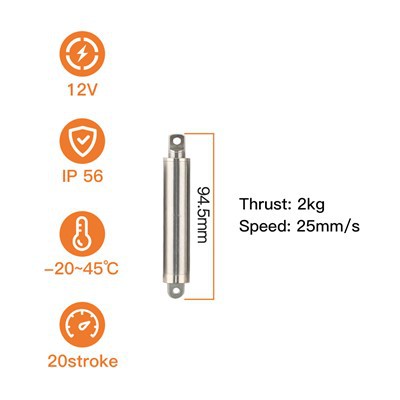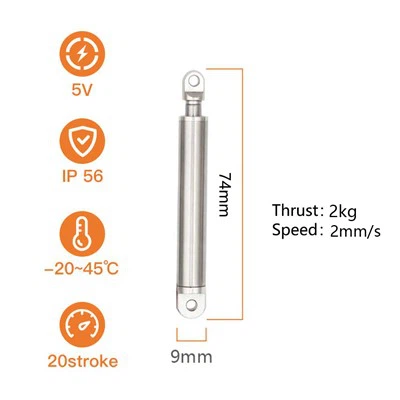
Micro actuators are compact devices capable of converting various forms of energy into mechanical motion. These devices are characterized by their small size, high precision, and efficient performance, making them suitable for applications where space is limited and fine control is required. As a micro actuator supplier, I've witnessed firsthand the transformative potential of these tiny yet powerful devices in the field of robotics.
Types of Micro Actuators and Their Working Principles
There are several types of micro actuators, each with distinct working principles. Piezoelectric micro actuators operate based on the piezoelectric effect, where certain materials generate an electric charge in response to applied mechanical stress, and vice versa. When an electric field is applied to a piezoelectric material, it undergoes a small deformation, which can be harnessed to produce linear or rotary motion. These actuators offer extremely high precision and fast response times, making them ideal for applications that demand rapid and accurate positioning.
Electrostatic micro actuators rely on the force of electrostatic attraction or repulsion between charged surfaces. By applying a voltage to two conductive plates or electrodes, an electrostatic force is generated, causing the plates to move relative to each other. Electrostatic micro actuators are known for their simplicity, low power consumption, and high-speed operation. However, they typically produce relatively low forces and have limited stroke lengths.
Shape memory alloy (SMA) micro actuators utilize the unique property of shape memory alloys to change shape in response to temperature variations. When heated above a certain transition temperature, an SMA material returns to its pre - programmed shape, generating mechanical force. SMA micro actuators offer high force - to - weight ratios and can produce large displacements. However, their response times are relatively slow, and they require a heating and cooling cycle to operate.
Advantages of Using Micro Actuators in Robotics
One of the most significant advantages of micro actuators in robotics is their compact size. In many robotic applications, especially those involving small - scale or miniaturized robots, space is a critical constraint. Micro actuators can be integrated into tight spaces without adding excessive weight or bulk to the robot, enabling the design of more streamlined and efficient robotic systems. For example, in micro - robots used for medical applications such as minimally invasive surgery or drug delivery, the small size of micro actuators allows for precise movement within the human body without causing significant trauma.
Micro actuators also offer high precision and accuracy. They can be controlled with great precision to achieve very small displacements, which is essential for tasks that require fine manipulation or positioning. In robotic assembly lines, micro actuators can be used to handle small components with high accuracy, improving the quality and efficiency of the manufacturing process. Additionally, the high precision of micro actuators enables robots to perform delicate tasks such as picking and placing fragile objects without damaging them.
Another advantage is their energy efficiency. Many micro actuators consume relatively low amounts of power compared to larger actuators, which is beneficial for battery - powered robots. This allows robots to operate for longer periods without frequent recharging, increasing their overall usability and practicality. For example, in autonomous drones or mobile robots, energy - efficient micro actuators can extend the flight or operation time, enabling more extensive data collection or exploration.
Applications of Micro Actuators in Different Types of Robots
In industrial robots, micro actuators play a crucial role in enhancing the performance of robotic arms and grippers. For example, micro actuators can be used to control the fingers of a robotic gripper, allowing for precise grasping and manipulation of objects of different shapes and sizes. They can also be integrated into the joints of robotic arms to provide fine - tuned movement, improving the accuracy and repeatability of assembly operations. The Micro Linear Actuator 6V is an excellent choice for such applications due to its compact size and precise linear motion control.
In service robots, which are designed to interact with humans in various environments, micro actuators are used for a wide range of functions. For instance, in humanoid robots, micro actuators can be used to mimic human facial expressions and gestures, enhancing the robot's social interaction capabilities. In assistive robots for the elderly or disabled, micro actuators can be used to provide gentle and precise movements for tasks such as helping with daily living activities. The Micro Linear Motor offers smooth and efficient motion, making it suitable for these types of service robot applications.
In medical robots, micro actuators have revolutionized minimally invasive surgical procedures. They can be used to control the movement of surgical instruments with high precision inside the human body, reducing the risk of damage to surrounding tissues. Micro actuators are also used in drug delivery systems, where they can precisely control the release of drugs at the desired location. The Actuator Linear For Diy Model can be a cost - effective option for medical device developers looking to prototype or develop custom - made robotic medical devices.
Challenges and Limitations
Despite their numerous advantages, the use of micro actuators in robotics also faces some challenges. One of the main challenges is the limited force output of micro actuators. In applications where high forces are required, such as heavy - duty industrial tasks or large - scale robotic movements, micro actuators may not be able to provide sufficient power. This often requires the use of multiple micro actuators in parallel or in combination with larger actuators to achieve the desired force levels.
Another challenge is the durability and reliability of micro actuators. Due to their small size and complex operating principles, micro actuators are more susceptible to wear and tear, as well as environmental factors such as temperature, humidity, and vibration. Ensuring the long - term reliability of micro actuators in harsh robotic environments is crucial for the overall performance and safety of the robotic system.
The control of micro actuators can also be complex. Precise control algorithms are required to achieve the desired motion and performance, especially when dealing with multiple actuators working in coordination. Developing these control algorithms requires a deep understanding of the actuator's behavior and the specific requirements of the robotic application.
Future Outlook
The future of micro actuators in robotics looks promising. With ongoing advancements in materials science and manufacturing technologies, we can expect to see micro actuators with even higher performance, such as increased force output, improved durability, and faster response times. For example, the development of new piezoelectric materials and nanocomposites may lead to more powerful and efficient piezoelectric micro actuators.
Integration with other emerging technologies such as artificial intelligence and sensor technology will also enhance the capabilities of robots using micro actuators. AI - enabled control systems can optimize the operation of micro actuators based on real - time sensor data, enabling robots to adapt to changing environments and perform more complex tasks.
As the demand for smaller, more efficient, and intelligent robots continues to grow, the role of micro actuators in robotics will become increasingly important. They will enable the development of new types of robots, such as swarm robots, soft robots, and micro - flying robots, opening up new possibilities in various fields including healthcare, environmental monitoring, and exploration.
Conclusion
Micro actuators have the potential to significantly enhance the capabilities of robots in a wide range of applications. Their compact size, high precision, and energy efficiency make them well - suited for modern robotic systems. However, challenges such as limited force output, durability, and complex control need to be addressed to fully realize their potential.
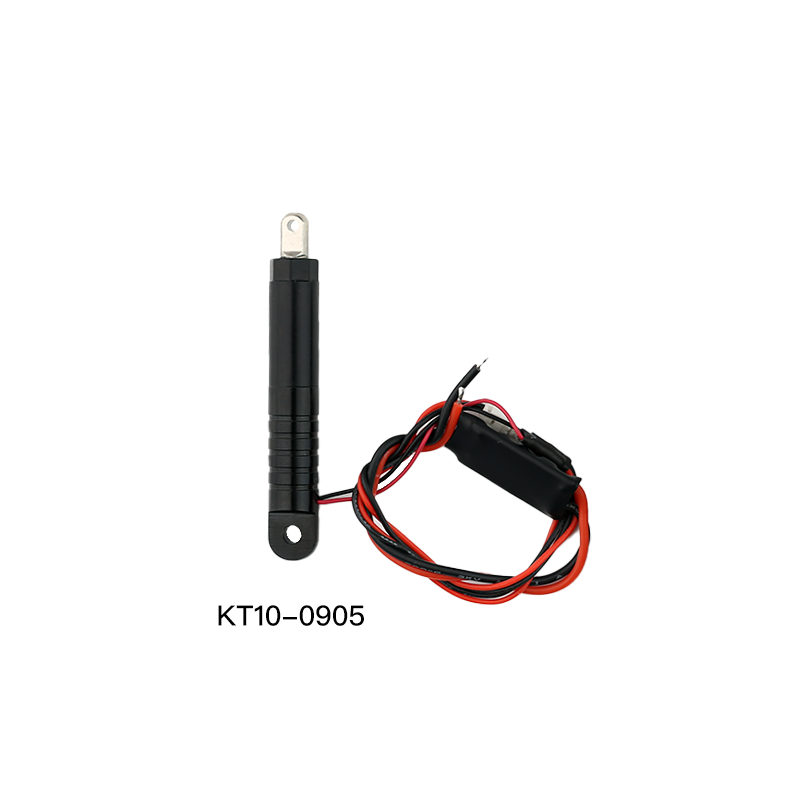
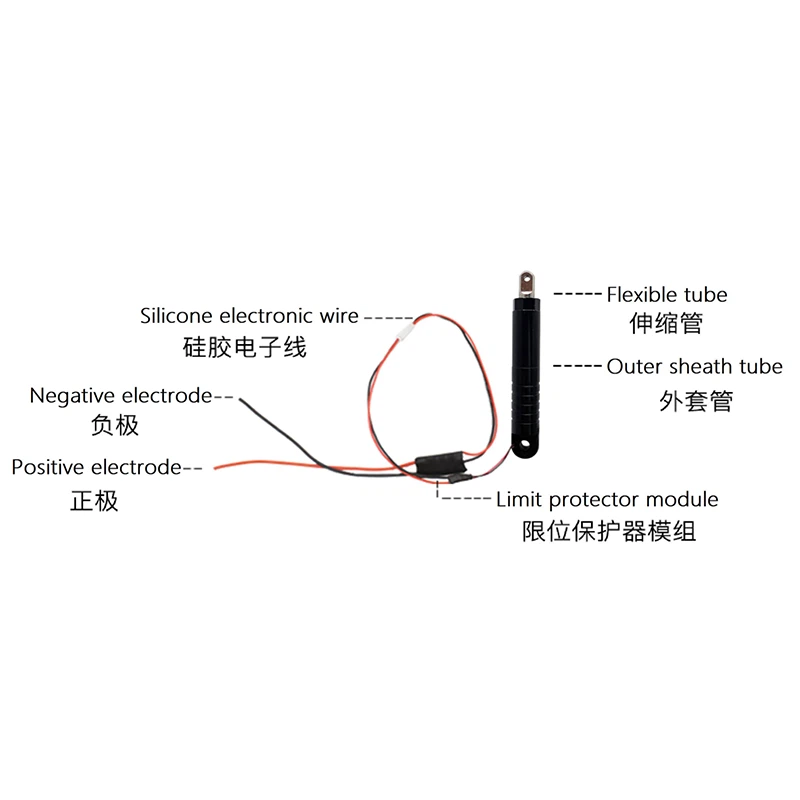
As a micro actuator supplier, I am committed to providing high - quality micro actuators that meet the diverse needs of the robotics industry. If you are interested in exploring the use of micro actuators in your robotic projects, I encourage you to contact me for further discussion and to start a procurement negotiation. Together, we can develop innovative solutions to drive the future of robotics forward.
References
- Beeby, S. P., Tudor, M. J., & White, N. M. (2006). Energy harvesting vibration sources for microsystems applications. Measurement Science and Technology, 17(12), R175 - R195.
- Craig, J. J. (2005). Introduction to robotics: mechanics and control. Pearson Prentice Hall.
- Kovacs, G. T. A. (1998). Micromachined transducers sourcebook. McGraw - Hill.