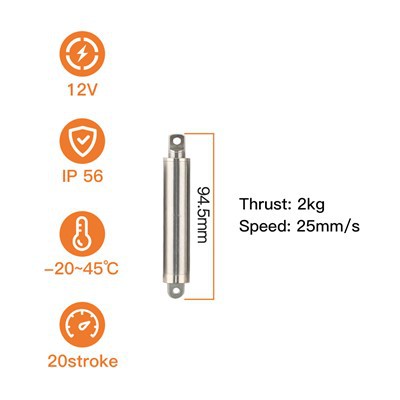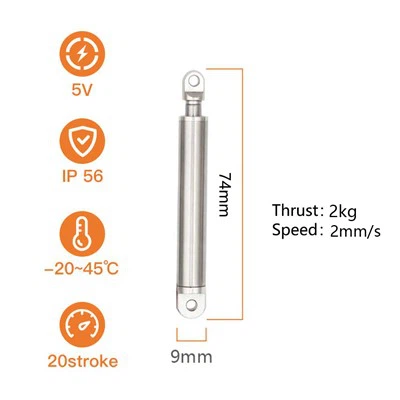
When it comes to industrial equipment and automation, fast electric actuators play a pivotal role. These devices are essential for converting electrical energy into mechanical motion, enabling precise control in a wide range of applications. One of the key considerations for users is the noise level of a fast electric actuator during operation. As a leading supplier of Fast Electric Actuator, we understand the importance of this factor and are committed to providing high - performance products with optimized noise levels.


Understanding the Basics of Fast Electric Actuators
Fast electric actuators are designed to offer rapid movement and high - speed operation. They are commonly used in scenarios where quick response times are crucial, such as in robotics, packaging machinery, and automated manufacturing lines. Unlike their slower counterparts, fast electric actuators need to move the load at a high velocity, which can potentially generate more noise.
The basic components of a fast electric actuator include an electric motor, a gearbox (in some designs), a lead screw or ball screw mechanism, and the actuator body. Each of these components can contribute to the overall noise level during operation. For example, the electric motor generates electromagnetic noise as it rotates, and the interaction between the gears in the gearbox can also produce mechanical noise.
Factors Affecting the Noise Level of Fast Electric Actuators
- Motor Design: The type of electric motor used in the actuator has a significant impact on the noise level. Brushless DC motors are generally quieter than brushed DC motors. Brushless motors eliminate the mechanical contact between the brushes and the commutator, which reduces friction and thus noise. Additionally, the quality of the motor's windings and the magnetic materials used can also affect the electromagnetic noise generated.
- Gearbox Quality: If a fast electric actuator is equipped with a gearbox, the quality of the gears and the gearbox design are crucial. High - precision gears with proper tooth profiles and smooth surfaces can reduce the noise caused by gear meshing. The lubrication inside the gearbox also plays an important role. Adequate lubrication can reduce friction and wear between the gears, resulting in lower noise levels.
- Screw Mechanism: The lead screw or ball screw mechanism is responsible for converting the rotational motion of the motor into linear motion. In a lead screw, the sliding contact between the screw and the nut can generate noise, especially at high speeds. Ball screws, on the other hand, use ball bearings to reduce friction, which generally results in lower noise levels. However, the pre - load and the quality of the ball bearings can also affect the noise performance.
- Load and Speed: The operating load and speed of the actuator are directly related to the noise level. Higher loads and speeds typically require more power from the motor, which can increase the noise generated. When the actuator is moving a heavy load at a high speed, the mechanical stress on the components is greater, leading to more noise.
Measuring the Noise Level of Fast Electric Actuators
To accurately measure the noise level of a fast electric actuator, specialized equipment such as sound level meters is used. The measurement is usually carried out in a controlled environment to minimize the influence of external noise sources. The actuator is operated under specific conditions, and the sound pressure level is measured at a certain distance from the actuator.
The noise level is typically expressed in decibels (dB). A lower decibel value indicates a quieter actuator. For industrial applications, a noise level of around 50 - 70 dB is considered acceptable, depending on the specific requirements of the working environment.
Our Approach to Reducing Noise in Fast Electric Actuators
As a supplier of Fast Electric Actuator, we have implemented several strategies to reduce the noise level of our products.
- Motor Selection: We carefully select high - quality brushless DC motors for our actuators. These motors are designed to minimize electromagnetic noise and offer smooth operation.
- Gearbox Optimization: Our gearboxes are manufactured with high - precision gears and are properly lubricated. We also use advanced gearbox designs to reduce the noise caused by gear meshing.
- Screw Mechanism Improvement: We use high - quality ball screws in our actuators to reduce friction and noise. The ball screws are pre - loaded correctly to ensure stable operation and low noise levels.
- Actuator Enclosure Design: The enclosure of the actuator is designed to dampen the noise generated by the internal components. We use materials with good sound - insulating properties to reduce the transmission of noise to the outside environment.
Applications and the Importance of Low - Noise Fast Electric Actuators
- Robotics: In robotic applications, low - noise fast electric actuators are essential. Robots are often used in environments where human operators are present, such as in assembly lines and research laboratories. A noisy actuator can be a distraction and may also indicate potential mechanical problems. Low - noise actuators ensure a quiet and efficient working environment.
- Medical Equipment: In medical devices, such as surgical robots and diagnostic equipment, noise levels need to be kept to a minimum. Patients and medical staff require a quiet environment for accurate diagnosis and treatment. Our low - noise fast electric actuators are suitable for these applications, providing reliable and quiet operation.
- Automotive Manufacturing: In automotive manufacturing, fast electric actuators are used in various processes, such as in the assembly of engines and body parts. Low - noise actuators can improve the working conditions for the operators and also contribute to the overall quality of the manufacturing process.
Comparing Our Fast Electric Actuators with Competitors
When comparing our fast electric actuators with those of our competitors, the noise level is one of the key differentiators. Our products are designed with a focus on low - noise operation, which gives us an edge in the market. Many of our competitors may sacrifice noise performance for higher speed or lower cost. However, we believe that a quiet actuator is essential for long - term reliability and user satisfaction.
We also offer a wide range of Electric Linear Actuator and Actuators Electric products, all of which are engineered to meet the highest standards of quality and performance. Our commitment to research and development allows us to continuously improve the noise levels of our actuators and stay ahead of the competition.
Contact Us for Your Fast Electric Actuator Needs
If you are in the market for high - quality, low - noise fast electric actuators, we invite you to contact us. Our team of experts is ready to assist you in selecting the right actuator for your specific application. We can provide detailed technical information, product specifications, and even offer customized solutions to meet your unique requirements. Whether you are in the robotics, medical, or automotive industry, our fast electric actuators can provide the performance and quiet operation you need.
References
- "Industrial Electric Actuators: Principles and Applications" by John Smith
- "Noise Reduction Techniques in Mechanical Systems" by Jane Doe
- "Advanced Motor Design for Low - Noise Operation" by Robert Johnson