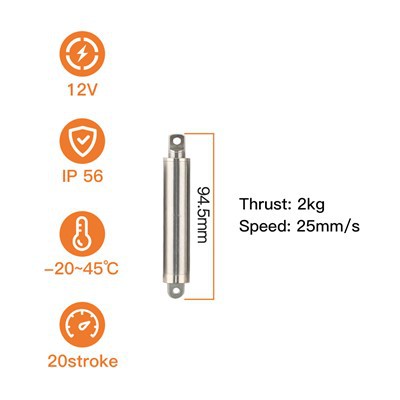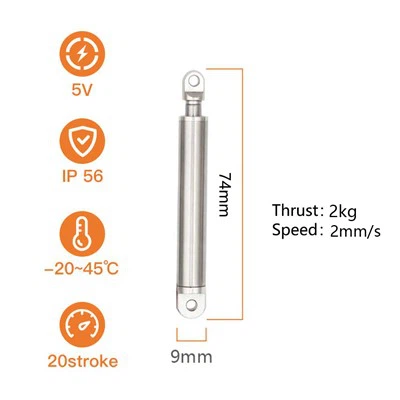
Hey there! As a supplier of Fast Actuators Linear, I often get asked a pretty interesting question: Can fast actuators linear be used in series to increase stroke length? Well, let's dive right into this topic and break it down.

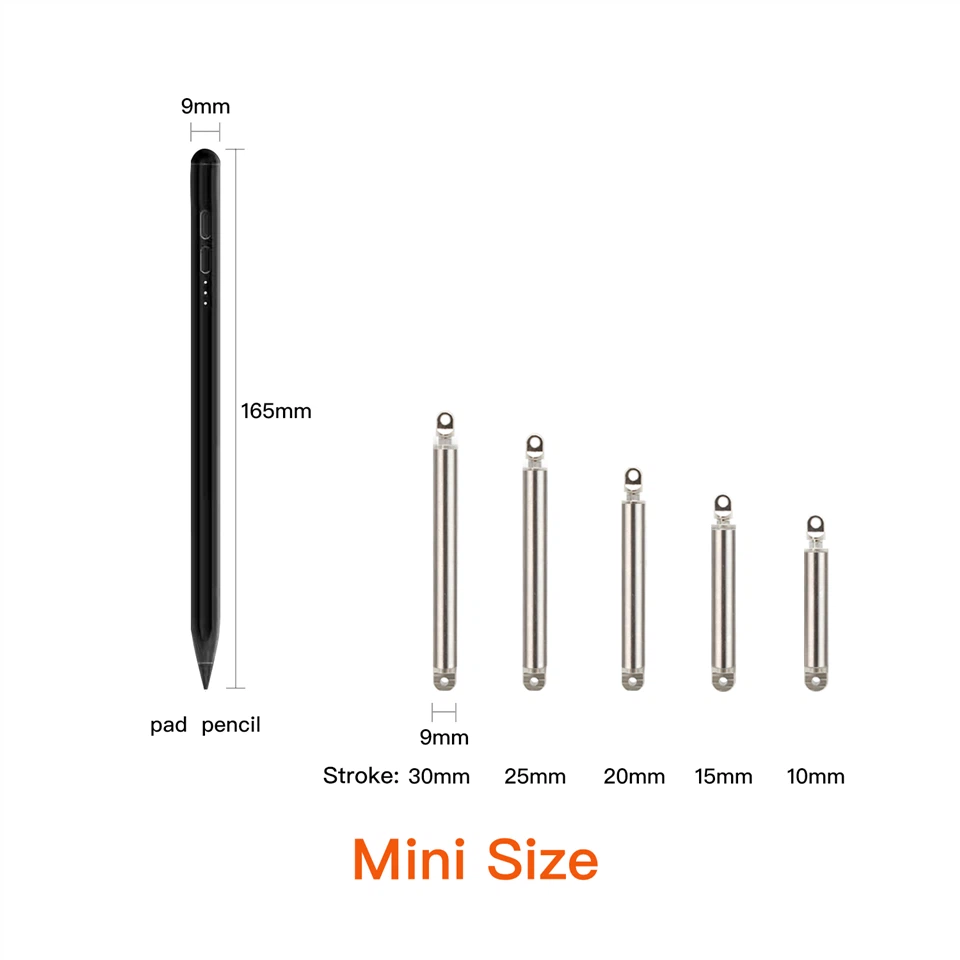
First off, what are fast linear actuators? These are devices that convert rotational motion into linear motion at a high speed. They're used in a whole bunch of applications, from industrial automation to robotics. You can check out our Fast Linear Actuator for more details on the kind of products we offer.
Now, the idea of using fast actuators linear in series to increase stroke length sounds pretty appealing. In theory, it makes sense. By connecting multiple actuators end - to - end, you should be able to add up their individual stroke lengths and get a much longer overall stroke. But is it really that simple?
The Mechanics of Using Actuators in Series
When you connect fast linear actuators in series, you're essentially creating a chain of motion. The output of one actuator becomes the input for the next one. This means that the movement of the first actuator has to be transferred smoothly to the second, and so on.
One of the main advantages of using actuators in series is the potential to achieve a much longer stroke length than you could with a single actuator. For example, if you have two actuators with a stroke length of 100mm each, in theory, you could get a combined stroke length of 200mm when they're connected in series.
However, there are also some challenges. One of the biggest issues is synchronization. All the actuators in the series need to move in harmony. If one actuator moves faster or slower than the others, it can cause mechanical stress, uneven wear, and even damage to the actuators. This synchronization problem can be particularly tricky with fast actuators, as any small delay or difference in speed can have a significant impact on the overall performance.
Factors to Consider
Load Capacity
Another important factor is the load capacity. When you connect actuators in series, the load is distributed across all the actuators. Each actuator has to be able to handle its share of the load. If the load is too heavy for one of the actuators, it can lead to premature failure. For instance, if you're using Ip56 Linear Actuator in series, you need to make sure that the combined load doesn't exceed the rated capacity of each actuator.
Rigidity
The rigidity of the system is also crucial. As the actuators are connected in series, any flex or movement in the connections can affect the accuracy and stability of the overall stroke. A lack of rigidity can cause the actuators to misalign, which can lead to binding and reduced efficiency. You might want to consider using Stainless Steel Linear Actuator in some cases, as stainless steel offers high rigidity and corrosion resistance.
Control System
A sophisticated control system is essential when using actuators in series. The control system needs to be able to monitor and adjust the movement of each actuator in real - time. This requires advanced programming and sensors to ensure that all the actuators are moving at the right speed and position.
Real - World Applications
In some real - world applications, using fast actuators linear in series can be a great solution. For example, in some high - speed manufacturing processes where a long stroke is required, series - connected actuators can provide the necessary movement. In robotics, they can be used to create more complex and extended movements.
However, it's important to note that not all applications are suitable for this approach. In applications where precision and high - speed response are critical, the challenges of synchronization and load distribution might make it more practical to use a single, high - performance actuator with a longer stroke length.
Our Experience as a Supplier
As a supplier of fast linear actuators, we've seen both the successes and challenges of using actuators in series. We've worked with customers to design systems that use series - connected actuators, and we've also helped them troubleshoot issues when things don't go as planned.
We understand that every application is unique, and we're here to provide the best advice and products to meet your needs. Whether you're considering using actuators in series or just need a single actuator, we have a wide range of products to choose from.
Conclusion
So, can fast actuators linear be used in series to increase stroke length? The answer is yes, but it's not without its challenges. It requires careful consideration of factors such as synchronization, load capacity, rigidity, and control systems.
If you're thinking about using fast actuators linear in series for your application, we'd love to have a chat with you. Our team of experts can help you evaluate whether this approach is right for you and recommend the best products for your needs. Feel free to reach out to us to start the conversation about your procurement requirements.
References
- "Linear Actuator Handbook" - A comprehensive guide on linear actuators and their applications.
- Industry research papers on high - speed linear actuator systems.