A solar panel tracking system is a technology that adjusts the orientation of solar panels to follow the sun's path throughout the day. This tracking mechanism significantly enhances the efficiency of solar energy collection, as it allows the panels to receive direct sunlight for a longer period. The key component in such a system is an actuator, which is responsible for moving the solar panels. In this blog, we'll explore whether a 12V linear actuator can be used in a solar panel tracking system, and I'll share insights as a 12V linear actuator supplier.
Understanding Solar Panel Tracking Systems
Before delving into the suitability of a 12V linear actuator, it’s essential to understand the basic types of solar panel tracking systems. There are two main types: single - axis and dual - axis tracking systems.


Single - axis tracking systems move the solar panels along one axis, typically either horizontally (east - west) or vertically (tilt). These systems are relatively simple and cost - effective, and they can increase the energy output of solar panels by 20 - 30% compared to fixed - panel systems.
Dual - axis tracking systems, on the other hand, move the panels along both the horizontal and vertical axes. This allows the panels to precisely follow the sun's path throughout the day and across different seasons. Dual - axis systems can boost energy output by up to 40 - 45%, but they are more complex and expensive.
The Role of Actuators in Solar Panel Tracking
Actuators are the muscle behind solar panel tracking systems. They convert electrical energy into mechanical motion, enabling the panels to move. There are different types of actuators, including hydraulic, pneumatic, and electric. Electric linear actuators are particularly popular in solar panel tracking systems due to their simplicity, precision, and ease of control.
Advantages of Using a 12V Linear Actuator in Solar Panel Tracking
1. Compatibility with Solar Power Systems
Most solar power systems operate at low voltages, and a 12V linear actuator aligns well with these systems. Solar panels often produce direct current (DC) at 12V, 24V, or 48V. A 12V linear actuator can be directly powered by the output of a 12V solar panel or a 12V battery bank charged by the solar panels. This eliminates the need for complex voltage conversion circuits, reducing the overall cost and complexity of the tracking system.
2. Energy Efficiency
12V linear actuators are generally more energy - efficient compared to higher - voltage actuators. They consume less power during operation, which is crucial in a solar power system where energy conservation is a priority. This efficiency means that more of the solar energy collected can be used for other purposes, such as powering the electrical loads connected to the solar system.
3. Cost - Effectiveness
12V linear actuators are often more affordable than their higher - voltage counterparts. This makes them an attractive option for small - scale solar panel tracking systems, such as those used in residential or small - business applications. Additionally, the lower cost of the actuator can help to offset the additional expense of implementing a tracking system, making it a more financially viable option for many users.
4. Safety
Low - voltage systems, such as those using 12V linear actuators, are generally safer to work with compared to high - voltage systems. There is less risk of electric shock during installation, maintenance, or repair, which is an important consideration for both installers and end - users.
Considerations When Using a 12V Linear Actuator
1. Load Capacity
The load capacity of a 12V linear actuator is an important factor to consider. Solar panels, along with their frames and any additional equipment, can be quite heavy. The actuator must be able to generate enough force to move the panels smoothly and accurately. When selecting a 12V linear actuator, it's crucial to choose one with a load capacity that is sufficient for the specific solar panel setup.
2. Stroke Length
The stroke length of the actuator determines how far the solar panels can move. In a solar panel tracking system, the stroke length should be appropriate for the range of motion required. For example, in a single - axis tracking system, the actuator needs to be able to move the panels from one extreme position (e.g., east - facing in the morning) to the other (e.g., west - facing in the afternoon).
3. Speed of Movement
The speed at which the actuator moves the solar panels is also important. The actuator should move the panels at a rate that allows them to keep up with the sun's movement without being too fast or too slow. A too - slow actuator may not be able to track the sun effectively, while a too - fast actuator may cause unnecessary wear and tear on the system.
4. Environmental Conditions
Solar panel tracking systems are exposed to various environmental conditions, including sunlight, rain, wind, and temperature fluctuations. The 12V linear actuator should be able to withstand these conditions without significant degradation in performance. Look for actuators that are designed with weather - resistant materials and have appropriate protection against dust, moisture, and corrosion.
Our 12V Linear Actuator Products
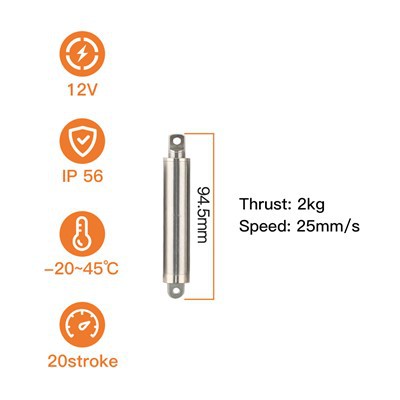
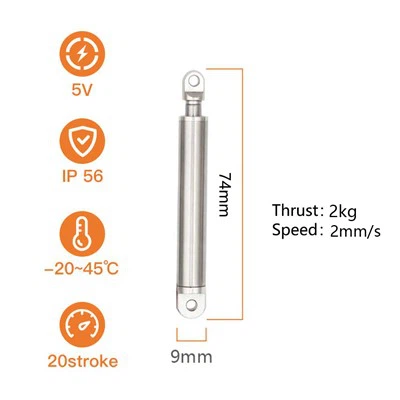
As a 12V linear actuator supplier, we offer a wide range of products suitable for solar panel tracking systems. Our Micro Linear Actuator 12V is ideal for small - scale solar panel setups, providing precise control and smooth movement. It has a compact design, which makes it easy to install in tight spaces.
For larger solar panel systems, our 12V Dc Linear Actuator offers higher load capacity and longer stroke lengths. These actuators are built to withstand harsh environmental conditions, ensuring reliable performance over an extended period.
In addition, we also provide 24Vdc Linear Actuator for applications where higher power and performance are required. Our team of experts can help you select the most appropriate actuator for your specific solar panel tracking system.
Conclusion
In conclusion, a 12V linear actuator can be an excellent choice for a solar panel tracking system, especially for small - scale and low - cost applications. Its compatibility with solar power systems, energy efficiency, cost - effectiveness, and safety make it a viable option for many users. However, it's important to carefully consider factors such as load capacity, stroke length, speed of movement, and environmental conditions when selecting an actuator.
If you're interested in incorporating a 12V linear actuator into your solar panel tracking system, we'd be more than happy to assist you. Our team can provide you with detailed product information, technical support, and help you find the best solution for your needs. Contact us today to start the procurement and discussion process.
References
- "Solar Photovoltaic Systems: Design and Installation Guide" by International Renewable Energy Agency (IRENA).
- "Electric Linear Actuators: Principles and Applications" by various industry experts.
- Technical documentation from leading linear actuator manufacturers.