In the realm of automation and mechanical control, actuators play a pivotal role. They are the unsung heroes that convert energy into motion, enabling a wide range of applications from simple home appliances to complex industrial machinery. Among the various types of actuators available in the market, the 12V actuator linear and regular actuators stand out, each with its unique characteristics and uses. As a supplier of 12V Actuator Linear, I am well - versed in the nuances that set these two types of actuators apart.
What is an Actuator?
Before delving into the differences, let's first understand what an actuator is. An actuator is a device that uses energy, typically electrical, hydraulic, or pneumatic, to produce mechanical motion. It takes an input signal, such as an electrical current or a fluid pressure, and translates it into a physical movement, which can be linear (in a straight line) or rotary (in a circular motion).
Regular Actuators
Regular actuators come in a wide variety of forms and operate under different power sources and control mechanisms. They can be powered by AC or DC electricity, hydraulic fluid, or compressed air.
Power Sources: AC - powered actuators are commonly used in industrial settings where a stable and continuous power supply is available. They can handle high - power applications and are suitable for large - scale machinery. On the other hand, DC - powered regular actuators are more versatile and can be used in both industrial and consumer applications. Hydraulic actuators use pressurized hydraulic fluid to generate force and are known for their high power density, making them ideal for heavy - duty applications such as construction equipment. Pneumatic actuators, which rely on compressed air, are often used in applications where speed and simplicity are required, like in automated manufacturing lines.
Control Mechanisms: Regular actuators can have complex control systems. For example, some industrial actuators are controlled by programmable logic controllers (PLCs), which allow for precise and customizable operation. Others may use simple on - off switches or proportional control systems.
12V Actuator Linear
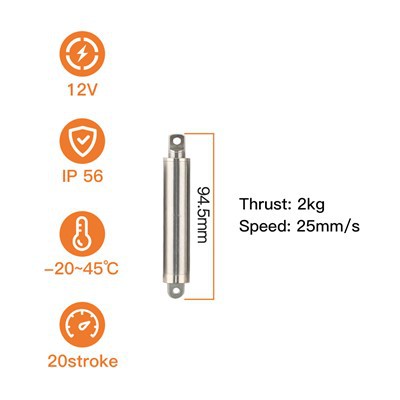
A 12V actuator linear is a specific type of actuator that operates on a 12 - volt DC power supply and produces linear motion.
Power Supply: The 12V power requirement is a key characteristic. It makes these actuators suitable for applications where a low - voltage power source is available, such as in automotive, marine, and solar - powered systems. For instance, in a solar panel tracking system, a 12V actuator linear can be used to adjust the position of the panels to follow the sun's movement. Since solar panels typically produce DC power, a 12V actuator can directly utilize this power without the need for complex power conversion.

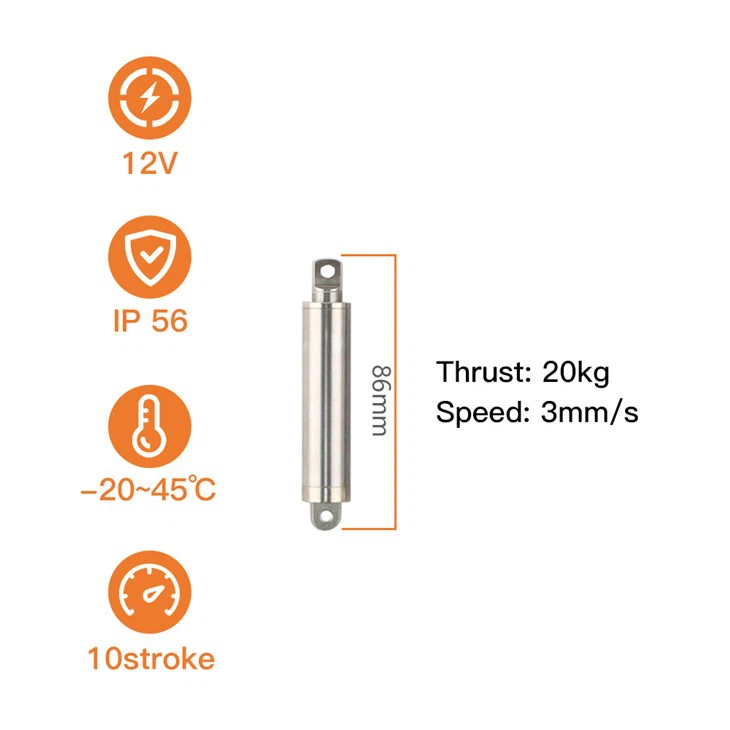
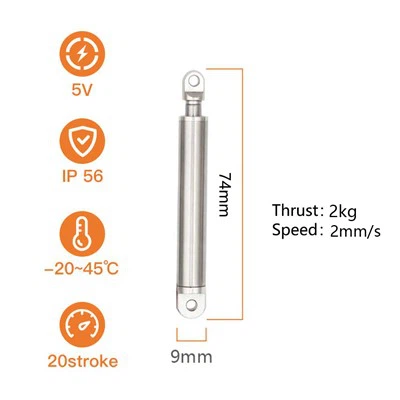
Linear Motion: As the name suggests, it moves in a straight line. This linear motion is highly precise and can be easily controlled. The stroke length, which is the distance the actuator can move, can vary depending on the model. Some 12V actuator linear models have short stroke lengths of a few millimeters, while others can have stroke lengths of several centimeters or even meters.
Key Differences
Power and Voltage
The most obvious difference is the power supply. Regular actuators can operate on a wide range of voltages, from high - voltage AC power in industrial settings to various DC voltages. In contrast, a 12V actuator linear is designed to work specifically with a 12V DC power source. This low - voltage requirement not only makes it safer to handle but also allows for use in applications where high - voltage power is not available or practical.
Application Scope
Regular actuators are used in a vast array of industries due to their diverse power sources and control options. They are commonly found in heavy - industrial machinery, large - scale manufacturing plants, and power generation facilities. For example, in a steel mill, hydraulic actuators are used to control the movement of large metal sheets.
On the other hand, 12V actuator linear has a more niche application scope. It is popular in automotive accessories, such as power seats and trunk openers. In the marine industry, it can be used to control the position of sails or hatches. Additionally, in home automation projects, 12V actuator linear can be used to create automated curtains or adjustable furniture.
Cost and Complexity
Regular actuators, especially those used in industrial applications, can be quite expensive. They often require complex installation and maintenance procedures, including the setup of power distribution systems, control panels, and safety features.
In comparison, 12V actuator linear is generally more affordable. Its simple design and low - voltage operation make it easy to install and maintain. This makes it an attractive option for DIY enthusiasts and small - scale projects.
Size and Portability
12V actuator linear is usually smaller and more portable than many regular actuators. The low - voltage operation allows for a more compact design, which is beneficial in applications where space is limited. For example, in a mobile robot, a 12V actuator linear can be used to control the movement of the robot's arm without taking up too much space. Regular actuators, especially hydraulic and pneumatic ones, tend to be larger and require additional equipment such as pumps and compressors, which reduces their portability.
Advantages of 12V Actuator Linear for Your Projects
As a supplier of 12V Actuator Linear, I have seen firsthand the benefits these actuators bring to various projects.
Energy Efficiency: The 12V power supply means that these actuators consume less energy compared to high - voltage actuators. This is especially important in applications where power conservation is a concern, such as in battery - powered devices.
Ease of Integration: Their small size and simple control requirements make them easy to integrate into existing systems. Whether you are working on a small - scale DIY project or a professional automation system, a 12V actuator linear can be easily incorporated.
Safety: The low - voltage operation reduces the risk of electrical shock, making them safer to use, especially in consumer applications and environments where non - professional users may be present.
Conclusion
In conclusion, while both regular actuators and 12V actuator linear serve the purpose of converting energy into motion, they have distinct differences in terms of power supply, application scope, cost, size, and other aspects. The choice between the two depends on the specific requirements of your project.
If you are looking for a reliable and cost - effective solution for applications that require low - voltage, linear motion, a 12V actuator linear is the way to go. You can explore our range of 12V Linear Actuator, 24Vdc Linear Actuator, and Linear Motor 12V to find the perfect fit for your needs.
If you have any questions or are interested in discussing a potential procurement, I encourage you to reach out. We are here to provide you with the best products and solutions for your automation needs.
References
- "Actuators: Principles and Applications" by John Smith
- "Automation Technology Handbook" edited by Jane Doe
- Industry whitepapers on actuator technology