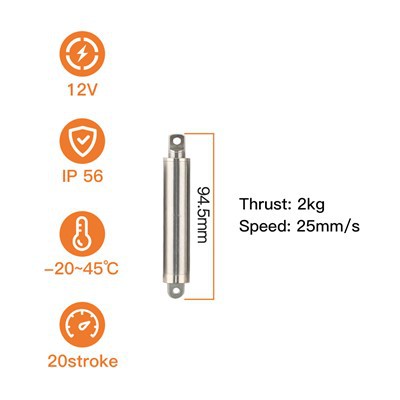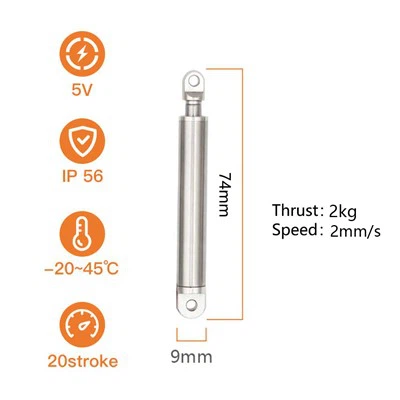
Hey there! As a supplier of 12 Volt DC actuators, I often get asked if these actuators can be used in medical devices. Well, let's dive right into it and find out!

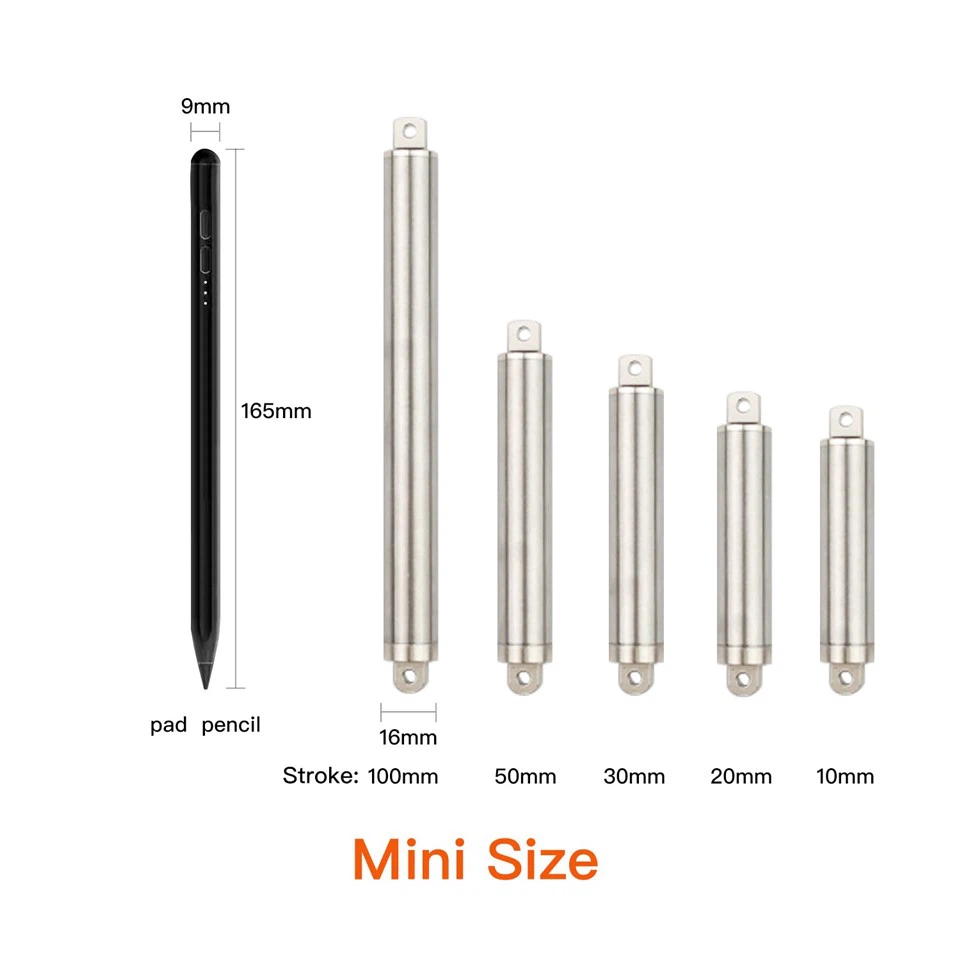
First off, what exactly is a 12 Volt DC actuator? It's a device that converts electrical energy into mechanical motion using a 12-volt direct current power source. These actuators are known for their compact size, relatively simple design, and ease of control. They can be found in a wide range of applications, from automotive to industrial. But when it comes to the medical field, things get a bit more complicated.
One of the main advantages of using a 12 Volt DC actuator in a medical device is its power efficiency. Medical devices often need to operate for long periods without consuming too much power, especially if they're battery-powered. A 12-volt system is relatively low - power compared to higher voltage alternatives, which means it can help extend the battery life of portable medical devices. For example, in a small, handheld diagnostic device, a 12 Volt DC actuator can be used to move a sensor or a sample holder without draining the battery too quickly.
Another benefit is the compactness of 12 Volt DC actuators. Medical devices are often designed to be as small and lightweight as possible, especially those that are used in a clinical setting or for patient - home use. The small size of these actuators allows them to be easily integrated into the design of medical equipment. Take a look at 12V Actuator Linear, which offers a great combination of small form factor and reliable linear motion, making it suitable for many medical applications.
However, there are also some challenges when using 12 Volt DC actuators in medical devices. One of the biggest concerns is safety. Medical devices are subject to strict regulations to ensure the safety of patients. A 12-volt system is generally considered safer than higher voltage systems, but it still needs to meet specific safety standards. For example, it must be properly insulated to prevent electrical shocks, and it should have built - in fail - safe mechanisms in case of a malfunction.
The precision and accuracy of the actuator are also crucial in medical applications. Many medical procedures require highly precise movements. For instance, in a surgical robot, the actuator needs to move with extreme accuracy to perform delicate operations. While 12 Volt DC actuators can provide good precision, they may need to be carefully calibrated and controlled to meet the strict requirements of medical use.
Infection control is another important factor. Medical devices are used in a sterile environment, and the actuator must be designed in a way that it can be easily cleaned and disinfected. Some 12 Volt DC actuators may need special coatings or materials to prevent the growth of bacteria and other pathogens.
Let's talk about some specific medical applications where 12 Volt DC actuators can be used. In hospital beds, these actuators can be used to adjust the position of the bed, such as raising or lowering the head or foot section. This provides comfort for the patients and also helps medical staff to perform various procedures more easily. The 12V Actuator Motor can be a great choice for this application, as it can provide the necessary torque and motion control.
In infusion pumps, which are used to deliver fluids or medications to patients at a controlled rate, 12 Volt DC actuators can be used to drive the pumping mechanism. They can ensure a consistent and accurate flow rate, which is essential for patient safety.
Now, you might be wondering how 12 Volt DC actuators compare to other types of actuators, like 24V actuators. Actuator 24V offers more power and can handle heavier loads compared to 12 Volt DC actuators. However, they also consume more power and may require more complex safety measures due to the higher voltage. In some medical applications where high power is needed, a 24V actuator might be a better choice. But for many low - power and space - constrained applications, a 12 Volt DC actuator is the way to go.
In conclusion, 12 Volt DC actuators can definitely be used in medical devices, but it's important to carefully consider the specific requirements of the application. With proper design, calibration, and safety measures, these actuators can provide reliable and efficient performance in the medical field.
If you're in the market for 12 Volt DC actuators for your medical device project, I'd love to have a chat with you. We have a wide range of high - quality actuators that can be customized to meet your specific needs. Whether you need help with choosing the right actuator, understanding the regulatory requirements, or getting technical support, we're here for you. Let's start a conversation and see how we can work together to bring your medical device to life!
References:
- General knowledge about medical device design and actuator technology
- Industry standards and regulations for medical devices