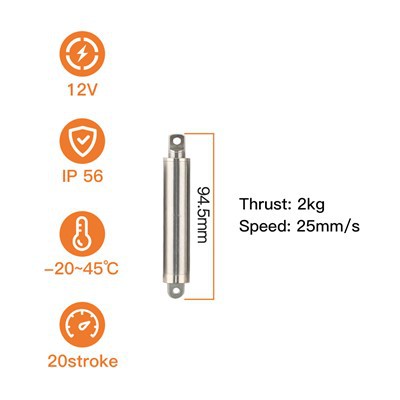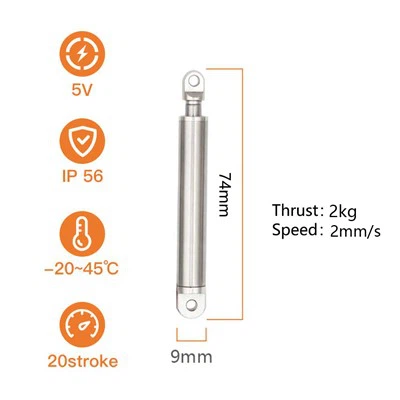
As a supplier of Electric Actuator 6V, I often encounter various technical inquiries from customers. One question that frequently comes up is about the maximum torque ripple of a 6V electric actuator. In this blog post, I will delve into this topic in detail, exploring what torque ripple is, its implications for 6V electric actuators, and how it can be managed.
Understanding Torque Ripple
Torque ripple refers to the periodic variation in the output torque of an electric actuator as it rotates. It is an inherent characteristic of electric motors and is caused by several factors, including the magnetic field distribution in the motor, the design of the stator and rotor, and the commutation process. In a perfect electric motor, the output torque would be constant throughout the rotation. However, in reality, there are always small fluctuations in torque, which can lead to unwanted vibrations, noise, and reduced efficiency.
For 6V electric actuators, torque ripple can have a significant impact on their performance. These actuators are commonly used in applications where precision and smooth operation are crucial, such as in robotics, automation systems, and medical devices. Excessive torque ripple can cause the actuator to move unevenly, leading to inaccurate positioning and reduced overall system performance.
Factors Affecting Torque Ripple in 6V Electric Actuators
Several factors can influence the magnitude of torque ripple in a 6V electric actuator. One of the primary factors is the motor design. Different motor topologies, such as brushed DC motors, brushless DC motors, and stepper motors, have different levels of torque ripple. For example, brushed DC motors typically have higher torque ripple compared to brushless DC motors due to the mechanical commutation process.
The number of poles in the motor also plays a role in torque ripple. Motors with a higher number of poles generally have lower torque ripple because the magnetic field distribution is more uniform. Additionally, the shape and design of the stator and rotor can affect torque ripple. Motors with optimized stator and rotor geometries can reduce torque ripple by minimizing the variation in the magnetic field.

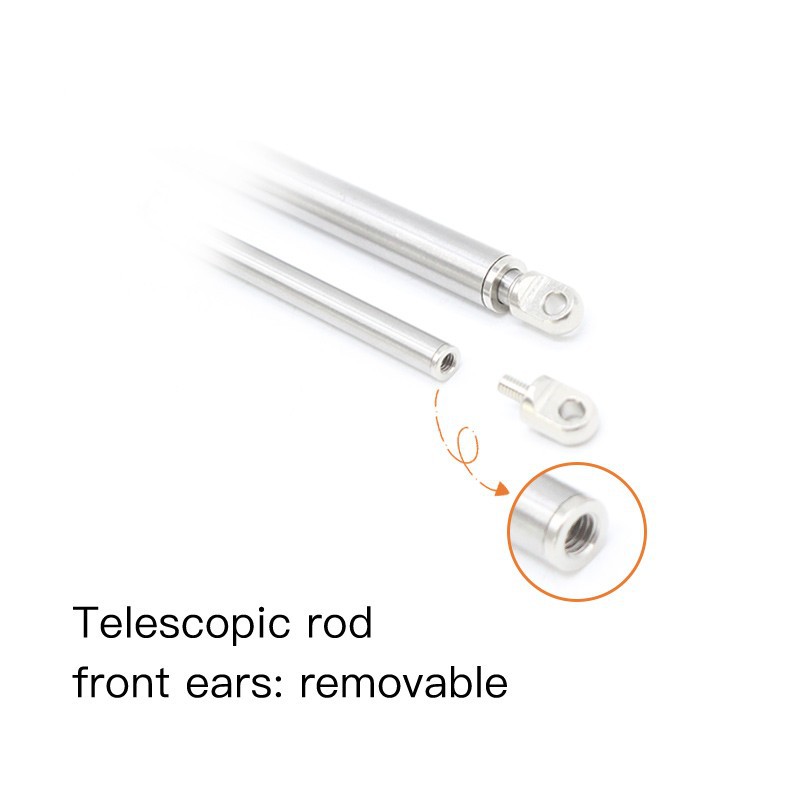
Another factor that can impact torque ripple is the control strategy used to drive the actuator. Advanced control algorithms, such as field-oriented control (FOC) and direct torque control (DTC), can significantly reduce torque ripple by precisely controlling the motor current and voltage. These control strategies can adjust the motor's operation in real-time to compensate for the torque variations, resulting in smoother operation and reduced ripple.
Measuring Torque Ripple
To determine the maximum torque ripple of a 6V electric actuator, it is necessary to measure the torque output of the actuator under different operating conditions. This can be done using a torque sensor, which is a device that measures the torque applied to a rotating shaft. The torque sensor is typically connected to the output shaft of the actuator, and the torque readings are recorded using a data acquisition system.
The torque ripple is then calculated by analyzing the torque data. The maximum torque ripple is defined as the difference between the maximum and minimum torque values over a complete rotation of the actuator. This value is usually expressed as a percentage of the average torque output.
Managing Torque Ripple in 6V Electric Actuators
As a supplier of Electric Actuator 6V, we understand the importance of minimizing torque ripple to ensure the optimal performance of our products. To achieve this, we employ several strategies in our actuator design and manufacturing process.
One of the key strategies is to use high-quality motor components and materials. We carefully select the motor magnets, windings, and bearings to ensure uniform magnetic field distribution and smooth operation. Additionally, we use advanced manufacturing techniques to ensure precise alignment of the stator and rotor, which helps to reduce torque ripple.
We also invest in research and development to develop advanced control algorithms and technologies that can effectively reduce torque ripple. Our engineers are constantly working on improving the control strategies used in our actuators to achieve smoother operation and higher precision.
In addition to design and manufacturing improvements, we also provide comprehensive technical support to our customers. We work closely with our customers to understand their specific application requirements and recommend the most suitable actuator and control solution. Our technical support team is available to assist with installation, commissioning, and troubleshooting, ensuring that our customers can achieve the best possible performance from our products.
Applications of 6V Electric Actuators
6V electric actuators are widely used in a variety of applications due to their compact size, low power consumption, and high precision. Some of the common applications include:
- Robotics: 6V electric actuators are used in robotic arms, grippers, and other robotic components to provide precise motion control.
- Automation Systems: These actuators are used in industrial automation systems for tasks such as material handling, assembly, and packaging.
- Medical Devices: 6V electric actuators are used in medical devices such as infusion pumps, surgical robots, and diagnostic equipment to provide accurate and reliable motion control.
- Consumer Electronics: These actuators are used in consumer electronics products such as cameras, drones, and smart home devices to provide precise movement and positioning.
Conclusion
In conclusion, the maximum torque ripple of a 6V electric actuator is an important factor that can significantly impact its performance. By understanding the factors that affect torque ripple and implementing appropriate design and control strategies, it is possible to minimize torque ripple and achieve smooth and precise operation. As a supplier of Electric Actuator 6V, we are committed to providing high-quality products with low torque ripple and excellent performance. If you are interested in learning more about our products or have any questions about torque ripple, please feel free to contact us. We look forward to discussing your specific requirements and providing you with the best possible solution.
References
- Johnson, M. (2018). Electric Motor Handbook. McGraw-Hill Education.
- Miller, T. J. E. (2001). Brushless Permanent-Magnet and Reluctance Motor Drives. Oxford University Press.
- Rahman, M. A. (2008). Electric Machines and Drives: Design, Analysis, and Applications. CRC Press.