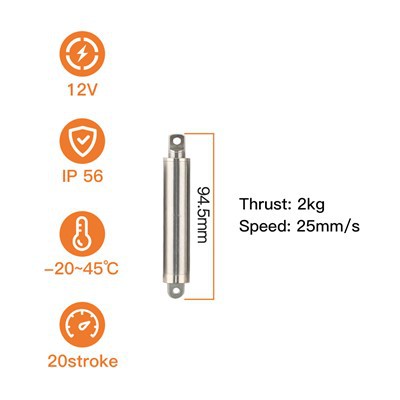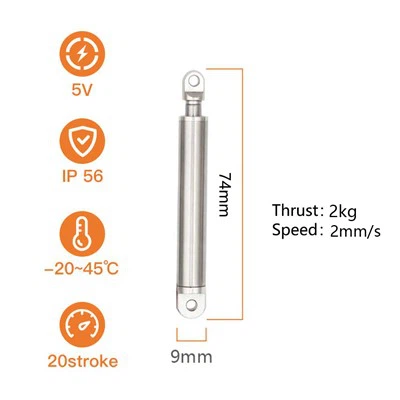
As a supplier of Electric Lift Cylinders, I am often asked about the working principle of these remarkable devices. In this blog post, I will delve into the details of how an electric lift cylinder operates, exploring its components, functionality, and the science behind its movement.
Components of an Electric Lift Cylinder
An electric lift cylinder, also known as an electric linear actuator, consists of several key components that work together to convert electrical energy into linear motion. These components include:
- Motor: The motor is the power source of the electric lift cylinder. It converts electrical energy into mechanical energy, providing the force required to move the cylinder. Most electric lift cylinders use DC motors, which offer high efficiency and precise control.
- Gearbox: The gearbox is responsible for reducing the speed of the motor and increasing the torque. This allows the electric lift cylinder to generate the necessary force to lift heavy loads. The gearbox can be either a worm gear or a planetary gear, depending on the application requirements.
- Screw and Nut Assembly: The screw and nut assembly is the heart of the electric lift cylinder. It converts the rotational motion of the motor into linear motion. The screw is a threaded rod that rotates inside the nut, causing the nut to move along the screw. This linear motion is transferred to the piston rod, which extends or retracts the cylinder.
- Piston Rod: The piston rod is the part of the electric lift cylinder that extends and retracts to perform the lifting or pushing action. It is connected to the nut of the screw and nut assembly and moves in a straight line as the screw rotates.
- Housing: The housing is the outer casing of the electric lift cylinder that protects the internal components from dust, dirt, and moisture. It also provides a mounting point for the cylinder and helps to dissipate heat generated by the motor.
Working Principle of an Electric Lift Cylinder
The working principle of an electric lift cylinder can be explained in the following steps:

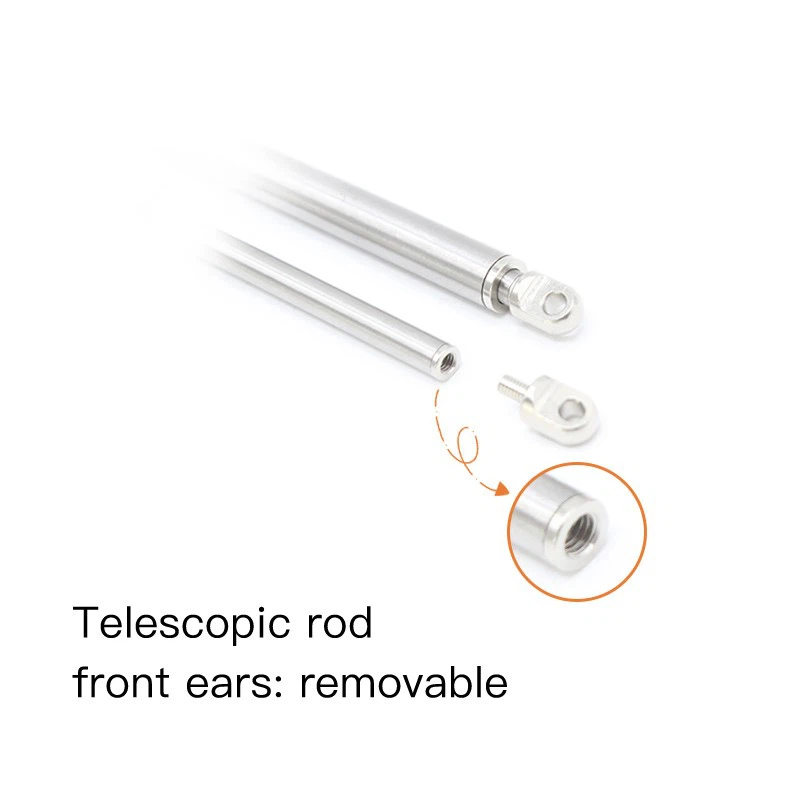
- Power Supply: When an electric current is applied to the motor, it starts to rotate. The direction of rotation of the motor can be controlled by reversing the polarity of the electrical supply.
- Gearbox Operation: The rotation of the motor is transmitted to the gearbox, which reduces the speed of the motor and increases the torque. The gearbox ensures that the electric lift cylinder can generate the necessary force to lift heavy loads.
- Screw and Nut Movement: The output shaft of the gearbox is connected to the screw of the screw and nut assembly. As the screw rotates, the nut moves along the screw in a linear motion. This linear motion is transferred to the piston rod, which extends or retracts the cylinder.
- Lifting or Pushing Action: The extension or retraction of the piston rod causes the electric lift cylinder to perform the lifting or pushing action. The force generated by the cylinder depends on the torque of the motor, the gear ratio of the gearbox, and the pitch of the screw.
- Control and Feedback: Electric lift cylinders can be controlled using a variety of methods, including manual switches, remote controls, and programmable logic controllers (PLCs). Some electric lift cylinders also come with feedback sensors, such as potentiometers or encoders, which provide information about the position and speed of the cylinder.
Advantages of Electric Lift Cylinders
Electric lift cylinders offer several advantages over other types of lifting devices, such as hydraulic and pneumatic cylinders. These advantages include:
- Precise Control: Electric lift cylinders provide precise control over the position, speed, and force of the lifting or pushing action. This makes them ideal for applications that require accurate positioning and repeatability.
- Energy Efficiency: Electric lift cylinders are more energy-efficient than hydraulic and pneumatic cylinders because they only consume power when they are in operation. This can result in significant energy savings over time.
- Low Maintenance: Electric lift cylinders have fewer moving parts than hydraulic and pneumatic cylinders, which reduces the risk of mechanical failure and requires less maintenance. They also do not require hydraulic fluid or compressed air, which eliminates the need for regular fluid changes and air compressor maintenance.
- Clean and Quiet Operation: Electric lift cylinders operate quietly and do not produce any oil or air leaks, making them suitable for cleanroom environments and applications where noise is a concern.
- Easy Installation and Integration: Electric lift cylinders are easy to install and integrate into existing systems. They can be mounted in a variety of orientations and can be connected to a variety of control systems.
Applications of Electric Lift Cylinders
Electric lift cylinders are used in a wide range of applications across various industries, including:
- Industrial Automation: Electric lift cylinders are used in industrial automation systems to perform tasks such as lifting, pushing, pulling, and positioning. They are commonly used in assembly lines, packaging machines, and material handling equipment.
- Medical Equipment: Electric lift cylinders are used in medical equipment, such as hospital beds, patient lifts, and dental chairs, to provide smooth and precise movement. They are also used in rehabilitation equipment, such as exercise machines and therapy tables.
- Automotive Industry: Electric lift cylinders are used in the automotive industry to perform tasks such as lifting and lowering car hoods, trunks, and seats. They are also used in automotive testing equipment to simulate different driving conditions.
- Aerospace Industry: Electric lift cylinders are used in the aerospace industry to perform tasks such as opening and closing aircraft doors, flaps, and landing gear. They are also used in satellite deployment systems and space exploration equipment.
- Home and Office Furniture: Electric lift cylinders are used in home and office furniture, such as adjustable desks, chairs, and beds, to provide ergonomic support and comfort. They are also used in home automation systems to control the movement of curtains, blinds, and doors.
Conclusion
In conclusion, the working principle of an electric lift cylinder is based on the conversion of electrical energy into linear motion. By using a motor, gearbox, screw and nut assembly, and piston rod, an electric lift cylinder can generate the necessary force to lift or push heavy loads with precise control and accuracy. Electric lift cylinders offer several advantages over other types of lifting devices, including energy efficiency, low maintenance, clean and quiet operation, and easy installation and integration. They are used in a wide range of applications across various industries, making them a versatile and reliable solution for many lifting and pushing needs.
If you are interested in learning more about our Electric Lift Cylinder products or have any questions about their working principle, please feel free to contact us. Our team of experts will be happy to assist you with your inquiries and help you find the right solution for your application. We also offer a range of Fast Actuators Linear and Linear Actuator Control products to meet your specific requirements.
References
- Beckhoff Automation. (n.d.). Electric Linear Actuators. Retrieved from https://www.beckhoff.com/EP7200/
- Parker Hannifin Corporation. (n.d.). Electric Linear Actuators. Retrieved from https://www.parker.com/us/en/linear-motion-control/electric-linear-actuators
- Tolomatic. (n.d.). Electric Linear Actuators. Retrieved from https://www.tolomatic.com/products/electric-linear-actuators