Hey there! As a supplier of fast linear actuators, I often get asked about the static friction of these nifty devices. So, let's dive right in and break down what static friction is in the context of fast linear actuators.
First off, what's static friction? Well, static friction is the force that resists the start of motion between two surfaces that are in contact with each other. In the case of a fast linear actuator, it's the force that needs to be overcome to get the actuator moving from a stationary position.
Think of it like trying to push a heavy box across the floor. At first, it's really hard to get the box moving because of the static friction between the box and the floor. Once you get it moving, though, it's a bit easier to keep it going. That's because the kinetic friction (the friction between two surfaces in motion) is usually less than the static friction.
Now, why is static friction important for fast linear actuators? Well, it plays a crucial role in determining how much force the actuator needs to generate to start moving. If the static friction is too high, the actuator might not be able to overcome it, and it won't move at all. On the other hand, if the static friction is too low, the actuator might start moving too easily and could be difficult to control.
There are a few factors that can affect the static friction of a fast linear actuator. One of the main factors is the type of materials used in the actuator. For example, if the actuator has a metal rod moving inside a plastic housing, the static friction between the metal and the plastic will depend on the surface finish of the materials. A smooth surface will generally have less static friction than a rough surface.
Another factor that can affect static friction is the lubrication of the actuator. Lubricants can reduce the friction between two surfaces by creating a thin layer between them. This can make it easier for the actuator to start moving and can also reduce wear and tear on the components.
The load on the actuator can also have an impact on the static friction. If the actuator is carrying a heavy load, the static friction will be higher because there is more force pressing the two surfaces together. This means that the actuator will need to generate more force to start moving.
As a supplier of fast linear actuators, we take these factors into account when designing and manufacturing our products. We use high-quality materials with smooth surface finishes to reduce static friction. We also offer a range of lubrication options to help our customers optimize the performance of their actuators.
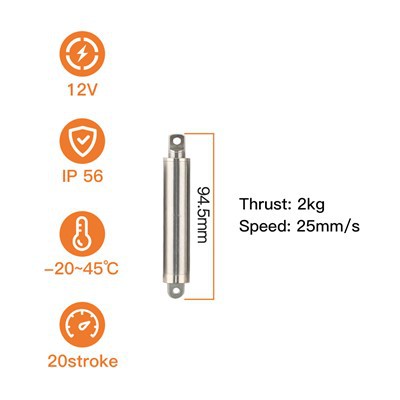
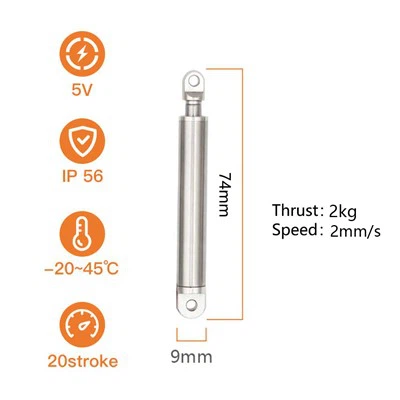
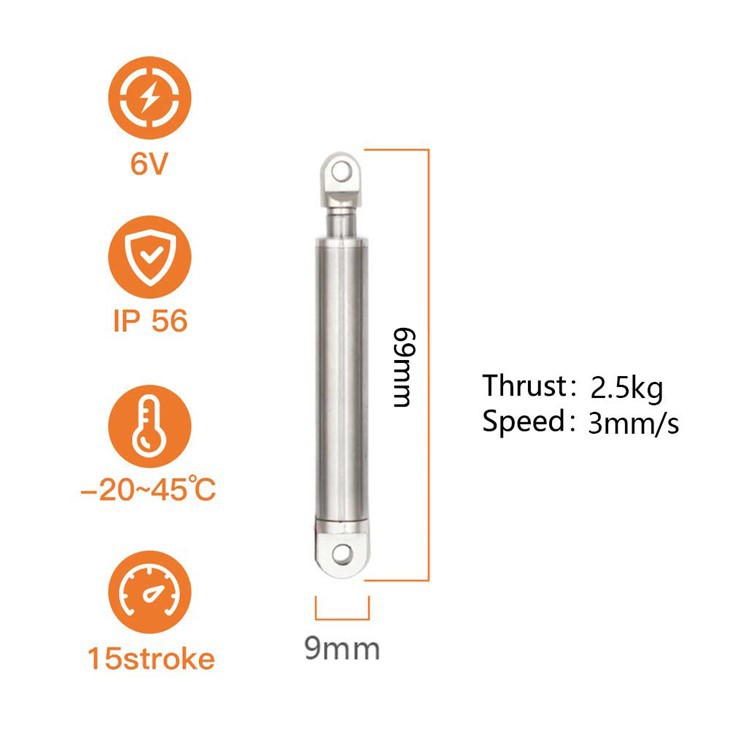
Now, let's talk about some of the different types of fast linear actuators we offer. We have the Ip56 Linear Actuator, which is designed to be dust-tight and protected against water jets. This makes it ideal for use in harsh environments where the actuator might be exposed to dust, dirt, or water.
Our Electric Lift Cylinder is another popular option. It's a powerful and reliable actuator that can be used for a variety of lifting applications. Whether you need to lift a heavy load or adjust the height of a platform, our electric lift cylinder can get the job done.
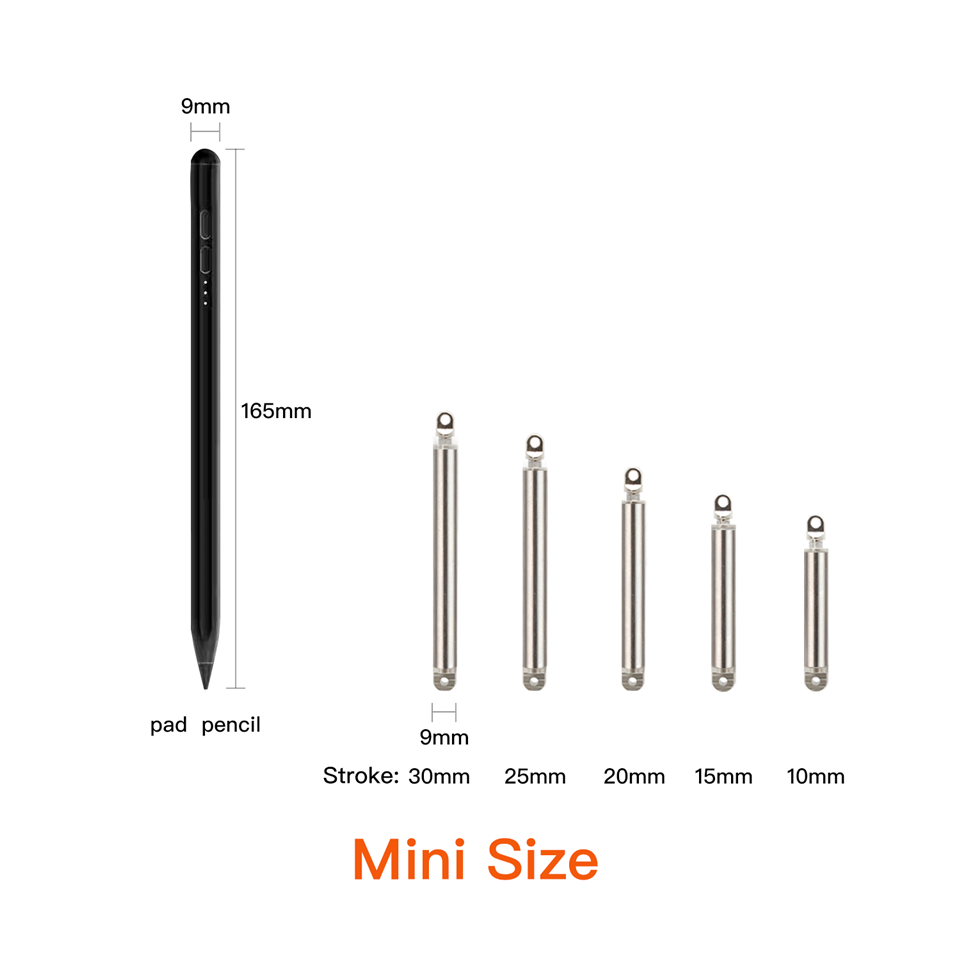
And if you're looking for an actuator that's resistant to corrosion, our Stainless Steel Linear Actuator is the way to go. It's made from high-quality stainless steel, which makes it durable and long-lasting.
So, if you're in the market for a fast linear actuator, we're here to help. We can provide you with all the information you need to choose the right actuator for your application, and we can also offer technical support and advice to ensure that you get the most out of your purchase.
Whether you're a small business looking for a simple actuator for a DIY project or a large industrial company in need of a high-performance actuator for a complex application, we have the products and expertise to meet your needs.
If you have any questions or would like to discuss your requirements in more detail, don't hesitate to get in touch. We're always happy to talk to our customers and help them find the best solution for their needs.
In conclusion, understanding the static friction of a fast linear actuator is essential for ensuring its proper operation. By considering the factors that affect static friction and choosing the right actuator for your application, you can optimize the performance of your system and get the most out of your investment. So, if you're ready to take your project to the next level, give us a call and let's start talking about how we can help.
References
- Fundamentals of Physics, Halliday, Resnick, and Walker
- Engineering Mechanics: Statics and Dynamics, R.C. Hibbeler