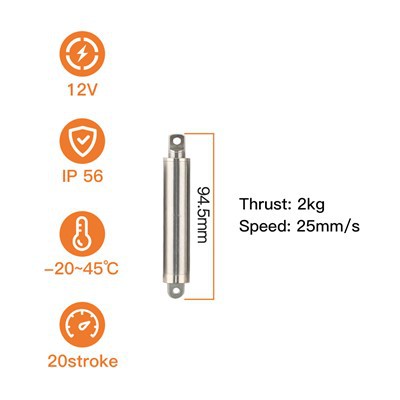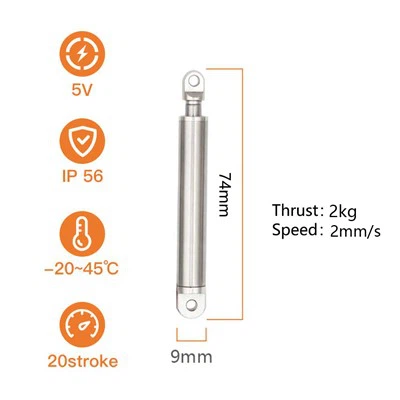
Hey there! As a supplier of 12V actuator motors, I often get asked about the mechanical efficiency of these little powerhouses. So, I thought I'd take a deep dive into this topic and share some insights with you.
Let's start with the basics. What exactly is mechanical efficiency? Well, in simple terms, it's a measure of how effectively a motor converts electrical energy into mechanical energy. You see, when you supply electrical power to a 12V actuator motor, not all of that energy gets transformed into useful mechanical work. Some of it is lost along the way, mainly in the form of heat.
The mechanical efficiency of a 12V actuator motor is usually expressed as a percentage. A higher percentage means the motor is more efficient, which is great news because it means you're getting more bang for your buck. You're using less electrical power to achieve the same amount of mechanical work, which can save you money in the long run.
Now, let's talk about the factors that can affect the mechanical efficiency of a 12V actuator motor. One of the most significant factors is the quality of the motor's components. Motors made with high - quality materials and precision manufacturing tend to be more efficient. For example, a motor with low - friction bearings will waste less energy overcoming friction, thus improving its overall efficiency.
The design of the motor also plays a crucial role. Some motors are designed with better magnetic circuits, which can enhance the conversion of electrical energy into mechanical energy. Additionally, the type of winding used in the motor can impact efficiency. Copper windings, for instance, are often preferred because copper has good electrical conductivity, reducing resistive losses.
Another factor is the load on the motor. When a 12V actuator motor is operating at its optimal load, it tends to be more efficient. If the load is too light, the motor may not be fully utilizing its capabilities, and if the load is too heavy, the motor has to work harder, which can lead to increased energy losses.
Let's take a look at some real - world scenarios. Suppose you're using a Linear Motor 12V in a small robotic arm. The efficiency of the motor will determine how long the battery lasts and how smoothly the arm moves. A more efficient motor will draw less current from the battery, allowing the robotic arm to operate for a longer period without needing a recharge.
Similarly, if you're using a 24Vdc Linear Actuator in an industrial setting, efficiency can have a significant impact on your operating costs. An inefficient motor will consume more electricity, which can add up over time, especially if you have multiple actuators running continuously.

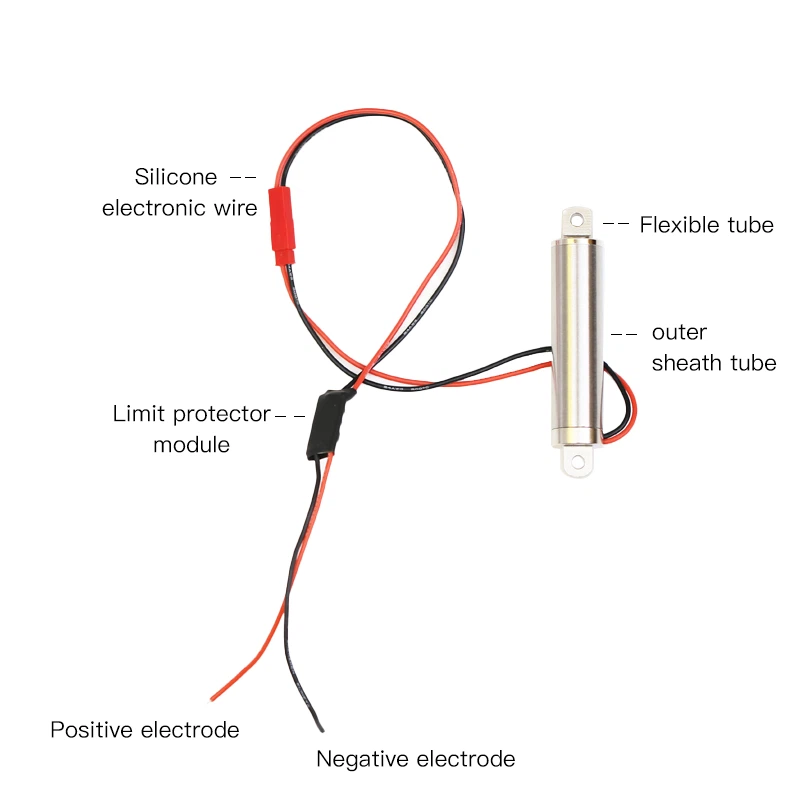
As a supplier of Linear Actuator 12V, we understand the importance of mechanical efficiency. That's why we source our motors from manufacturers who prioritize quality and efficiency. We test each motor to ensure it meets our high - standards before offering it to our customers.
When you're shopping for a 12V actuator motor, it's essential to look at the manufacturer's specifications. They usually provide information about the motor's efficiency, power consumption, and torque. You can also ask for test reports or customer reviews to get a better idea of how the motor performs in real - world applications.
It's also worth noting that the mechanical efficiency of a motor can change over time. Factors like wear and tear, dust accumulation, and improper maintenance can all reduce the efficiency of a 12V actuator motor. Regular maintenance, such as cleaning the motor and lubricating the moving parts, can help keep the motor running efficiently for longer.
In conclusion, the mechanical efficiency of a 12V actuator motor is a critical factor to consider when choosing a motor for your application. A more efficient motor can save you money on energy costs, extend the lifespan of your equipment, and improve the overall performance of your system.
If you're in the market for a 12V actuator motor, we'd love to help you find the perfect one for your needs. Whether you're working on a small DIY project or a large - scale industrial application, we have a wide range of high - quality motors to choose from. Don't hesitate to reach out and start a conversation about your requirements. We're here to assist you every step of the way.
References
- "Electric Motors and Drives: Fundamentals, Types, and Applications" by Austin Hughes
- "Motor Efficiency and Power Factor" - IEEE Industry Applications Magazine